A gas to electric stove conversion in San Diego costs $450 to $1,800 for the new 240V circuit alone, and that’s before you factor in whether your panel has room for it. The gas line itself only ran a small igniter on 120V, so the electrical work isn’t a swap, it’s a brand new dedicated circuit built from scratch. What decides the final number is the distance from your panel, whether your walls are finished, and whether a 100-amp panel can absorb another 40 to 50 amp load.
TL;DR
- New 240V range circuit, short run from the panel: $450 to $900.
- Long run, finished walls, or a detached-panel path: $900 to $1,800.
- Panel full or undersized: add a subpanel ($600 to $2,000) or a 200A panel upgrade ($2,800 to $4,200).
- Budget alternative when the panel is tight: a load management device, $600 to $1,200.
- California’s HEEHRA rebates were fully reserved statewide as of February 2026, and the old stove rebate never applied to single-family homes anyway.
- Capping the old gas line is a plumber’s job, not an electrician’s.
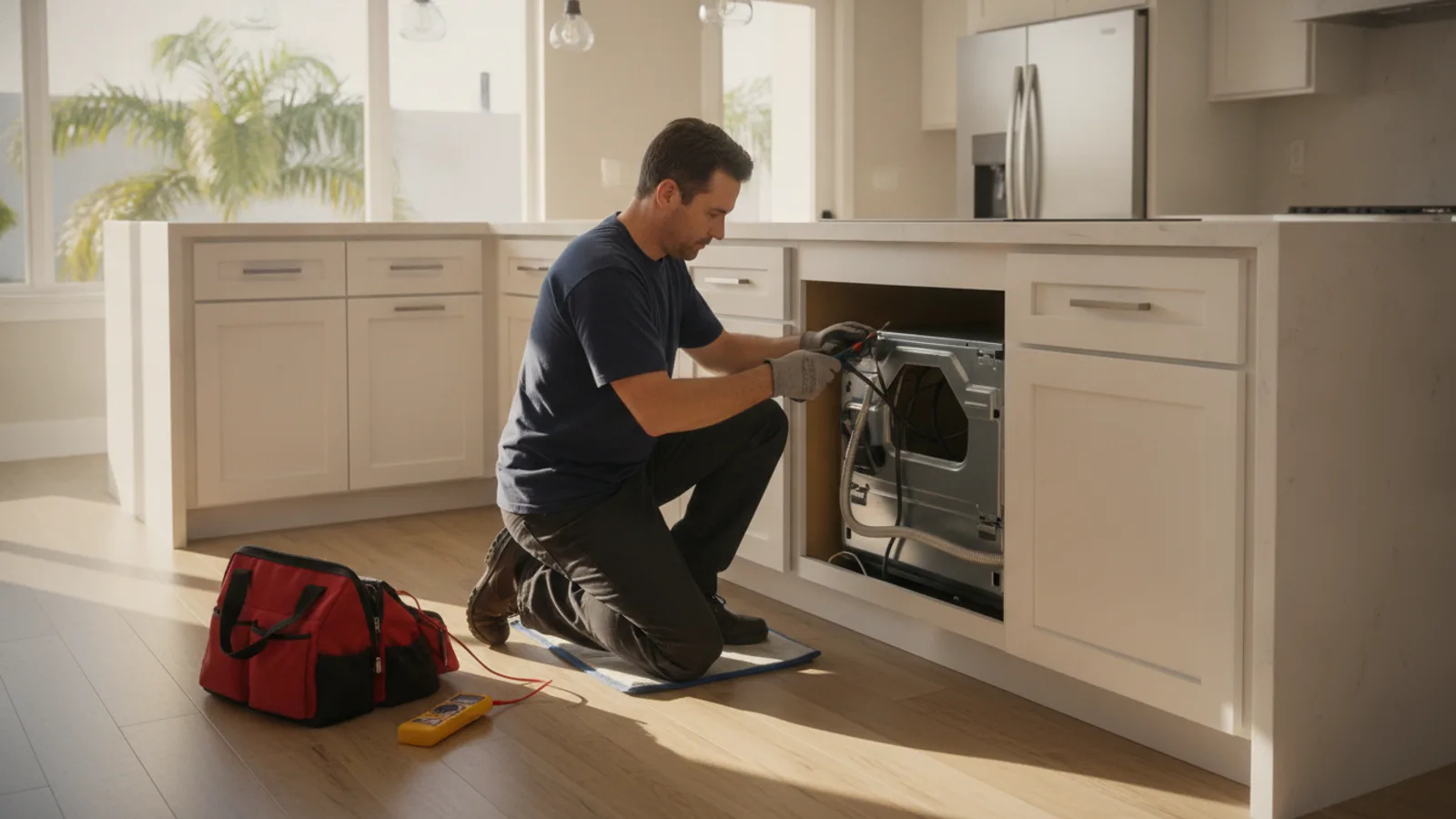
What does a gas to electric stove conversion actually involve electrically?
A gas range in most San Diego homes only ever needed a standard 120V outlet, and often not even that, just for the igniter and clock. That outlet cannot run an electric or induction range. You need a dedicated 240V circuit, typically 40A or 50A, wired per NEC 210.19, ending in a NEMA 14-50 receptacle or hardwired directly to the unit.
That means an electrician is pulling brand new wire from your panel to the kitchen, not extending anything that already exists. If the range location has never carried 240V, expect the same labor as any dedicated circuit installation: fishing wire through framing or finished drywall, landing a double-pole breaker, and terminating the receptacle correctly. A 40-amp circuit uses smaller wire than a 50-amp one, so check your appliance’s nameplate before your electrician orders material. Some slide-in induction ranges spec 40A; most standard electric ranges want 50A.
How much does gas to electric stove conversion cost in San Diego?
Pricing tracks the same three drivers as any new 240V circuit: distance from the panel, wall condition, and panel capacity. Here’s what a real quote looks like by scenario.
| Scenario | Typical San Diego cost |
|---|---|
| Short run from panel to kitchen, open framing or garage-adjacent | $450 to $900 |
| Long run, two-story layout, or finished-wall fishing | $900 to $1,800 |
| Subpanel needed because main panel is full | add $600 to $2,000 |
| 200A panel upgrade needed because service is undersized | $2,800 to $4,200 |
| Load management device instead of a panel upgrade | $600 to $1,200 |
The $450 to $900 range covers the easy version: a panel in the garage that backs onto the kitchen wall, open studs, and a clear breaker slot waiting. The $900 to $1,800 range is the more common reality for a true gas-to-electric conversion, since the range was never wired for 240V and the run usually crosses at least one finished wall. Our 240V outlet installation cost guide breaks down the same pricing logic for other 240V appliances if you want the full comparison.
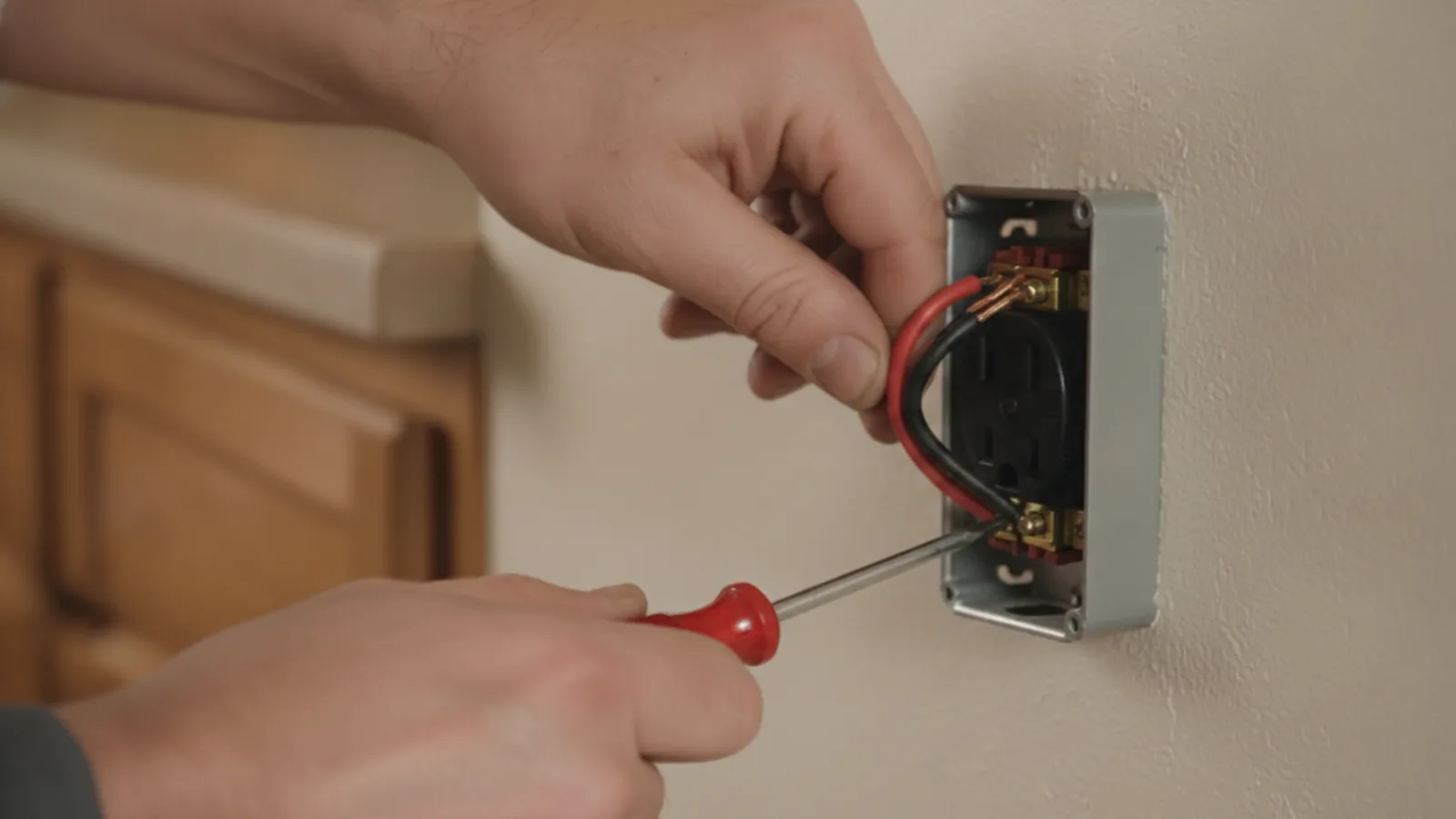
Will your panel handle it? The 100-amp panel problem
A lot of San Diego housing stock, especially older neighborhoods like El Cajon, La Mesa, and the original Clairemont-era tracts, still runs a 100-amp main panel. Adding a 40 to 50-amp range circuit on top of an electric dryer, AC, and everything else in the house is exactly the kind of load a real calculation has to check, not guess at.
Your electrician runs a load calculation per NEC Article 220 before quoting the circuit. Three outcomes come out of that math:
The panel has room. You just need the new circuit, no extra work. That’s the $450 to $1,800 range above.
The panel is full but healthy. A subpanel is often the cheaper fix, running $600 to $2,000 depending on how far it sits from the main panel. It doesn’t add capacity, it redistributes what you already have to a spot with open breaker slots.
The panel is at its limit or the service itself is undersized. That points to a full 200A panel upgrade, typically $2,800 to $4,200 installed. It’s the bigger bill, but it’s also the right call if you’re planning to add other electric loads (EV charger, heat pump, induction cooktop plus a wall oven) in the next few years.
If the panel upgrade feels like overkill for just a range circuit, a load management device is worth asking about. At $600 to $1,200, it monitors total household draw and throttles back a high-amperage circuit when the rest of the house is pulling hard, instead of forcing a full service upgrade. It’s the same logic homeowners use to fit an EV charger onto an older panel, and it works the same way for a range circuit.
Induction vs. standard electric: does it change the electrical requirement?
Not by much on the wiring side. Both induction and standard electric ranges need the same dedicated 240V circuit, sized 40A or 50A depending on the model. Where they differ is efficiency and what shows up on your utility bill.
| Standard electric (coil or smooth-top) | Induction | |
|---|---|---|
| Circuit needed | 240V, 40A or 50A dedicated | 240V, 40A or 50A dedicated |
| Energy transferred to the pan | Roughly 75 to 80 percent | Roughly 85 to 90 percent |
| Cookware compatibility | Any cookware | Magnetic cookware only (cast iron, most stainless) |
| Cooktop cost | Lower upfront | Higher upfront |
| Heat response | Slower to adjust | Near-instant, like gas |
Induction transfers most of its energy directly into the pan through a magnetic field instead of heating a coil or radiant element that then heats the pan. That efficiency gap is real, and it offsets part of the cost of running an electric appliance on SDG&E rates, which are among the highest in the continental US. It doesn’t erase the rate difference entirely, and we’re not going to hand you a made-up monthly dollar figure. What we can tell you honestly: if you already cook on gas and love the responsiveness, induction is the closest electric equivalent, and it’s the more efficient of the two electric options on your power bill.
Permits and who does what: electrician vs. plumber
A new 240V circuit in the City of San Diego needs an electrical permit through Development Services, the same way any new dedicated circuit does. A like-for-like appliance swap on a circuit that already exists doesn’t need one. Our simple vs. plan-check electrical permit guide covers which category your project falls into and what the permit actually costs.
Two trades touch a gas-to-electric conversion, and they’re not the same trade. The electrician runs the new circuit, sets the receptacle or hardwires the connection, and pulls the electrical permit. Capping the old gas line safely is a plumber’s job, not an electrician’s. Don’t assume one contractor covers both ends. If your kitchen remodel includes both the new circuit and the gas cap, confirm each scope is assigned before work starts, or you’ll end up with an open gas stub nobody claimed.
Rebate reality in 2026: don’t budget around a stove rebate
A lot of national guides tell homeowners to plan their electric stove budget around a HEEHRA or HEAR rebate. In San Diego right now, that advice is wrong, and it’s worth saying plainly instead of repeating it.
California’s HEEHRA/HEAR single-family retrofit rebates were fully reserved statewide as of February 24, 2026. The program is waitlist-only from here. And even when funding was open, the $840 electric-stove rebate under that program applied only to multifamily properties upgrading five or more units. Single-family homeowners never qualified for the stove-specific rebate, rebate reservations or not. There’s also no federal tax credit to lean on here: the 25C credit ended for property placed in service after 2025.
That doesn’t mean there’s nothing worth checking. Rebate programs open and close on their own schedule, and San Diego Community Power and SDG&E are the two places to check for whatever’s currently active before you commit to a budget. Just don’t build your 2026 plan around a stove rebate that isn’t there.
Frequently asked questions
How much does it cost to convert a gas stove to electric in San Diego?
The new 240V circuit alone runs $450 to $1,800 depending on distance and wall access. If your panel is full, add $600 to $2,000 for a subpanel, or $2,800 to $4,200 if a full 200A panel upgrade is needed. A load management device at $600 to $1,200 is often the cheaper fix when the panel is tight but not truly undersized.
Can I plug an electric range into my old gas stove’s outlet?
No. A gas range typically only used a 120V outlet for the igniter and clock. An electric or induction range needs a dedicated 240V circuit sized 40A or 50A, which is a different circuit entirely, not an upgrade of the existing one.
Will my 100-amp panel handle an electric or induction range?
It depends on what else is on the panel. Your electrician runs a load calculation per NEC Article 220. Many older San Diego homes in areas like El Cajon and La Mesa still run 100-amp service, and whether there’s room for a 40 to 50 amp range circuit depends on the rest of the home’s electrical load, not just the panel’s rated size.
Is there a rebate for converting from gas to electric in San Diego right now?
Not for a single-family stove specifically. California’s HEEHRA/HEAR retrofit rebates were fully reserved statewide as of February 2026, and even before that, the $840 stove rebate under that program only applied to multifamily buildings upgrading five or more units. Check sdcommunitypower.org and sdge.com for whatever incentives are currently open before you plan around one.
Who caps the old gas line, the electrician or the plumber?
The plumber. An electrician handles the new 240V circuit and the electrical permit. Capping the gas line safely so it’s not left as an open stub is plumbing work. If you’re doing both as part of one remodel, confirm each contractor’s scope covers their half before the job starts.
Related guides
For the full breakdown on the new circuit itself, see our 240V outlet installation cost guide and our explainer on when you need a dedicated circuit. If your panel needs more room, compare subpanel installation cost against a full 200A panel upgrade, or look at a load management device as the budget path. Before any of it, check whether your project needs a simple permit or a plan-check permit.
When to call us
A gas to electric stove conversion touches live panel work, load calculations, and a permit, three things that go wrong quietly if they’re rushed. Bright Pro Electric connects San Diego homeowners with licensed electricians who handle panel upgrades, new outlet and switch installation for the range circuit, and electrical troubleshooting if something’s off after the conversion, across the full county, 24/7. Call us at (858) 988-5580 for a same-day estimate.