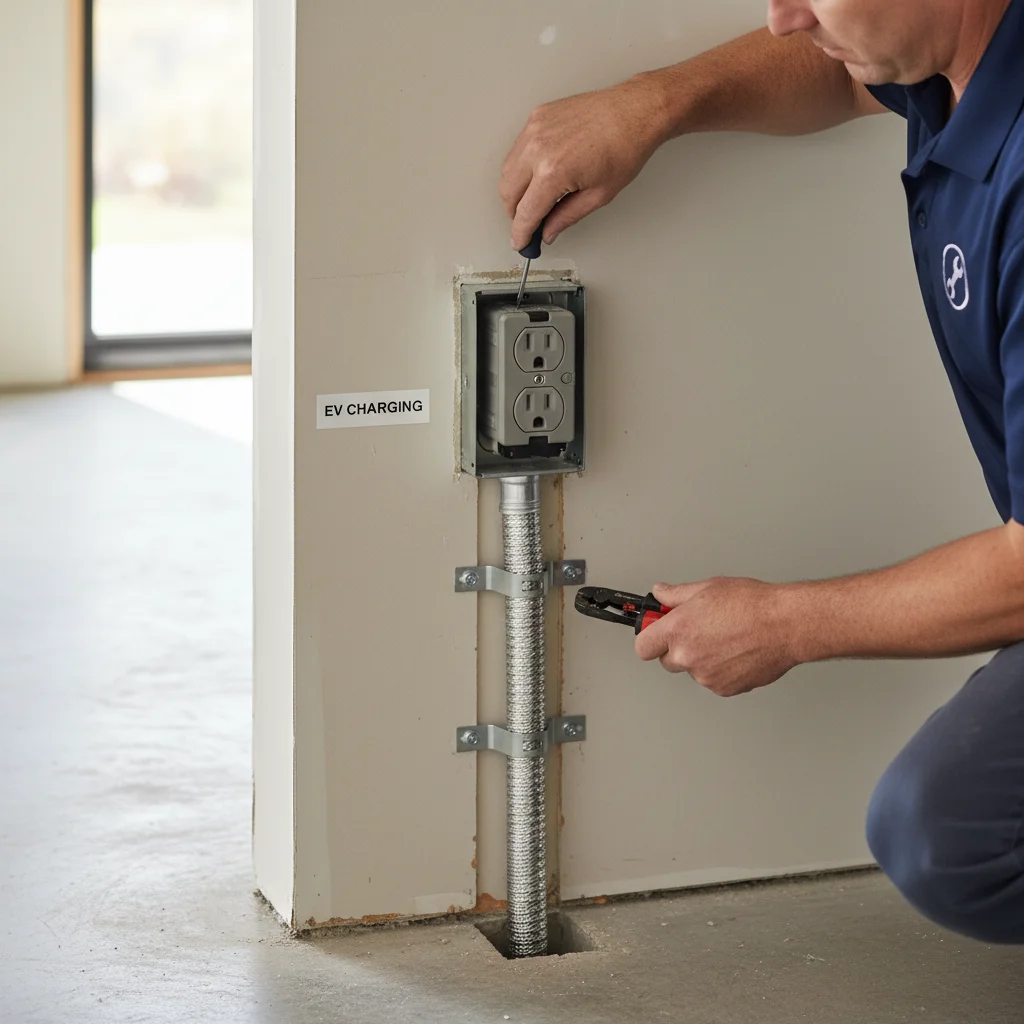
A new 240-volt circuit is how a dryer, range, Level 2 charger, welder, or mini-split gets the voltage it was designed for. The published San Diego range for a straightforward install is $250 to $700. Distance, finish, GFCI, and panel capacity move it. This page keeps those figures parked and qualifies the technical claims that used to read like one recipe for every house.
TL;DR
- A 240V receptacle uses two ungrounded legs. Ampacity, not the word “240,” sets conductor size, breaker, and cost.
- Straightforward published range: $250 to $700. Fishing finished walls: add $150 to $400 on this site’s figures. Detached-garage subpanel work is extra.
- Receptacle configuration follows the appliance nameplate (14-50, 14-30, 6-50, and others). NEMA 14-50 is common for plug-in EVSE, not mandatory for every charger.
- New branch circuits generally need an electrical permit in the City of San Diego unless an exemption applies. Other cities differ. Unpermitted work is a disclosure risk, not a guaranteed claim denial.
- Dedicated vs shared is an onsite code and load call. This page does not say every 240V load “must” be dedicated with no exceptions.
What a 240V outlet is, and why amps matter more than the nickname
A 120V receptacle is one ungrounded conductor to neutral. A 240V receptacle uses two ungrounded conductors. Older manuals still say 220. The panel is 240/120.
Conductor size follows ampacity tables, insulation temperature, grouping, and length, not a slogan. Many 30-amp dryer circuits use 10 AWG copper. Many 50-amp circuits use 6 AWG copper. Those are typical, not universal. Aluminum, 60°C terminations, or a long run can change the size. The licensed electrician sizes from the nameplate and the adopted code.
Whether the panel has spare capacity is a load calculation. A panel upgrade is a separate job when the calc says so.
Common uses: dryer, range, EV, welder, mini-split
Electric dryer. Modern units usually want a 4-wire NEMA 14-30. Older 3-wire NEMA 10-30 has no separate equipment grounding conductor. New 10-30 installs are not how current code treats dryer replacements. Confirm the nameplate.
Range or oven. Often 40 or 50 amps. NEMA 14-50 or 14-30 depends on the unit.
Level 2 EV. Plug-in EVSE often ships with a 14-50. Hardwired units skip the receptacle and follow the EVSE listing (32-48 A continuous is common, OCPD at 125%). See EV charger installation.
Welder. Often NEMA 6-50 (no neutral). Not interchangeable with 14-50.
Mini-split. Circuit ampacity is on the outdoor-unit nameplate, often 20-30 A at 240 V. Do not order a 14-50 “just in case.”
Cost by scenario (parked)
For panel capacity available, a short run in a garage or laundry, no fishing:
- 30-amp dryer circuit (NEMA 14-30): $250-$500
- 50-amp EV or range circuit (NEMA 14-50): $350-$700
- 50-amp welder circuit (NEMA 6-50): $300-$650
- Mini-split, 20-30 amp: $250-$500
Add $150-$400 to fish finished walls. Add $200-$600 if a subpanel is needed for a detached garage. Panel slot or service work is separate: panel upgrade cost, cost to add an outlet.
Permit fees belong on the jurisdiction’s current bulletin. This page does not publish a countywide dollar ballpark.
Stove or range runs
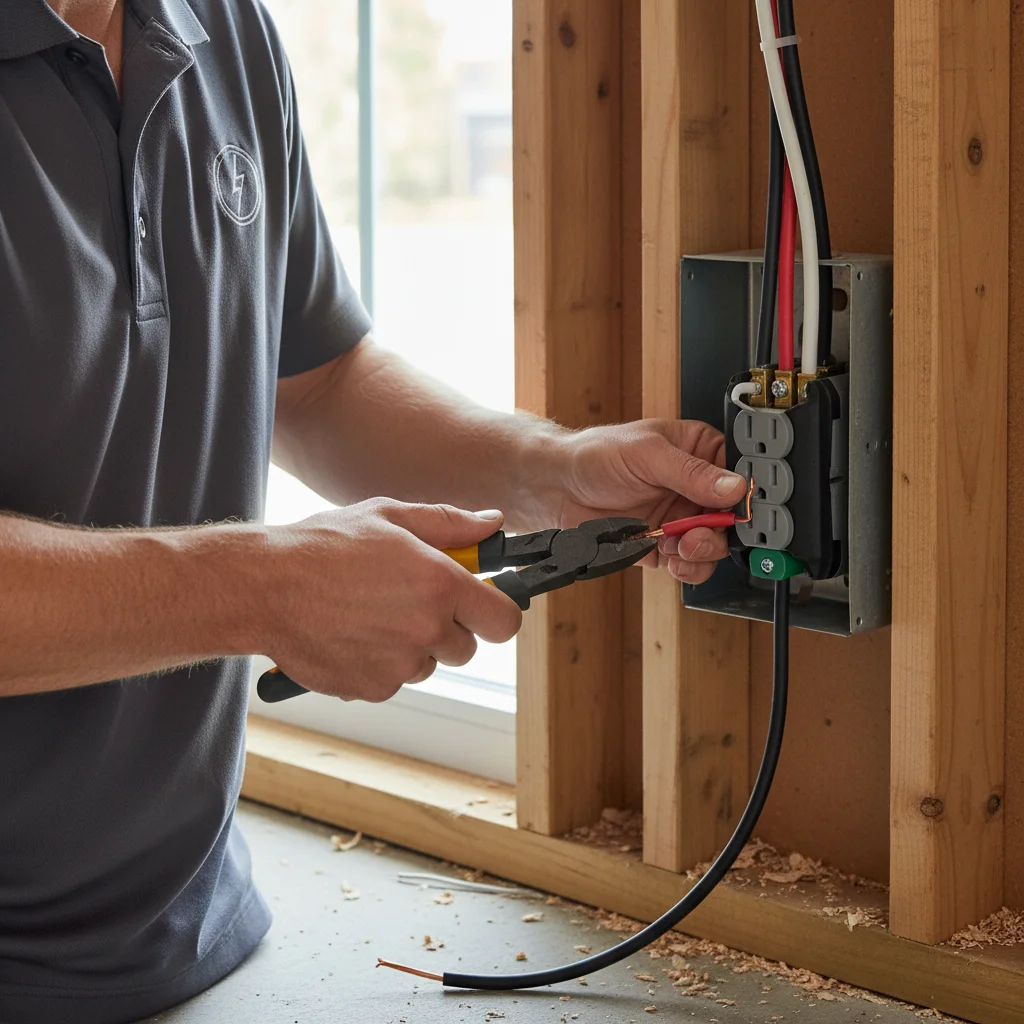
Kitchen 50-amp circuits in finished walls are often $450-$900 on this site for a single-story interior run. Longer two-story pulls, gas-to-electric conversions with no existing cable, and full panels sit higher. Some slide-ins specify 40 A: same family of conductors, different breaker, still nameplate-driven. Dryer-specific: 240V dryer outlet.
Sauna, hot tub, spa
Sauna 30-60 A: $400-$900 when close to a panel. Hot tub/spa 50-60 A with GFCI and a disconnect in sight: $500-$1,100. Outdoor conduit, underground, GFCI breaker ($80-$150 on this site), and disconnect ($75-$150) add cost. Details: hot tub electrical hookup. Surge protection is a separate add: whole-house surge protector.
NEMA types, in short
- 14-50: 50 A, two hots, neutral, ground. Common plug-in EVSE and some ranges.
- 14-30: 30 A dryer, 4-wire. Not the same pinout as 14-50.
- 10-30: 3-wire dryer, no separate ground. Not the current new-install pattern.
- 6-50: two hots and ground, no neutral. Welders and some tools.
Adapters hide mismatches. Order the configuration the listing requires.
Permits and GFCI
City of San Diego: electrical installation/alteration generally needs a permit unless SDMC 129.0303 exempts it. A new 240V branch circuit is normally permitted work. Unincorporated county and other cities have their own rules. California is not one permit office.
GFCI for 240V receptacles depends on location and the adopted NEC cycle (garages, outdoors, and similar spaces expanded in recent cycles). Protection is often a 2-pole GFCI breaker. AFCI rules differ by occupancy and circuit type. The AHJ’s adopted code and local amendments control, not a Bright Pro checklist.
This site previously treated “every new 240V circuit in California” as an absolute. Treat it as: assume a permit, then let the contractor confirm the counter.
Insurance: unpermitted work can complicate a claim or a sale. That is not the same as “the carrier will deny.”
Dedicated circuits
Sharing a dryer circuit with a charger or welder is usually a bad idea because the overcurrent device and conductors were sized for one load. Some listed EVSE products share current by design (load management). Those are equipment listings, not a DIY tap. If the panel is full, a panel upgrade or garage subpanel may be the next conversation.
Outlet and switch installation is the service category. The licensed electrician pulls the permit when the job requires one. Bright Pro does not.
Frequently asked questions
What 240V outlet do plug-in EV chargers often use?
NEMA 14-50 is the usual plug-in configuration. Hardwired EVSE follows the unit’s listing, which may be 50 A, 60 A, or another rating. Tesla and other brands also ship hardwired wall connectors.
How much for a dryer 240V outlet in San Diego?
$250 to $500 for a straightforward 30-amp 14-30 in a garage or laundry on this site’s range. Fishing or long cable: add $150 to $400. Replacing a 10-30 is a 4-wire upgrade conversation. See dryer outlet cost.
Do I need a permit?
In the City of San Diego, plan on a permit for a new 240V circuit. Confirm exemptions with Development Services, not with this article. Other cities and the County differ.
14-50 vs 6-50?
14-50 includes a neutral. 6-50 does not. Welders often want 6-50. Most plug-in EVSE and ranges want the 14-50 family if they use a receptacle at all.
When to call
240V work is live-panel, sized-conductor work. Verify the installer’s license at CSLB. Bright Pro Electric matches homeowners with independent licensed electricians. Hours are Monday through Saturday, 7am to 7pm. Use the contact form.