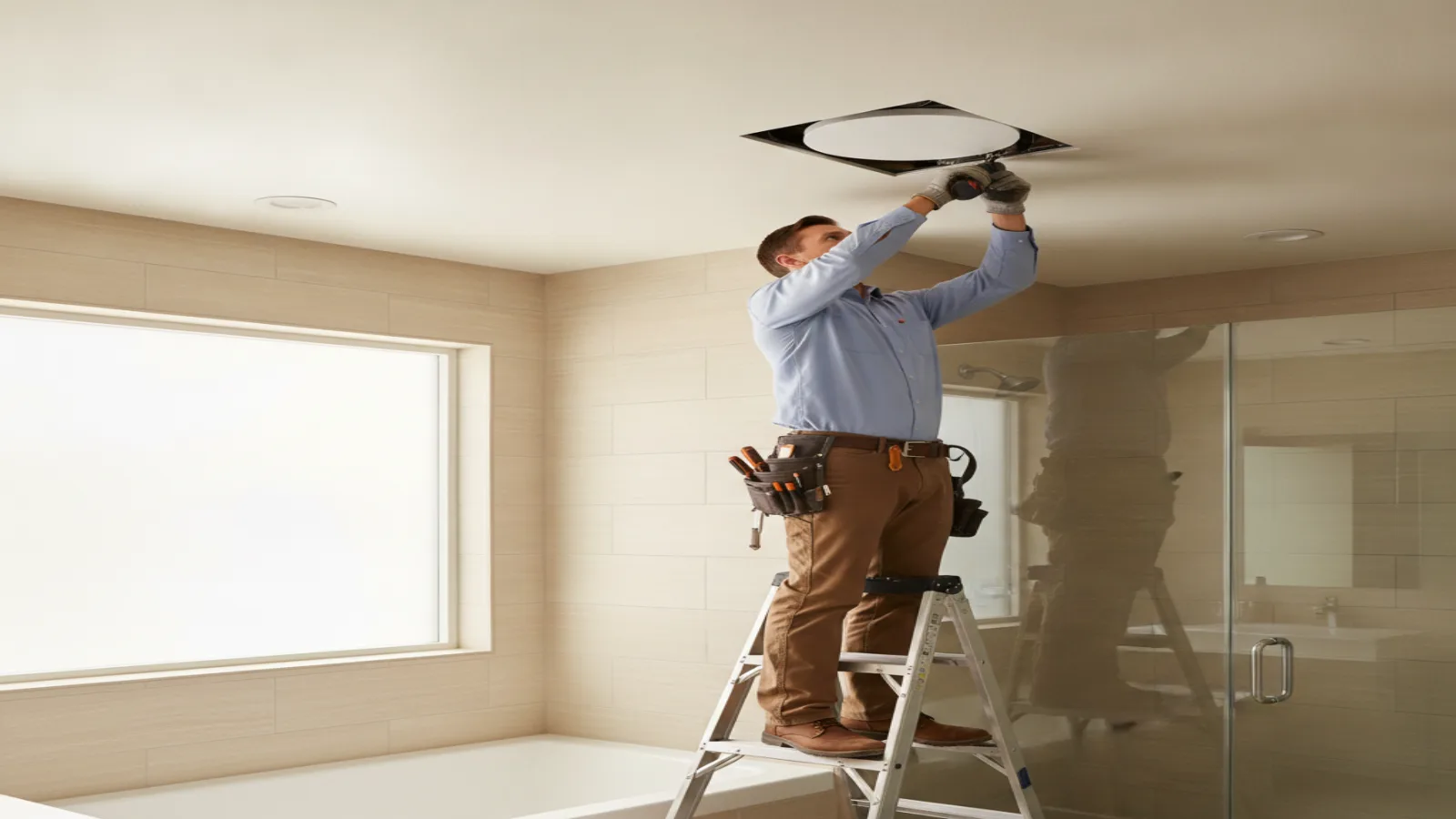
Replacing an existing bathroom exhaust fan in San Diego runs $250 to $550. Adding a fan to a bathroom that never had one costs $500 to $1,200, because it needs new wiring, a switch, and a vent to the outside. Most of these jobs are routine for a licensed electrician. What sets the price is whether the wiring and vent already exist, and which fan you choose.
TL;DR
- Replace an existing fan: $250 to $550.
- Add a fan where none existed (new wiring, switch, vent): $500 to $1,200.
- Upgrade to a quiet or humidity-sensing fan: $350 to $700.
- The fan must vent outside through a wall or roof cap, never into the attic.
- A like-for-like swap generally needs no permit. A new circuit or new roof/wall penetration usually does.
- The switch, wiring, and circuit are licensed electrician work.
How much does bathroom exhaust fan installation cost in San Diego?
A straight swap runs $250 to $550. A brand-new install with no existing wiring or vent runs $500 to $1,200. Everything in between depends on what’s already there.
| Job | Typical San Diego cost |
|---|---|
| Replace an existing fan (same spot, wiring and vent already there) | $250 to $550 |
| Upgrade to a quiet or humidity-sensing fan | $350 to $700 |
| Add a fan and light combo on the existing circuit | $300 to $650 |
| Install a fan where none existed (new wiring, switch, and vent) | $500 to $1,200 |
| Add a timer or humidity-sensing switch | $120 to $300 |
| Add or reroute exterior venting (wall or roof cap) | $200 to $600 add-on |
Access drives most of the price swing. A single-story home with attic room above the bathroom is the cheapest scenario. A second-floor bath, or a flat ceiling with no attic access, costs more. Fan grade matters too. A timer or humidity-sensing switch upgrade is its own small add-on, covered in our dimmer and switch installation cost guide. A brand-new fan location, especially paired with heat lamps or a larger combo unit, may also need its own dedicated circuit. See our dedicated circuit guide for when that applies.
Where does a bathroom exhaust fan have to vent?
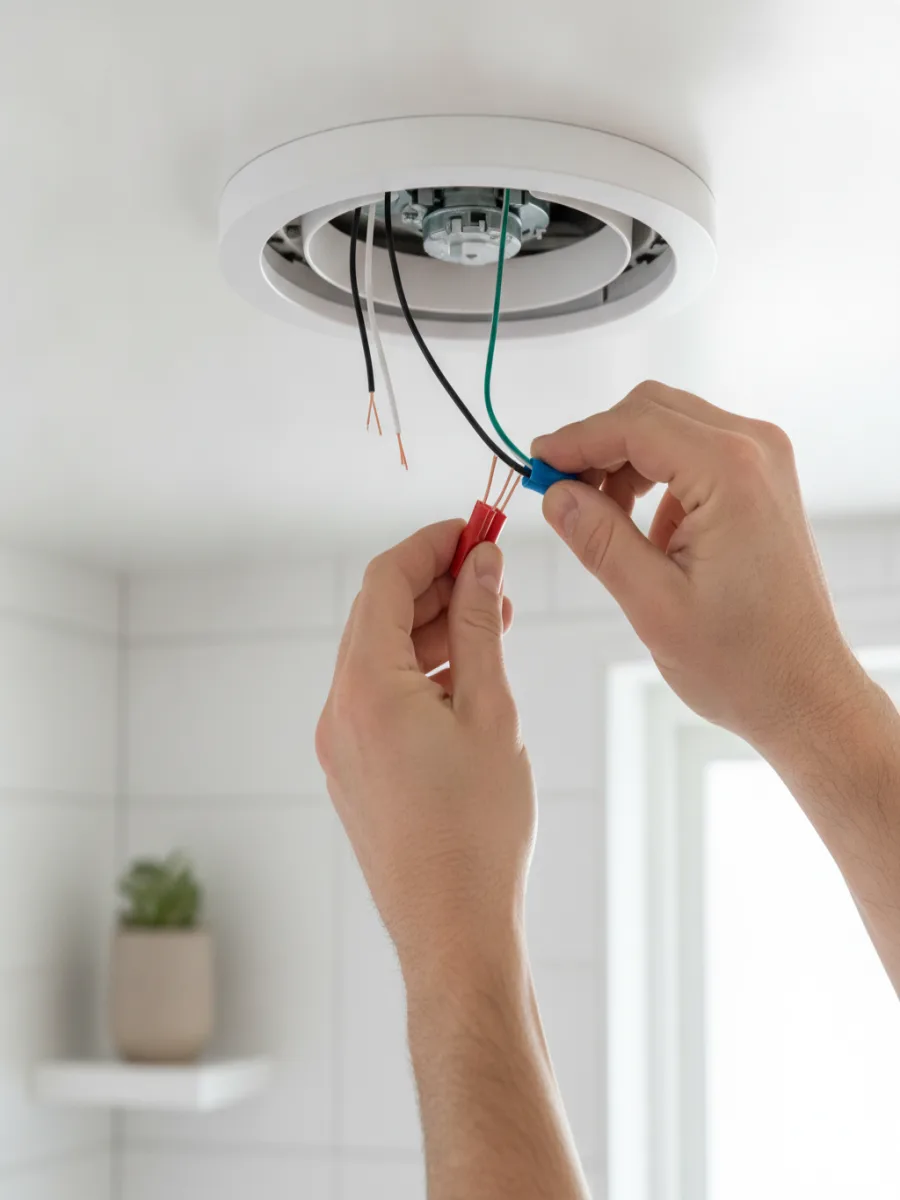
Outside, always, through a wall or roof cap, never into the attic or a wall cavity. Venting into the attic is the most common mistake homeowners run into, and it just moves the moisture problem instead of solving it. Warm, damp air gets dumped into the roof space, where it has nowhere to go and starts growing mold on the framing and insulation.
That mistake matters more here than it sounds. The marine-layer humidity that rolls in from La Jolla to Oceanside keeps San Diego bathrooms damper than the dry-climate reputation suggests, so an attic-vented fan is a mold problem waiting to happen in that coastal air. It’s also common in older San Diego homes and condos with windowless bathrooms, where the fan is doing the room’s only job of clearing moisture. California’s residential code requires every bathroom to have either an openable window or a mechanical exhaust fan, and a windowless bathroom must have a fan that vents outdoors.
Do you need a permit to install a bathroom exhaust fan?
A like-for-like replacement on existing wiring generally doesn’t need a permit. Adding a fan where none existed, running a new circuit, or cutting a new roof or wall vent usually does, because it’s new wiring and a new penetration. Our electrical permit guide breaks down which jobs cross that line.
How to pick the right fan: size and noise
Match the fan’s airflow to the room, and match the noise rating to how much you’ll actually notice it running. For a bathroom under 100 square feet, the sizing rule is roughly 1 CFM per square foot of floor space, with 50 CFM as a practical minimum. Bigger bathrooms, or ones with a separate shower and tub, need more airflow.
Noise is measured in sones, and it’s the difference between a fan you use and a fan you avoid. A builder-grade fan runs 3 to 4 sones and drones loud enough that people leave it off. A quiet modern fan runs under 1 sone and barely registers. In condos and townhomes with shared walls, a quiet ENERGY STAR-rated fan is worth the small upcharge. A humidity-sensing model solves the real problem behind most complaints: the fan is fine, but nobody remembers to run it, so it turns itself on and off instead. A bathroom exhaust fan is a different appliance than a whole-house fan, which cools the whole home rather than clearing moisture from one room.
Electrician or handyman: who installs a bathroom fan?
The electrical side of a bathroom fan is licensed electrician work: the circuit, the switch, new wire to a new fan location, wiring a fan and light combo on one or two switches, and any timer or humidity-sensing switch. A like-for-like swap on existing wiring can go either way, but new wiring or a new circuit makes it electrician territory.
At Bright Pro Electric, we connect San Diego homeowners with licensed electricians who handle fan and switch wiring across the full county. That covers new ceiling fan installation for the fan itself, outlet and switch installation for the timer or humidity-sensing switch, and electrical troubleshooting if your current fan trips a breaker, hums, or has gone dead. Homeowners in humid coastal pockets like Encinitas and La Jolla feel the marine-layer moisture problem first, since constant coastal humidity strains a weak or undersized fan.
Frequently asked questions
How much does it cost to replace a bathroom exhaust fan in San Diego?
$250 to $550 for a like-for-like replacement where the wiring and vent are already in place. Adding a fan to a bathroom that never had one runs $500 to $1,200 because of the new wiring, switch, and vent. A quiet or humidity-sensing upgrade lands in the $350 to $700 range.
Do I need an electrician for a bathroom exhaust fan?
For a new circuit, new wiring, or a fan in a new spot, yes, that’s licensed electrician work. A simple like-for-like swap on existing wiring can go either way, but the switch and circuit side is always an electrician’s job.
Does a bathroom exhaust fan need a permit in San Diego?
A like-for-like replacement on existing wiring usually doesn’t. Adding a new fan, a new circuit, or cutting a new roof or wall vent usually does, because it’s new wiring and a new penetration. Our electrical permit guide covers which jobs cross that line.
Can a bathroom fan vent into the attic?
No. It has to vent to the outside through a wall or roof cap. Venting into the attic is a code problem and it grows mold by dumping warm damp air into the roof space, which matters more in San Diego’s coastal humidity.
What size bathroom exhaust fan do I need?
For a bathroom under 100 square feet, match the CFM to the square footage, about 1 CFM per square foot, with 50 CFM as a practical floor. Larger bathrooms, or ones with a separate shower and tub, need more airflow.
Why is my bathroom fan so loud?
Loud fans are usually old builder-grade units rated at 3 to 4 sones. A modern quiet fan runs under 1 sone. If yours is loud, weak, or no longer clears the steam, electrical troubleshooting can confirm whether it’s the fan or the wiring. Replacing the fan is a licensed job when the circuit or the box has to change. Bright Pro Electric matches San Diego homeowners with licensed electricians. Use contact.