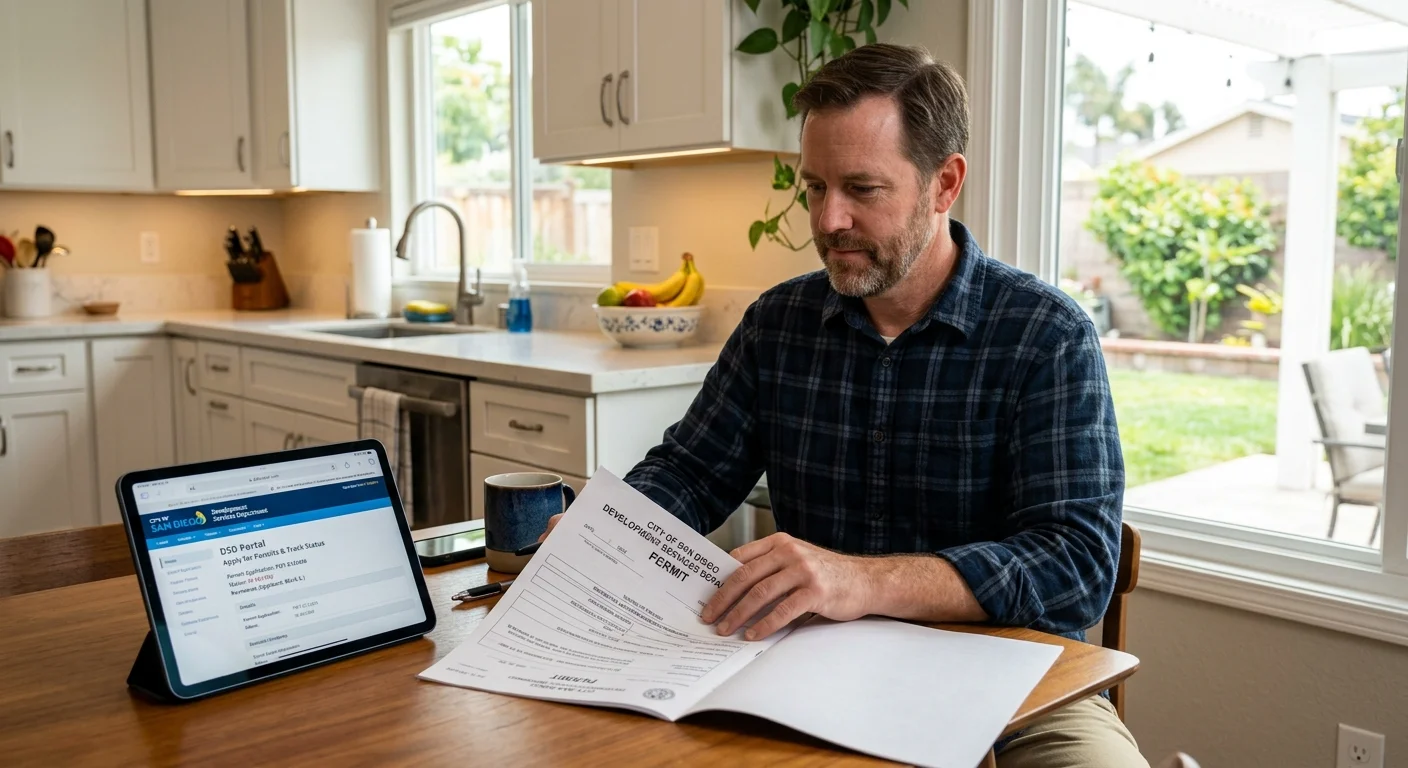
The City of San Diego publishes Simple (No-Plan) and Plan-required electrical permit tracks. Confirm the current path for the exact address and scope on San Diego Development Services. Do not treat this article as a same-day Simple-track quote. Published fees on this page stay parked.
TL;DR
- Send the address and scope to the current Development Services electrical permit page. Track assignment can change.
- Simple (No-Plan) is for work the City currently lists as over-the-counter. Plan-required is for work the City currently lists as needing plans.
- EV chargers, added circuits, and panel swaps are not automatically Simple. Ask DSD.
- Parked fee figures are examples, not a universal Simple-track price.
- In the City of San Diego a Simple electrical permit is $176.57 for a panel upgrade or the first five added circuits. Circuits six through ten are $52.39 each. A $12.16 mapping fee applies when plans or drawings are used for review. Confirm the current DSD schedule. Other jurisdictions set their own fees.
- A licensed electrician pulls the permit and knows which track your job falls into before work starts.
The two-track system, in plain English
San Diego, like most California jurisdictions, doesn’t treat every electrical permit the same way. Instead of one process for every job, the city’s Development Services Department routes applications into one of two tracks based on scope.
The Simple track, sometimes called No-Plan or over-the-counter, is for work the city considers standard and low-risk: it doesn’t change the structure of the home, doesn’t require engineered calculations beyond a straightforward load check, and uses common equipment installed in a common way. These get reviewed and issued the same day at the counter or through the online portal, no waiting on a plan checker.
The Plan-required track is for everything more involved: work tied to structural changes, commercial and multi-unit projects, large service upgrades that need engineered drawings, or anything the reviewing department flags as needing a closer look before it’s approved. These go through actual plan review, which adds real time to the front end of a project before work can even start.
Which residential jobs land in the Simple track
For most San Diego homeowners, the majority of common electrical projects are Simple permits:
- EV charger installation. A Level 2 charger is not automatically Simple. Where the panel already has room or gets a straightforward breaker addition, DSD may still put it on Simple. Confirm the address and scope on the current Development Services page. Our EV charger permit guide goes deeper into how the city evaluates EV-specific applications.
- Added circuits. New dedicated circuits for a spa, a large appliance, a home office, or a workshop, where the panel has available capacity, are often listed as Simple. Ask DSD. They are not automatically Simple.
- Most panel swaps. A 100-amp to 200-amp upgrade at the existing service location, without relocating the meter or touching the structure, is often Simple in City of San Diego homes. Confirm the track. It is not automatic.
- Like-for-like device replacements. Swapping an outlet, switch, or fixture at the same location often doesn’t need a permit at all, which is a separate category from Simple. Our general permit requirements guide covers that distinction in full.
Which jobs push into Plan review
Plan-required work usually involves one or more of these: a service upgrade combined with structural changes to the home, a panel relocation that requires new structural support or exterior work beyond a straightforward swap, commercial or tenant-improvement electrical work, service sizes beyond what standard residential equipment covers, or any project the reviewing department determines needs engineered drawings rather than a standard load calculation.
If your project started as a simple panel upgrade and grew to include moving the panel, relocating the meter, or coordinating with SDG&E for a new service drop location, it can shift from Simple to Plan-required partway through scoping. A licensed electrician should flag this during the initial assessment, before the permit application goes in, not after.
Fees and timelines by track
In the City of San Diego the published Simple permit fee is $176.57, and that one figure covers a panel upgrade to 200 amps, the first five added circuits, and rewiring or outlet relocation alike. Circuits six through ten are $52.39 each. A $12.16 mapping fee applies when plans or drawings are used for review. These fees are set by the issuing jurisdiction and can vary between cities.
Timeline is where the tracks really diverge. A Simple permit is often issued the same day, either at the counter or through an online portal submission, with an inspection scheduled once the work is complete. A Plan-required permit adds a review period before the permit is even issued, which can run from several days to a few weeks depending on the complexity of the drawings and how busy the plan-check queue is.
Who actually pulls the permit
For any electrical work beyond a like-for-like device swap, the licensed electrician doing the work pulls the permit, not the homeowner. This matters for two reasons: the electrician knows which track a specific job falls into before quoting the project, and permits pulled by an unlicensed party or skipped entirely create the same problems as unpermitted work generally, including complications at resale and potential issues with insurance claims. You can verify any electrician’s license through the CSLB license lookup before hiring.
North County cities run their own process
Everything above describes the City of San Diego’s Development Services process specifically. If your home is in Carlsbad, Encinitas, Oceanside, Vista, San Marcos, or Escondido, that city runs its own building division with its own fee schedule and, in some cases, its own version of a Simple versus Plan-required split. The general concept, minor standard work moving faster than complex or engineered work, holds across most jurisdictions, but the exact fee and timeline should be confirmed with that city’s building department rather than assumed from San Diego’s numbers. You can find the City of San Diego’s own process details on the Development Services permits page.
Frequently asked questions
Is a Simple permit the same as no permit at all?
No. A Simple permit is still a real permit, reviewed and issued by the city, and the work still gets inspected. It’s simpler because it skips engineered plan review, not because it skips oversight entirely. Like-for-like device replacements are the category that often doesn’t need a permit at all, which is a different thing from a Simple permit.
Will my EV charger installation need a Plan-required permit?
Ask DSD for the current track. Many Level 2 EV charger installs are listed as Simple when they are standard equipment on a standard circuit, but that is not automatic. It shifts toward Plan-required if the install requires a larger service upgrade with structural or service-entrance changes beyond a normal panel swap. Do not treat this article as the assignment.
How do I know in advance which track my panel upgrade will need?
Ask your electrician to do a load calculation and site assessment before the permit application goes in. A straightforward capacity upgrade at the existing panel location is often Simple. Anything involving relocating the panel, the meter, or the service entrance point is more likely to need Plan review. Confirm with DSD.
Does a Plan-required permit cost more than a Simple one?
Not necessarily by track alone, since fees scale with project value and scope rather than the review type directly. What Plan-required adds is time, not always a proportionally bigger fee, though projects that need Plan review also tend to be larger-scope jobs that cost more overall.
What happens if my project gets reclassified from Simple to Plan-required mid-process?
This happens when scope grows, most often when a panel upgrade turns into a panel relocation or a service entrance change. The application effectively restarts under the new track, which adds time. A thorough upfront assessment by your electrician is the best way to avoid this surprise.
When to call us
Figuring out which permit track applies before you apply saves real time on any electrical project. Licensed electricians typically run a load assessment before quoting panel upgrade or EV charger installation so you know the likely track and timeline before work starts, not after. Bright Pro Electric matches you with that electrician. It does not perform the assessment or pull the permit. Use contact. There is no same-day estimate promise.