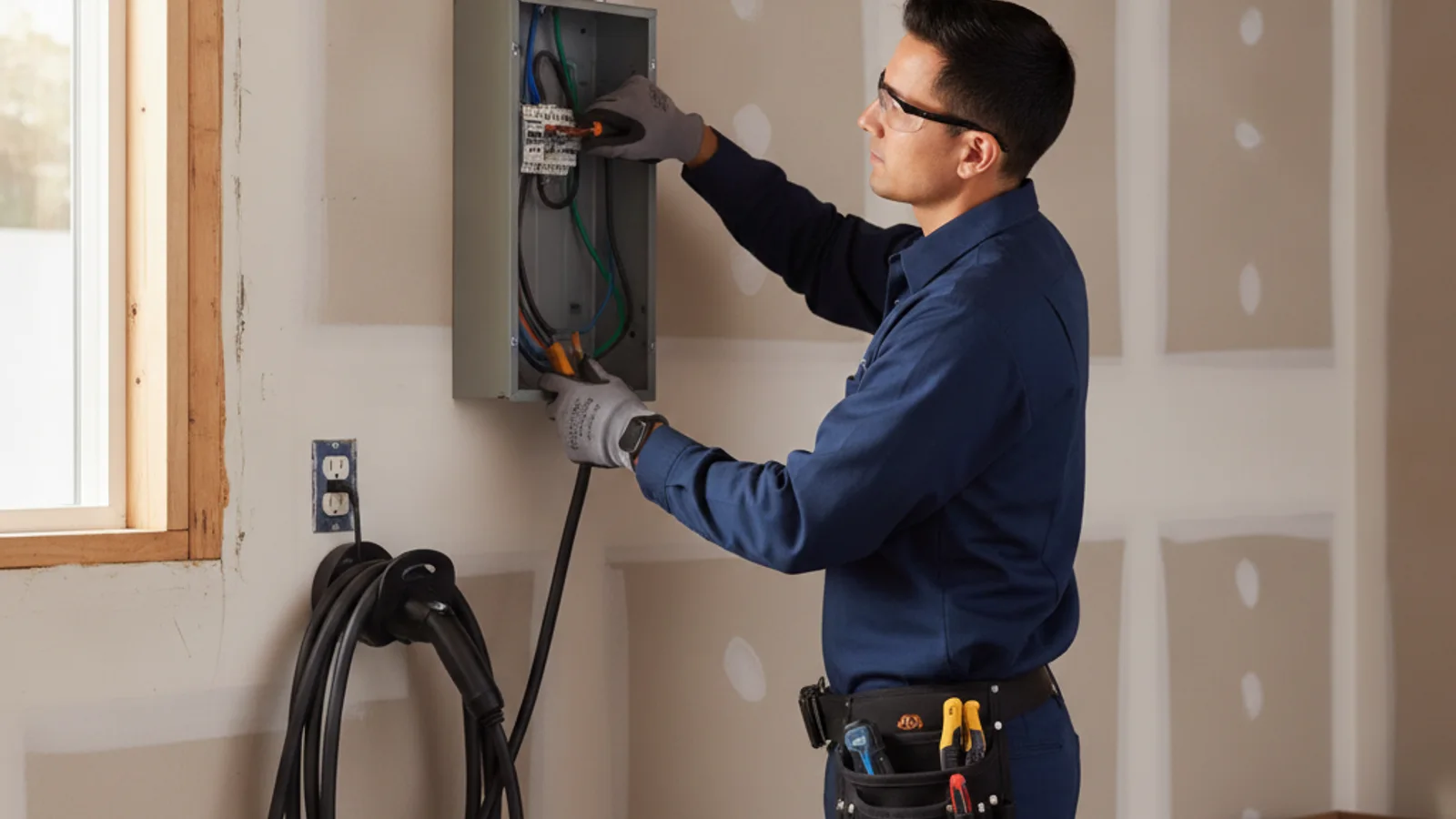
Published subpanel installation ranges on this page run $600 to $4,000 or more in San Diego. Distance still decides a lot of that. Keep detached-structure planning. Feeder size, grounding vs isolated neutrals, and the permit follow the existing service and the adopted code, not a four-wire slogan copied from a blog.
TL;DR
- An attached-garage subpanel with a short feeder runs $600-$1,000.
- A 100-amp indoor run runs $1,000-$1,500. A 125-amp unit or a long finished-wall run runs $1,500-$2,000.
- A detached structure that needs a buried feeder runs $2,000-$4,000 or more.
- A subpanel typically needs a four-wire feeder with separated neutrals and grounds when it is a separately derived or sub-fed panel under the adopted code. Confirm on the existing service.
- If the main panel is already full, you may need a service or panel upgrade before the subpanel goes in. That is a load calculation.
What a subpanel is and when you need one
A subpanel is a smaller distribution panel fed from your main panel, giving you more breaker spaces and power in a specific location. It doesn’t add capacity to the home. It redistributes the capacity you already have to where you need it.
Most San Diego homeowners reach for a subpanel in one of five situations. A detached garage, workshop, or ADU needs its own circuits without running a dozen separate wires back to the house. A home addition or kitchen remodel adds more circuits than the main panel has room for. A new EV charger plus other large loads fills the last open slots. A pool or spa equipment cluster needs several dedicated circuits in one spot. Or the main panel is simply out of physical space, even though the service has capacity to spare.
The key word is capacity. A subpanel only makes sense when your main service can support the added load. If your 100-amp panel is already near its limit, adding a subpanel doesn’t solve the problem, and an electrician will run a load calculation first. Our 200-amp electrical panel guide explains how to tell whether your service has room to grow.
What a subpanel installation costs in San Diego
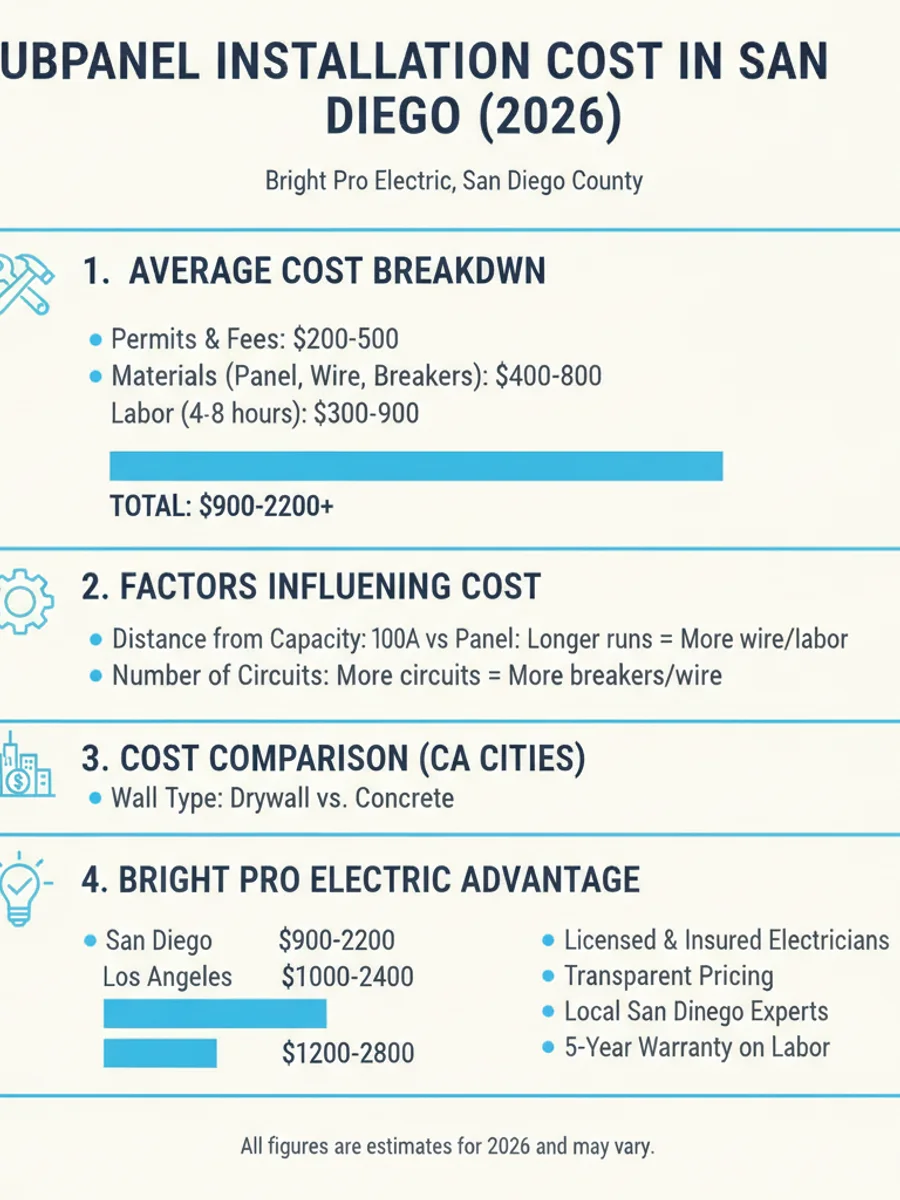
Price tracks three things: the amperage of the subpanel, the distance the feeder runs, and whether that run is a simple indoor pull or a trench to a separate building. Here’s how the common scenarios break down.
| Scenario | Typical cost |
|---|---|
| Small subpanel (60A), short feeder, attached garage | $600-$1,000 |
| Standard subpanel (100A), moderate indoor run | $1,000-$1,500 |
| Larger subpanel (125A) or long finished-wall run | $1,500-$2,000 |
| Detached garage, workshop, or ADU with buried feeder | $2,000-$4,000+ |
| Main panel upgrade required first | add $2,000-$4,000 |
The floor of that range is a subpanel bolted a few feet from the main panel, fed by a short length of cable through an unfinished garage wall. The ceiling is a subpanel in a detached structure, where the feeder has to be sized up for voltage drop, buried in conduit at code depth, and trenched across the yard. Everything else lands in between.
The grounding rule that trips up most subpanel jobs
Here’s the single detail that separates a code-compliant subpanel from a dangerous one: in a subpanel, the neutrals and grounds must be kept separate. That’s the opposite of how the main panel is wired, and it’s the mistake handymen and DIYers get wrong most often.
A subpanel is fed by a four-wire feeder: two hot conductors, a neutral, and a separate equipment ground. Inside the subpanel, the neutral bar has to float, meaning it can’t touch the metal enclosure. The grounds land on their own bonded bar. If the neutral and ground are bonded together at the subpanel, current flows on both the neutral and the ground path at the same time. That energizes metal that’s supposed to be safe to touch, and it’s a shock and fire hazard that an inspector will fail on sight.
Bonding happens once, at the main panel or service disconnect, and never again downstream. This is why a subpanel install isn’t a place to save money with a general handyman. In California, only a licensed electrician can legally pull the permit for new panel work, and the feeder sizing, grounding electrode, and bar separation all get inspected before the panel is energized.
What actually drives the price
Four factors move a subpanel quote more than anything else.
Distance and voltage drop come first. A short run inside a garage uses smaller, cheaper wire. A long run to a detached building forces the electrician to size the feeder up a gauge or two to keep voltage drop in check, and larger copper isn’t cheap.
Trenching is the big one for detached structures. Burying a feeder in conduit at code depth across a yard adds labor, permits, and sometimes concrete cutting if a driveway is in the way. That’s what pushes an ADU or workshop subpanel toward the top of the range.
Amperage matters next. A 60-amp subpanel for a few garage circuits costs less than a 125-amp subpanel built to carry an EV charger, a heat pump, and a workshop at once. Size it to the real load, not to a round number.
Main panel capacity is the wildcard. If the panel is full or already near its limit, the subpanel can’t go in until the service is upgraded. Our electrical panel upgrade cost guide covers what that step adds. When an EV charger is the reason for the subpanel, our EV charger installation cost guide explains how the two jobs often get bid together.
Do you need a permit for a subpanel in San Diego?
Yes. A subpanel is new panel and feeder work, and California requires a permit for it, every time. San Diego inspects the feeder sizing, the grounding electrode connection, and the neutral-to-ground separation before the panel is energized.
A permit protects you at resale, too. Unpermitted panel work shows up during a home inspection and can stall a sale or dent your insurance coverage. Our San Diego electrical permit guide walks through when a permit is required and what the inspection covers. A licensed electrician pulls the permit as part of the job, so you’re not the one standing in line at the counter.
Frequently asked questions
How much does a subpanel installation cost in San Diego?
A subpanel next to the main panel with a short feeder costs $600 to $1,000. A 100-amp indoor run runs $1,000 to $1,500. A 125-amp subpanel or a long run through finished walls runs $1,500 to $2,000. A detached garage, workshop, or ADU that needs a buried feeder runs $2,000 to $4,000 or more, mostly because of trenching.
What’s the difference between a subpanel and a panel upgrade?
A panel upgrade replaces your main panel and often raises the home’s service amperage, say from 100 to 200 amps. A subpanel adds a secondary panel fed from the main, giving you more breaker spaces in a new location without changing the service size. You upgrade when you’re out of capacity, and you add a subpanel when you’re out of space but still have capacity.
Can I install a subpanel myself in California?
Not legally for a permitted install. California requires a licensed electrician to pull the permit for new panel and feeder work, and the neutral-to-ground separation and feeder sizing get inspected. A subpanel wired wrong is a genuine shock and fire hazard, which is why this is one of the last jobs to hand a handyman.
Why do the neutral and ground have to be separated in a subpanel?
Because the neutral and ground are only bonded once, at the main service. If they’re bonded again at the subpanel, normal current splits onto the ground path and energizes metal enclosures that should be safe to touch. Keeping the neutral bar isolated and the grounds on their own bar is what keeps a fault current on the wire instead of on you.
Do I need a subpanel for an EV charger?
Sometimes. If your main panel has an open slot and spare capacity, a single dedicated circuit is enough. But if the panel is full, or you’re adding a charger plus other big loads, a subpanel is often cheaper and cleaner than repeatedly fishing new circuits from a crowded main panel.
How many circuits can a subpanel hold?
It depends on the panel’s slot count and its amperage rating. A 60-amp subpanel typically holds a handful of circuits for a garage or shed. A 100-125 amp subpanel can carry many more, enough for a workshop, an ADU, or a cluster of large loads. The feeder to the subpanel has to be sized for the total load, not just the slot count.
When to call us
A subpanel install combines live main-panel work, correct feeder sizing, and a neutral-to-ground separation rule that’s easy to get wrong without seeing the setup in person. This isn’t a DIY project or general handyman work. California law requires a licensed electrician for new panel and feeder installs, and a miswired subpanel can void a homeowner’s insurance claim after a fault. You can verify any contractor’s license at the CSLB license check tool before hiring. Bright Pro Electric connects San Diego homeowners, including an electrician in Scripps Ranch and an electrician in Poway, with licensed electricians for subpanel and panel upgrade work. Our outlet and switch installation service covers the dedicated circuits a new subpanel feeds. Get in touch to be matched. There is no same-day estimate and no dispatch guarantee.