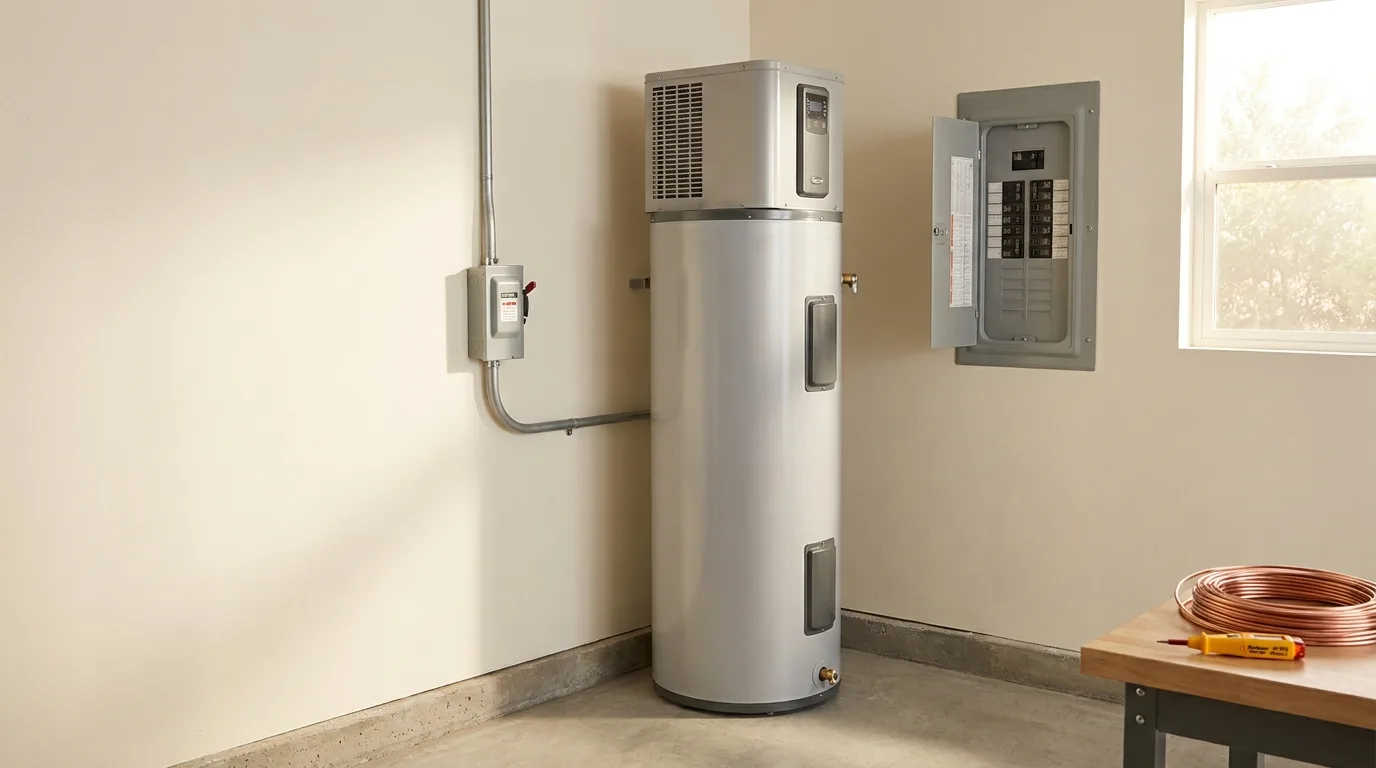
Swapping a gas water heater for a heat pump water heater is electrician work as much as plumber work. Read the selected unit’s nameplate and installation instructions before anyone states voltage, breaker size, conductor size, or load-management needs. Many listed hybrid tanks use a dedicated 240V, 30-amp circuit. That is an example that has to match the nameplate. Running a new circuit costs about $600 to $1,800 in San Diego on this page’s parked figures. Whether the panel can take the added load is a calculation, not a default 30-amp add. Some 120V models are listed to use an existing receptacle. Confirm that listing before skipping new wiring.
TL;DR
- Copy voltage, breaker, conductor, and disconnect requirements from the selected unit’s nameplate and installation instructions. A dedicated 240V, 30-amp circuit with a double-pole breaker and 10-gauge copper is a common hybrid example, not a universal rule.
- Running that new circuit runs about $600 to $1,800 in San Diego, depending on how far the tank sits from the panel and how easy the run is.
- Panel capacity is a load calculation. An older 100-amp panel already carrying AC or an EV charger may need a subpanel, a 200-amp upgrade, or a listed load-management device first.
- Hybrid backup elements are often listed around 4,500 watts. Size the circuit from the nameplate, not from compressor watts.
- 120V plug-in models exist. Shared-circuit versions listed at 6 amps or less may use an existing outlet when the instructions allow it. Recovery is slower.
- The plumber sets the tank and the drain; the electrician runs the circuit, checks the panel, and pulls the electrical permit when that is in their scope. Bright Pro Electric matches. It does not pull permits.
What electrical does a heat pump water heater need?
Start with the carton: nameplate voltage, maximum overcurrent protection, conductor material and size, disconnect, and whether the circuit must be dedicated. A common listed hybrid is a dedicated 240V, 30-amp circuit with a double-pole breaker and 10-gauge copper. Use that only if it matches the instructions. In a San Diego garage that often means THHN in conduit to a disconnect next to the tank when the listing calls for it. Inside a finished laundry room, NM-B is only acceptable if the listing and the adopted code allow it for that location.
The compressor draw is not what sizes the branch circuit. Hybrid units often list a resistance backup around 4,500 watts. The electrician sizes from the nameplate and Article 422 or 220 as adopted, not from “it barely uses electricity.”
A gas tank may have no 240V home run. Going to a 240V heat pump means a new circuit when the listing requires one, and a load calculation before the breaker is added. See when you need a dedicated circuit.
How much does it cost to wire a heat pump water heater in San Diego?
The wiring itself is usually the smaller number. Here’s what the electrical side runs across San Diego County:
| Scope | Typical San Diego cost |
|---|---|
| New 240V, 30-amp circuit, garage tank near the panel | $600 to $1,100 |
| Circuit with a long run, conduit, or fishing a finished wall | $1,100 to $1,800 |
| Subpanel added to make room for the new circuit | $1,200 to $2,200 |
| 200-amp panel upgrade if the main panel is full | $2,000 to $4,500 |
| 120V plug-in model on an existing outlet | No new circuit needed |
The tank and its plumbing are separate from these numbers, and the installer or plumber handles that side. What moves the electrical cost is distance and access: a tank sitting three feet from the panel in an open garage is a quick job, while a run across the house through finished walls takes longer. The bigger swing is whether the panel can take the circuit as-is or needs work first, which is the next question every honest quote answers before it prices the job. For the full picture on labor rates, see how much an electrician costs in San Diego.
Will my electrical panel handle a heat pump water heater?
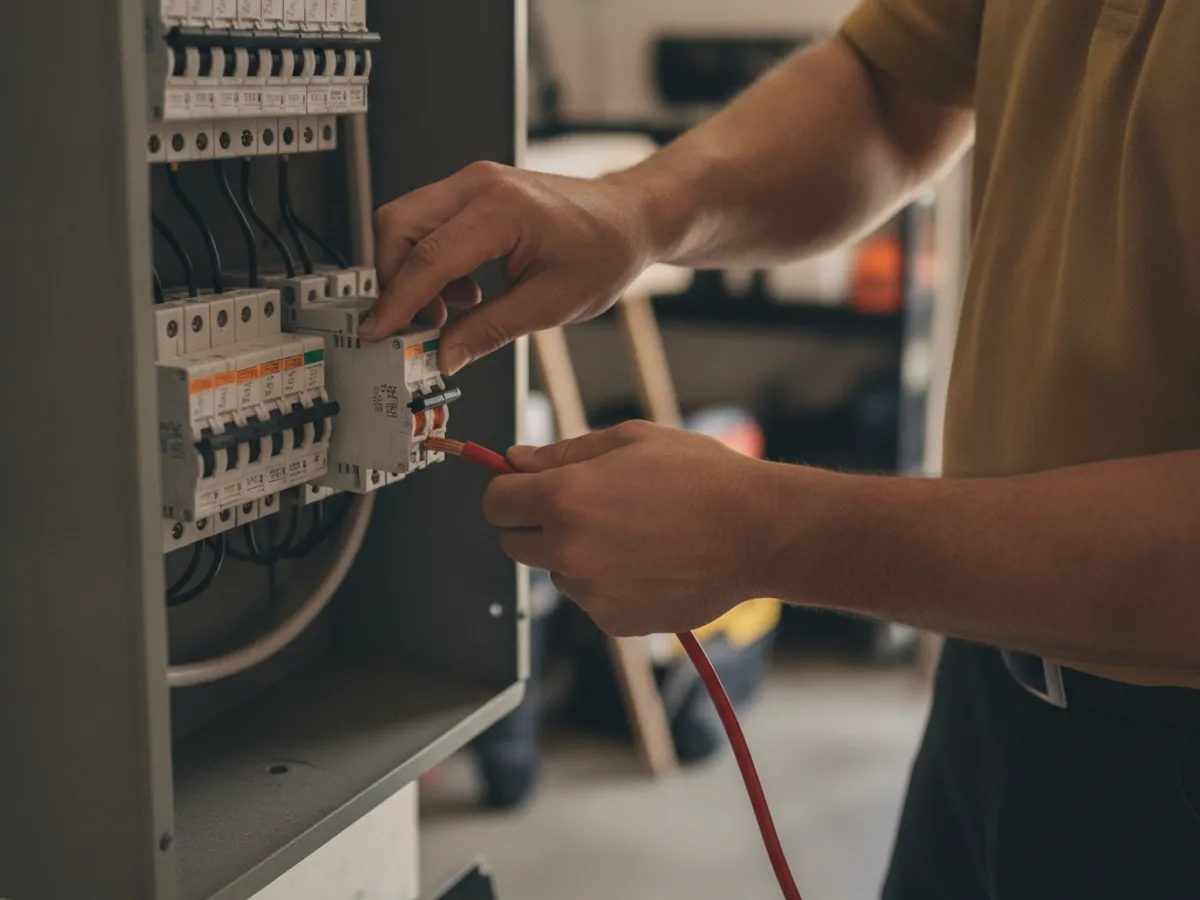
This is the real question, and the electrician should look at the panel and the nameplate before anyone orders a tank. Adding a 30-amp, 240V circuit is only the load if that is what the unit lists. A 1970s house on a 100-amp panel that already runs central AC and maybe an EV charger may not have headroom or a free double-pole slot.
An electrician settles it with a load calculation. If the panel has room, the circuit goes in. If it is tight, paths include a subpanel, a 200-amp service upgrade, or a listed load management device when the instructions and the utility allow sharing. See when to upgrade your electrical panel and electrical panel upgrade costs. Homes stacking an EV charger and a heat pump water heater hit this first; see the San Diego panel bottleneck.
Can I get a heat pump water heater without new wiring?
Yes, when the selected model is listed that way. Some manufacturers make 120V plug-in heat pump water heaters. Shared-circuit versions listed at 6 amps or less may plug into an existing 15-amp receptacle only if the installation instructions allow sharing. Dedicated 120V models that want their own circuit are a different listing. Confirm both before skipping a 240V home run.
Recovery speed follows the listing. A 120V unit without a large resistance element reheats slower. Raise that with the electrician before the tank is ordered, because it decides whether you are permitting a new circuit or confirming an outlet.
A new 240V circuit is typically permitted. The water-heater changeout often needs its own permit. A permitted, inspected install is what rebate programs usually require. Bright Pro Electric does not pull those permits. A licensed C-10 electrician handles the electrical permit when it is in the written scope.
On rebates, confirm the current SDG&E, TECH, or IRS page the week you buy. The federal 25C credit that used to cover heat pump water heaters expired at the end of 2025 and is not available for 2026 installs on this site’s last check. Statewide TECH funds have been reserved at times. Do not count on a figure from an old article. For related program tracking, see the EV charger rebate guide.
Who installs it, an electrician or a plumber?
Both, and they handle different halves. The plumber or water heater installer sets the tank, runs the water lines, plumbs the condensate drain the heat pump needs, and handles the temperature-and-pressure relief. The electrician runs the circuit the nameplate calls for, ties it into the panel, does the load calculation, and pulls the electrical permit when that is in their written scope. On a 120V plug-in swap, the electrician confirms the outlet and circuit against the listing.
Location still has to match the installation instructions: air volume, condensate drain, and noise. A garage is a common fit in San Diego, not a requirement. Running a new line is outlet and circuit matching; panel work is panel upgrade.
Permits and rebates in San Diego
A new 240V circuit is typically permitted. The water-heater changeout often needs its own permit. Confirm with the jurisdiction. A permitted, inspected install is what most rebate programs require. It does not decide an insurance claim. Bright Pro Electric does not pull permits.
On rebates, confirm the current program page the week you buy. The federal 25C tax credit that used to cover heat pump water heaters expired at the end of 2025 and is not available for 2026 installs on this site’s last check. California TECH and utility funds change. See the EV charger rebate guide for how we point readers at live program pages.
Frequently asked questions
Does a heat pump water heater need a 240V circuit?
Copy it from the nameplate. Many listed hybrids use a dedicated 240V, 30-amp circuit on a double-pole breaker with 10-gauge copper. The backup element is often listed around 4,500 watts. 120V plug-in models follow a different listing.
How much does it cost to run a circuit for a heat pump water heater in San Diego?
The electrical alone runs about $600 to $1,800 in San Diego on this page. A garage tank sitting close to the panel is on the low end, around $600 to $1,100. A long run, conduit, or fishing a finished wall uses the $1,100 to $1,800 band. If the panel is full and needs a subpanel or a 200-amp upgrade first, that adds $1,200 to $4,500. The tank and plumbing are priced separately.
Will a heat pump water heater overload my electrical panel?
It can. An electrician runs a load calculation against the nameplate, not a default 4,500-watt add. If the panel is tight, paths include a subpanel, a 200-amp upgrade, or a listed load-management device when the instructions allow sharing.
Is there a heat pump water heater that doesn’t need new wiring?
Yes, when the model is listed for it. Shared-circuit 120V units listed at 6 amps or less may use an existing 15-amp receptacle only if the installation instructions allow sharing. Recovery is slower.
Who runs the electrical for a heat pump water heater, an electrician or a plumber?
Both trades are involved. The plumber or installer sets the tank, water lines, and condensate drain. A licensed electrician runs the circuit the nameplate calls for, does the load calculation, and pulls the electrical permit when that is in their written scope. Bright Pro Electric matches you with that electrician. It does not pull the permit or run the circuit. Hours are Monday through Saturday, 7am to 7pm. After hours, leave a message. Use the contact page. See the panel upgrade matching page. For related planning, check 240V circuit installation costs and electrical panel upgrade costs in San Diego.