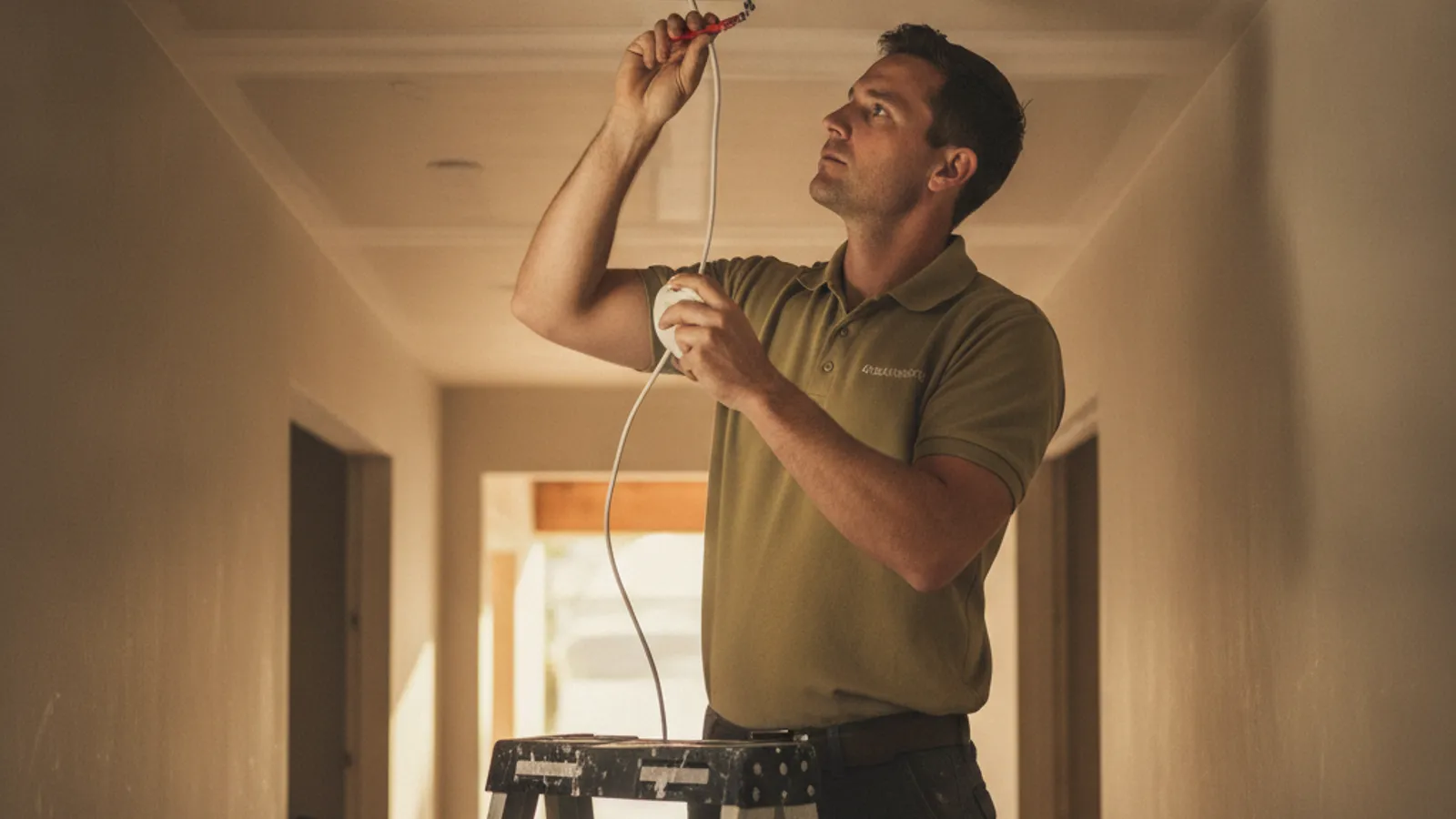
Smoke-alarm rules are not one sentence. Point-of-sale “working alarms” is a transfer rule. Hardwired, interconnected alarms are a residential-code rule that applies when the adopted CRC/CBC trigger and the actual permitted scope meet that threshold. Confirm the currently adopted residential code and the permit description for that job. Opening framing behind an alarm can be a trigger. A like-for-like device swap on a closed ceiling may not be. In San Diego, a listed add-on typically runs $400 to $1,100 on a permitted panel upgrade or rewire, or $900 to $2,400 as a stand-alone retrofit for a typical three- or four-bedroom home. Park those dollars.
If a smoke or CO alarm is sounding because of fire, or you see smoke, leave. Call 911 from outside. Do not wait on a contractor match. Bright Pro Electric hours are Monday through Saturday, 7am to 7pm. After hours, leave a message. There is no 24/7 live desk.
Homeowners often hear about this mid-project when an inspector comments on alarms. Ask before rough-in. An ADU is a different permitted scope. This page does not edit that article.
Does California actually require interconnected smoke detectors?
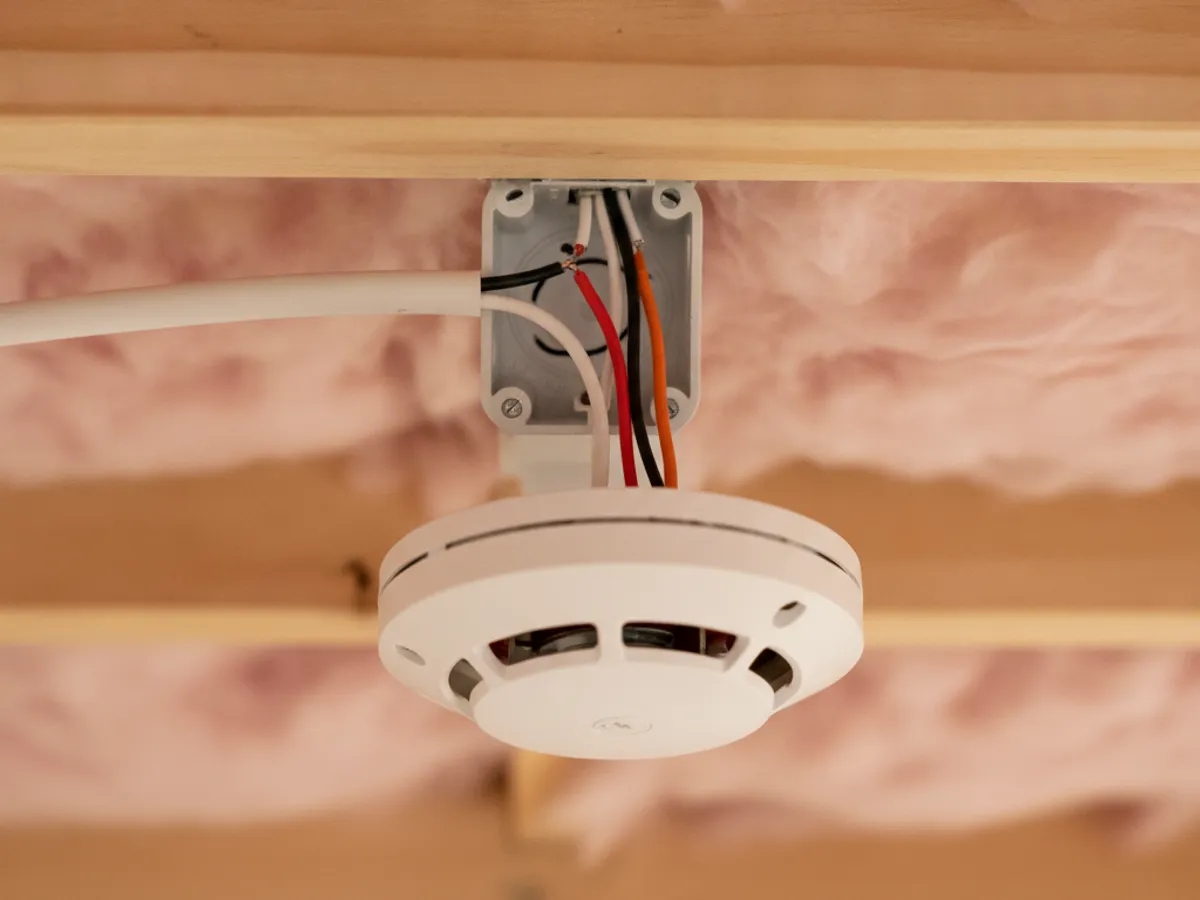
Yes. California’s residential building code, which follows the smoke alarm provisions in Section R314 of the model residential code, requires a smoke alarm in every bedroom, one in the hallway or area immediately outside each group of bedrooms, and one on every additional level of the home. All of them have to be interconnected, meaning if one alarm senses smoke, every alarm in the house sounds, not just the one nearest the fire.
This isn’t new construction only. It applies to existing homes the moment a qualifying permit is pulled, which is the part most San Diego homeowners don’t expect.
What kind of electrical work actually triggers the upgrade?
The rule turns on one question: does the permitted work expose the wall or ceiling finish behind your existing smoke alarms? In practice, that means:
- Whole-home rewires almost always trigger it. Once the ceiling is opened to fish new Romex, running one more interconnect wire between alarms is a small add.
- Panel upgrades sometimes trigger it, depending on whether the scope includes opening walls beyond the panel location itself.
- Room additions and ADUs trigger it for the affected area, and often for the whole home if the inspector treats the addition as connected to the existing structure.
- A simple like-for-like repair, such as swapping one outlet or replacing a single breaker, usually doesn’t expose enough framing to trigger a whole-house upgrade.
The building inspector makes the final call at rough-in, based on how much of the framing is actually open during your specific job. A licensed electrician who works San Diego County inspections can usually tell you before the quote whether the planned scope crosses that line. Bright Pro Electric matches. It does not pull the permit.
How much does it cost to add interconnected smoke detectors in San Diego?
The cost depends almost entirely on whether the walls are already open for other work.
| Scenario | Typical cost | Why |
|---|---|---|
| Bundled with a permitted rewire or panel upgrade | $400–$1,100 for a whole home | Framing is already exposed; it’s mostly units and interconnect wire, not labor to open walls |
| Stand-alone retrofit, no other permit work | $900–$2,400 for a whole home | Wire has to be fished through finished walls and attic space from scratch |
| Per additional hardwired, interconnected alarm | $150–$300 installed | Covers the unit, mounting, and tying into the existing interconnect run |
| Smart interconnected alarm (Nest Protect, First Alert Onelink) upgrade | $50–$100 more per unit than a basic hardwired alarm | Wiring is the same; the unit itself costs more |
A single-story three-bedroom home typically lands at the low end of these ranges, needing four alarms total: one per bedroom and one in the hallway outside the sleeping area. A two-story four-bedroom home with bedrooms on both levels usually needs six or seven, which pushes toward the higher end.
Can you use battery-only smoke detectors instead?
Only if no qualifying permit has been pulled. An existing San Diego home with battery-only stand-alone alarms is not automatically forced to upgrade. The requirement activates the moment a permit exposes the framing, not on a fixed schedule.
Separately, California’s point-of-sale law requires every home to have working smoke alarms before it closes escrow, but that rule is about function, not interconnection. A seller can pass that inspection with battery-only units still in place. The interconnection requirement is a permit trigger, not a sale trigger.
What happens if you skip the upgrade during a permitted job?
The final inspection fails until the remaining items pass. San Diego’s Development Services Department and the county building inspectors check smoke alarm compliance as part of the same rough-in and final walkthrough that covers wiring, panel, and grounding. A failed final means the permit stays open. This page does not claim an insurance or resale outcome.
Frequently asked questions
Do all smoke detectors in a house need to be interconnected in California?
Only once a qualifying permit exposes the wall or ceiling framing the alarms are wired into. At that point, every smoke alarm in the home has to be upgraded to hardwired and interconnected, not just the ones in the room where work is happening. Homes with no active permit aren’t required to retrofit on a fixed timeline.
Does a panel upgrade require interconnected smoke detectors?
Sometimes. It depends on how much wall or ceiling framing the specific panel job opens up. A straightforward panel swap in the garage often doesn’t trigger it. A panel upgrade paired with a sub-panel run through the attic or walls usually does. The inspector confirms this at rough-in, and a licensed electrician can usually tell you in advance based on the planned scope.
How many smoke detectors does a three-bedroom house need in California?
A single-story three-bedroom home typically needs four: one inside each bedroom and one in the hallway or area immediately outside the sleeping area. Add one more per additional story. A two-story home with bedrooms upstairs generally needs a hallway alarm on each level plus a common-area alarm downstairs.
Can smart smoke detectors replace basic interconnected ones?
Yes. Smart interconnected alarms such as Nest Protect or First Alert Onelink satisfy the same hardwired interconnection requirement and add phone alerts, self-testing, and carbon monoxide sensing in the combo models. The wiring work is identical to a basic hardwired alarm. Budget $50 to $100 more per unit for the smart hardware.
Do smoke detectors need to be replaced when you sell a house in California?
California’s point-of-sale law requires every home to have operable smoke alarms in the required locations before closing, but it doesn’t require interconnection unless a qualifying permit triggered that upgrade separately. A seller with working battery-only stand-alone alarms usually satisfies the sale requirement, though many buyers’ inspectors flag old or expired units regardless.
Related guides
For the fuller picture of which projects require a permit in San Diego in the first place, see when electrical work needs a permit. If a panel upgrade is what’s opening your walls, our panel upgrade cost guide breaks down what else is in that price. Planning a whole-home rewire, which is the project most likely to trigger a full smoke alarm upgrade, see what it costs to rewire a house in San Diego. And if an ADU is the permit in question, ADU electrical requirements in San Diego covers the subpanel and load calculation side of that project.
Service area and scheduling
Bright Pro Electric matches San Diego homeowners with licensed, insured electricians who can tell you before the quote whether a permitted panel upgrade or electrical troubleshooting scope will trigger a smoke-alarm upgrade, including older housing stock in La Mesa where pre-1990 wiring makes this trigger especially common. Bright Pro does not install the alarms or pull the permit. See the full list of cities served or get in touch to get matched.