An outdoor GFCI outlet can fail once or keep cutting power. Before calling, note what was plugged in, what else stopped working, and whether you can see moisture or damage. Those details help a licensed electrician begin with the right part of the system.
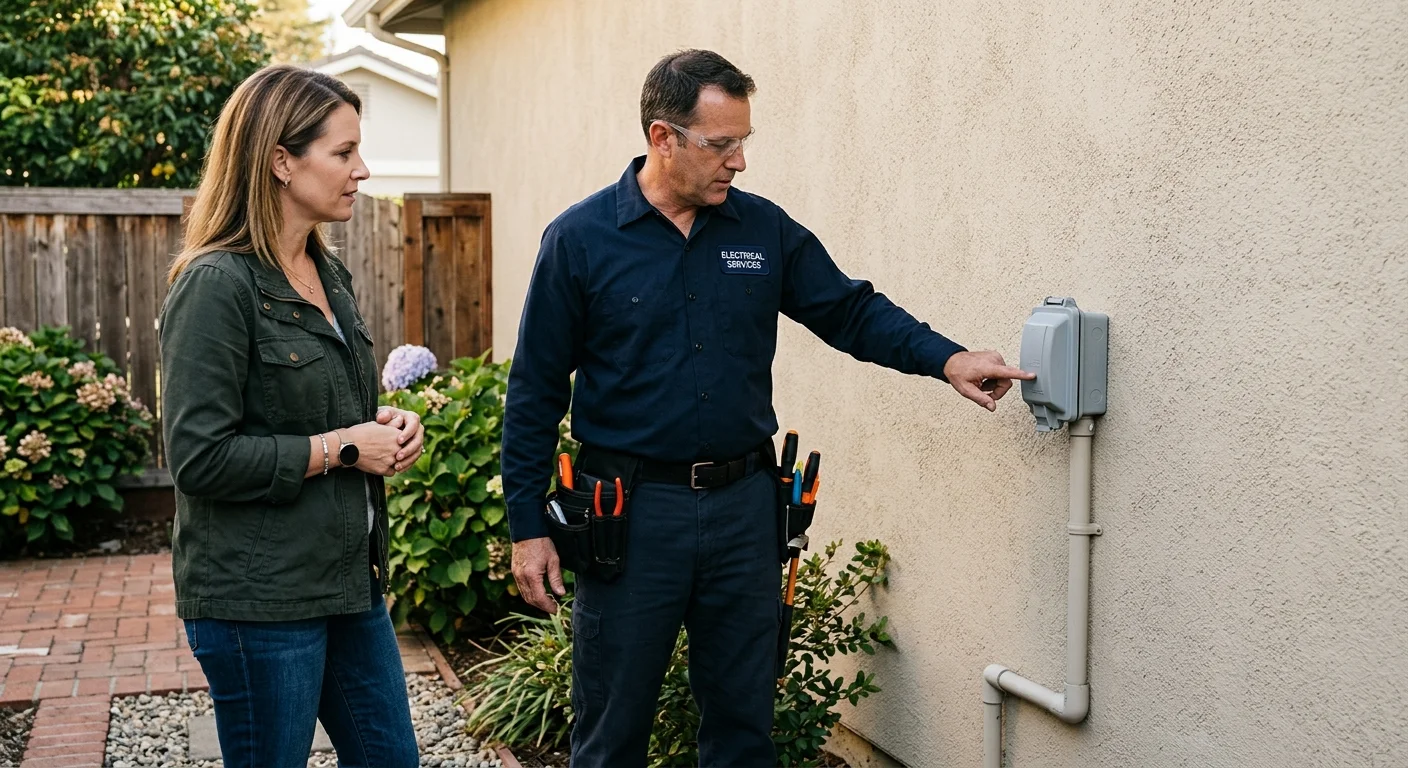
Start with what was plugged in when power stopped
The first useful clue is what changed when the power stopped. Write down the connected item before moving or testing anything. It might have been patio lighting, a power tool, holiday lights, a grill accessory, or another outdoor device.
Record what the item was doing at that moment. Did the power stop when someone switched it on? Had it already been running? Was the outlet unused when you noticed the problem? If several items were connected, list each one.
Also note any extension cord, power strip, splitter, timer, or adapter in use. You don’t need to decide which item caused the problem. That conclusion requires an actual diagnosis.
Don’t move a suspect item to another receptacle as an experiment. This article isn’t a reset or testing procedure. If the area is dry and you can observe it without touching the outlet, take a photo of the connected equipment, its plug, and the closed outlet cover.
A useful report sounds like this: “The patio outlet stopped while the landscape lights were running, and nothing else was connected.” That’s clearer than saying the outlet randomly died.
If the outlet has already been reset more than once, include that detail. Note whether it stayed on briefly or remained off. Don’t repeat the process just to create a better timeline. The electrician can decide what controlled testing is appropriate.
Separate one dead outlet from a wider circuit problem
An outside outlet that stopped working may be the only visible symptom. It may also be part of a wider loss of power. You don’t need to determine how the wiring is arranged, but you can describe the affected locations.
Make a simple map based on what was already in use. Note whether nearby exterior receptacles still had power. Include anything you noticed in the garage, patio, side yard, laundry area, or adjoining room. Record affected lights or equipment without operating them for testing.
Don’t plug devices into dead receptacles to build this map. Don’t remove wall plates or open electrical equipment. The goal is observation, not diagnosis.
Location names matter. “The rear patio outlet is dead, but the garage door opener remained on” gives the electrician a defined starting point. “Several outlets are out” leaves important boundaries unclear.
If multiple parts of the property lost power, check SDG&E for a reported utility outage at the address. A utility notice doesn’t explain an individual outlet problem, but it gives you another relevant detail to share.
When contacting an outdoor outlet electrician, describe whether the problem appears limited or widespread. Our electrical troubleshooting service covers diagnosis when the source isn’t apparent. A location map helps the matched pro understand the reported scope before discussing repair options.
Note moisture, damage, or repeated tripping without opening anything
Look at the outlet area without touching it. Record visible water droplets, staining, a cracked face, a loose cover, discoloration, or damage around the box. Keep the cover closed.
Also write down what happened nearby. Recent rain, irrigation, pressure washing, pool activity, or patio cleaning may belong in the timeline. These observations don’t prove why the outlet stopped. They tell the electrician what conditions were present.
Don’t remove the cover to look behind it. Don’t insert a tool, wipe inside the opening, or blow air into the outlet. Leave internal inspection and electrical testing to a licensed professional.
Repeated tripping deserves its own note. Record how many times you observed it and what was connected each time. If nothing was plugged in during one event, say that. Don’t reconnect equipment merely to reproduce the symptom.
Use the same hands-off checklist throughout San Diego County. It works for a Point Loma patio, a Chula Vista balcony, or a Poway yard. The property description changes, but the homeowner’s job stays limited to reporting visible conditions and the sequence of events.
This situation is different from planning a new receptacle. Our outdoor outlet installation guide explains the questions involved when adding or relocating an outlet. A tripping outlet needs diagnosis before anyone assumes a new installation will solve the problem.
What an electrician checks during the diagnosis
The electrician starts with your symptom history and the affected-area map. That helps organize the inspection around the reported problem.
Depending on the conditions, the electrician may inspect the receptacle, box, cover, connected equipment, wiring connections, breaker, and related circuit points. Some checks require equipment to be de-energized, opened, or tested. Those steps belong to the professional performing the diagnosis.
The inspection should answer several practical questions. Is the reported problem at the outdoor outlet, the connected equipment, another point on the circuit, or the electrical panel? Is there visible damage? Does the proposed correction involve one component or a wider section of the circuit?
Ask the electrician to explain the diagnosed cause and proposed scope. A reset that happens to hold doesn’t provide that explanation. You should understand what was inspected, what work is recommended, and whether another trade needs to assess connected equipment.
California’s minor-work exemption doesn’t rescue most electrical work from licensing requirements. Most electrical installation, alteration, or extension requires a licensed contractor regardless of price. Work requiring a building permit also requires a license at any dollar amount. You can verify the contractor through the CSLB license lookup.
Bright Pro Electric doesn’t inspect outlets or perform repairs. We connect homeowners with licensed, independent local electricians who assess the property and propose the work.
When repair and replacement become different scopes
“Repair” and “replacement” can describe different proposals after diagnosis. One quote might address an existing connection or another correctable condition. Another might include replacing the receptacle, enclosure, cover, or additional affected components. The written scope matters more than the label.
If the connected equipment needs separate service, replacing the outlet may not address that equipment. If the electrician finds damage beyond the receptacle, a single-device replacement may not cover the full correction. The diagnosis should come before the choice.
Our GFCI outlet replacement guide explains how to approach that service decision. For a new location, relocation, or a changed outlet setup, see our outlet and switch installation service.
Permitting depends on the exact work and property address. Inside the City of San Diego, the authority is the Development Services Department. In unincorporated communities such as Ramona, Lakeside, Fallbrook, Alpine, and Bonsall, it’s San Diego County Planning & Development Services. Poway has its own Building Services division and fee schedule.
A universal permit trigger for every outdoor GFCI repair or replacement couldn’t be confirmed from the approved evidence. Ask the matched electrician and the correct building authority about the proposed scope. No verified countywide price exists for this repair either, so request a written quote based on the diagnosis.
When to call us
Call when the tripping repeats, the outdoor outlet stays dead, or you see moisture or damage. Call us at (858) 988-5580 and we’ll connect you with a licensed local electrician.