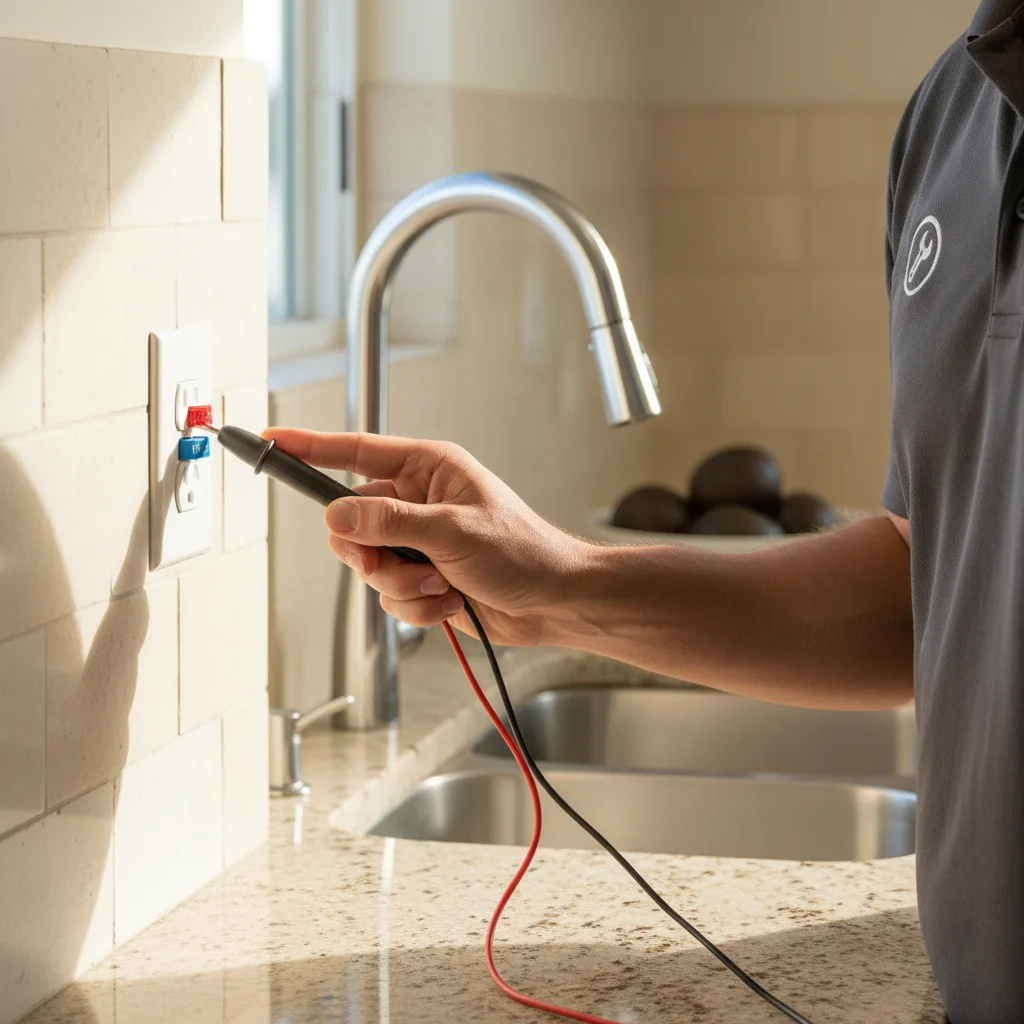
You press the TEST button on a GFCI outlet and nothing happens. Or you reset it, and within a day it trips again. Or the face is cracked, scorched, or smells like heat. Those are the reasons to stop using that receptacle and have the device and its upstream circuit diagnosed. Age and neighborhood are not the diagnosis.
TL;DR
- Lead with a failed TEST, a RESET that will not hold, visible damage, or downstream outlets that drop when this device trips. Those are the replacement and diagnosis triggers.
- A failed GFCI can look completely normal while providing zero ground-fault protection. Use TEST/RESET. This page does not assign a 10-to-15-year lifespan to San Diego neighborhoods.
- A single GFCI outlet often protects multiple downstream standard outlets. Recurring trips can be the device, a load on the circuit, or wiring upstream. Categories, not one cause.
- Replacement labor in San Diego runs $100 to $200 for a straightforward swap; diagnosis for outlets that keep tripping adds time and cost.
- Confirm GFCI locations against the currently adopted California Electrical Code for that room and circuit. Bathrooms, kitchens, garages, exteriors, laundry, and pool areas are common, not a closed list.
How a GFCI outlet works, and what actually tells you to replace it
A ground-fault circuit interrupter compares current on the hot and the neutral. When they differ by about 5 milliamps, the device is designed to cut power quickly. Humidity, salt air, and age can degrade the sensing parts. That is a wear category, not a schedule that says North Park or Coronado outlets are due.
Do not treat a published 10,000-test-cycle or 10-to-15-year figure as your device’s remaining life unless that number is on the manufacturer’s sheet for that model. Silent failure (power still on, TEST does nothing) is the dangerous category. Nuisance tripping is a different category: bad device, wet load, or a real ground fault downstream.
Signs that belong in the diagnostic, not a neighborhood story
1. The TEST button doesn’t cut power. Press TEST with a small load plugged in. If the load stays on, the protection may have failed. Stop using it. Replace or diagnose. Don’t keep using it as a normal outlet.
2. The RESET button won’t stay in. If it trips again within seconds, the categories are a defective GFCI or a real ground fault on this device or downstream. Unplug loads if they are safely reachable, then stop. Recurring trip is not proof it “just needs a new GFCI.”
3. The outlet is scorched, cracked, or smells like heat. Yellowing can be age. Scorch, burn smell, or a cracked face are damage. Stop using it. If you smell smoke or see sparks or fire, leave the house and call 911, then the phone once you are outside. Do not open the panel.
4. The device has never been tested. No visible symptoms does not mean it works. TEST/RESET is the check. Age without a manufacturer date is not a replacement rule.
5. Intermittent power on downstream outlets. A GFCI can protect several standard outlets wired downstream. Random drops can be nuisance tripping, a load, or an upstream wiring problem. Diagnose the circuit. Do not assume the face of the GFCI is the only defect.
DIY test vs. when to call an electrician
Testing a GFCI yourself is straightforward. Plug a lamp or phone charger into the outlet. Press TEST and the device should lose power. Press RESET and it should come back. If both steps work cleanly, the outlet is functioning.
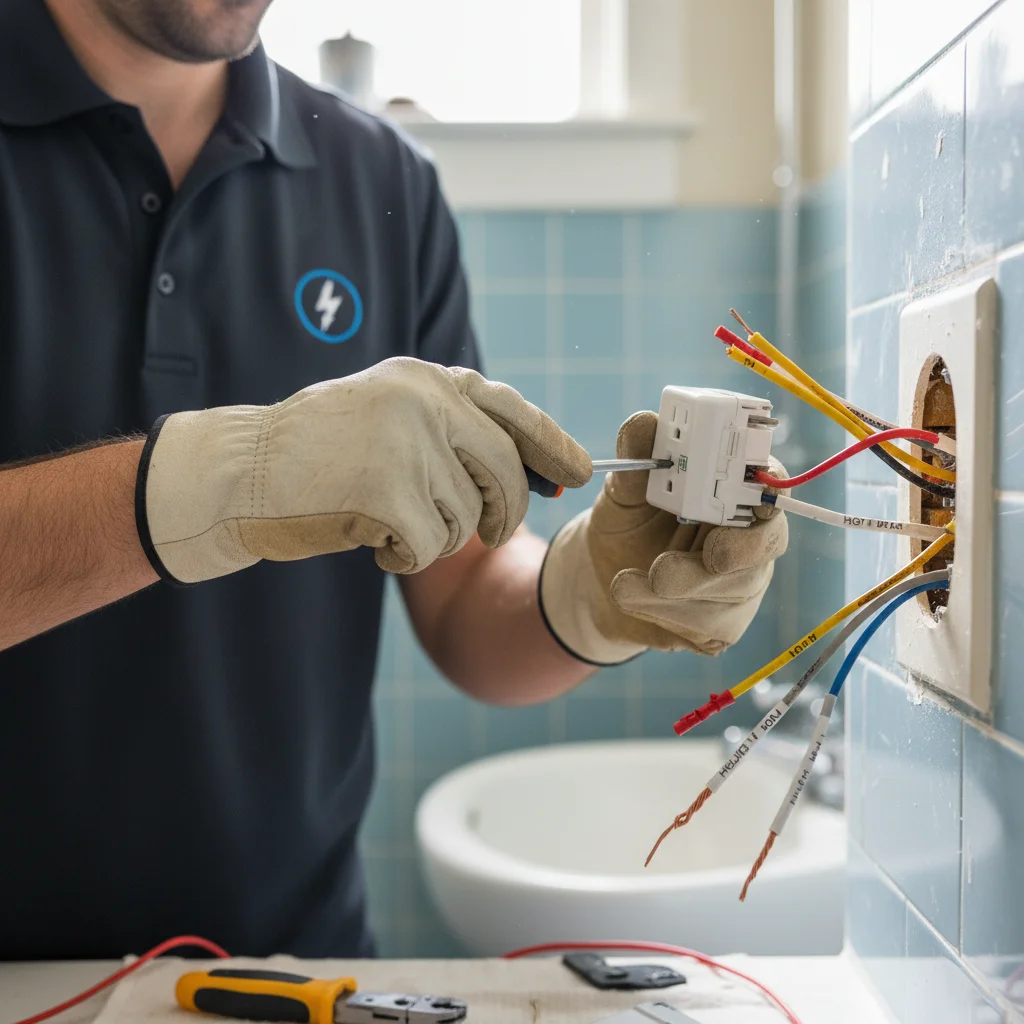
Replacing a GFCI yourself sits in a gray area. The wiring task is simpler than most electrical work: disconnect the old device, connect the new one to the LINE terminals, and optionally wire downstream outlets to the LOAD terminals. Many homeowners do this without incident.
But there are real reasons to call a licensed electrician for kitchen, bathroom, and exterior GFCI outlets specifically.
Kitchen and bathroom circuits frequently have multiple outlets downstream of a single GFCI. Wiring those LOAD terminals incorrectly means the protection doesn’t extend where code requires it. Exterior GFCI outlets in San Diego, particularly around pools, spas, and irrigation systems, are exposed to the kind of moisture that makes a wiring mistake consequential fast. And if the outlet keeps tripping after replacement, you’re likely dealing with a wiring fault or appliance issue that needs diagnosis, not just a new device. The outlet and switch installation matching page is how Bright Pro scopes receptacle work. Bright Pro does not swap the device or diagnose the circuit.
If a tripping GFCI is part of a larger pattern of circuit problems, it’s worth reading about why a breaker keeps tripping before assuming the outlet is the only issue.
Replacement cost in San Diego homes
A GFCI outlet itself costs $15-$40 depending on amperage rating and whether it’s tamper-resistant (which is code-required in most new installations). The device cost is not where the money goes.
Labor in San Diego typically runs $100-$200 for a single GFCI outlet replacement when it’s a straightforward swap on an accessible circuit. That range moves up when an electrician needs to troubleshoot why the outlet keeps tripping, when the existing wiring needs to be re-terminated, or when the work is part of a larger project like a kitchen remodel or panel upgrade.
If you need multiple GFCI outlets replaced (say, three bathrooms and a garage), most electricians will bundle the work at a lower per-outlet rate. It’s worth asking.
Our dedicated post on GFCI outlet installation cost and requirements breaks down pricing by location type and goes into the permit requirements for new circuits. This post focuses on replacement of existing devices, which generally doesn’t require a permit in California, but check with your local jurisdiction if you’re unsure. For bathroom-specific rules, including the 20-amp circuit requirement and outlet placement from the sink, see our guide on bathroom GFCI outlet requirements in San Diego.
For a broader look at what electrical work costs in San Diego County, this electrician cost guide covers typical rates for common jobs.
Where code requires GFCI, by room and circuit
The National Electrical Code (NEC/NFPA 70) is the model. California adopts the California Electrical Code with amendments. As of the 2025 CEC, GFCI protection is commonly required in bathrooms, kitchen countertop and sink-adjacent receptacles, garages, outdoors, crawl spaces and unfinished basements, laundry receptacles near sinks, boathouses, and pool or spa areas. Confirm each location against the adopted 210.8 text and the actual circuit, not a 2026 blog list.
Older homes may lack GFCI in those rooms. That is a safety and permit-upgrade question when work is permitted, not a neighborhood citation.
When you replace a failed GFCI, the inspector can require the installation to match the currently adopted rules for that location, including tamper-resistant devices where they apply.
What to do if a whole circuit lost power
If pressing RESET doesn’t restore power, or if multiple outlets in different rooms suddenly stopped working, the problem probably isn’t just the GFCI device.
Work through this sequence:
- Check every GFCI in the house. One tripped GFCI in a garage or bathroom can kill power to outlets elsewhere. Look for a RESET that is out. Do not keep resetting a device that will not hold.
- Look at the breaker panel. A tripped breaker sits between ON and OFF. Do not operate the main. Do not keep resetting a branch breaker that trips again.
- Test the outlet with something simple. A lamp rules out a bad phone charger or appliance as the culprit.
- Look for a tripped AFCI or dual-function breaker. Newer homes may have TEST buttons on breakers. That is a category, not a wiring diagram.
If none of those observations restore power, stop. Wiring, a failed breaker, or a more complex circuit issue is licensed work.
Frequently asked questions
How do I know if my GFCI outlet is still working?
Press the TEST button with a lamp or phone charger plugged in. The device should lose power immediately. Then press RESET and it should come back. If the device stays on during TEST, or the RESET won’t hold, the outlet has failed and needs replacement. Do this for every GFCI in your home at least once a year, including the ones in the garage and any exterior locations.
Can a GFCI outlet fail without any visible signs?
Yes, and that’s the dangerous scenario. A GFCI can look normal, power devices, and still fail to trip. The check is TEST/RESET, not the remodel year or the neighborhood.
Why do some of my regular outlets lose power when a GFCI trips?
A single GFCI outlet can protect multiple standard outlets wired downstream on the same circuit. When the GFCI trips, all outlets downstream lose power. This is intentional and code-compliant. In San Diego homes, a GFCI in the garage or bathroom often protects exterior outlets or outlets in adjacent rooms. When a circuit goes dead unexpectedly, check every GFCI in the house before assuming it’s a breaker or a wiring issue.
Does replacing a GFCI outlet require a permit in California?
Replacing a failed GFCI device with a new one on an existing circuit generally does not require a permit in California. However, if the work involves adding new wiring, moving the outlet to a new location, or bringing an older installation up to current code (like adding LOAD-side protection for downstream outlets), a permit may be required. When in doubt, ask your electrician before work begins.
How to get matched
If your GFCI is in a kitchen, bathroom, or exterior location, or if it’s part of a circuit that’s losing power intermittently, a licensed electrician is the right call. These locations carry the highest risk, and a mis-wired GFCI outlet provides false security rather than real protection. Bright Pro Electric matches homeowners across San Diego County with electricians whose licences you can verify through the CSLB license lookup. Hours are Monday through Saturday, 7am to 7pm. After hours, leave a message. Use the contact page to get matched.