Lights in one San Diego room going painfully bright while another room drops dim is the pattern behind a loose-neutral electrical search. If you see sparks, smoke, or fire, leave and call 911. If neighbors share the same odd power, report it to SDG&E. If the trouble is only in your house, unplug damaged appliances from a safe spot and get a licensed electrician on the home-side fault.
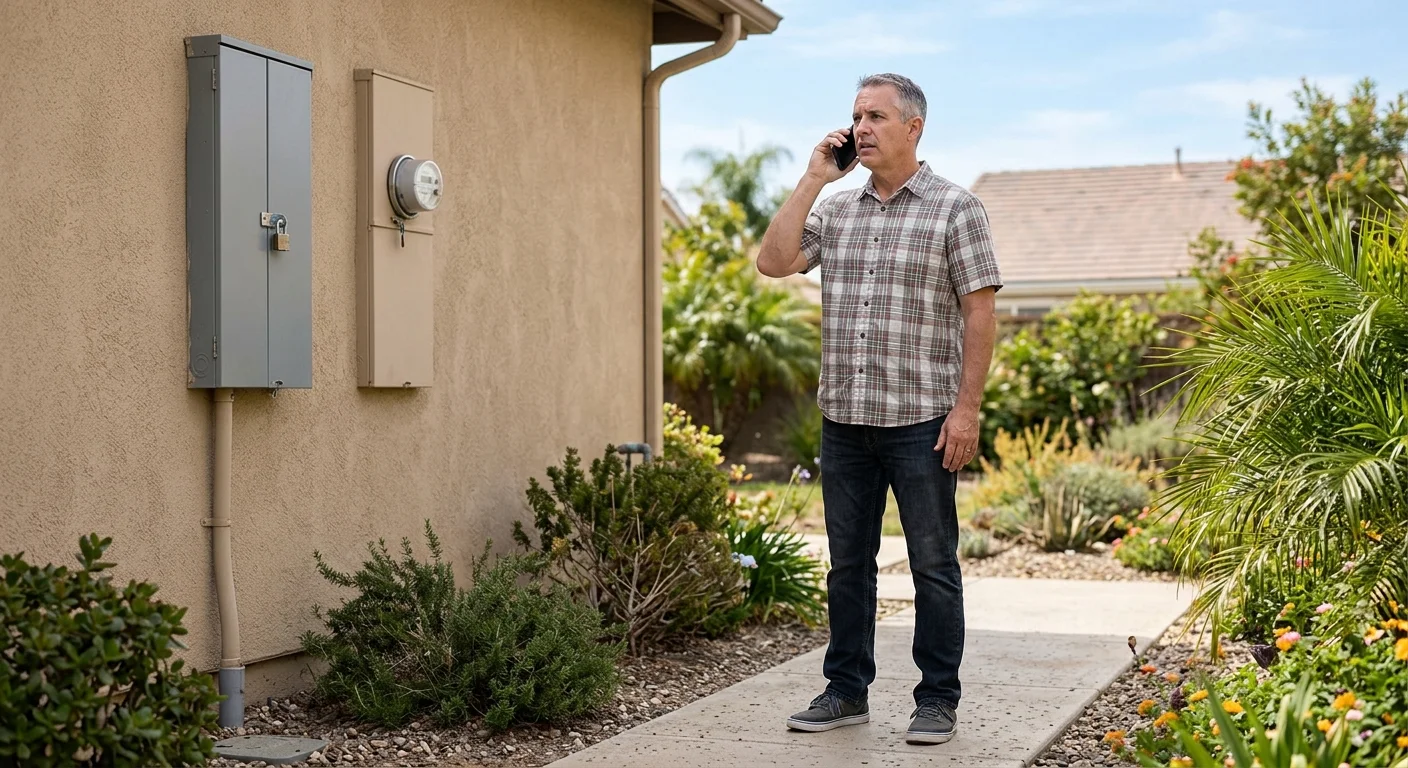
Signs of a loose-neutral electrical problem
A loose or lost neutral shows up as unstable power across rooms, plus appliance damage. One lamp burns too bright when the dishwasher starts. The fridge motor sounds strained. A TV reboots. The microwave dies mid-cycle. Lights in the hallway look fine while the kitchen looks washed out. That mix is why people search this phrase.
Flickering lights can have many causes, from a loose bulb to a failing fixture. This page is about a wider swing: brightness that moves when a large load starts, plus electronics that fail. Half the house with no power is a related emergency. A loose-neutral search usually includes that split plus ruined appliances, blown bulbs, and power that will not sit still.
The Electrical Safety Foundation International lists warning signs that belong in the same call, not on a wait-and-see list: frequent breaker trips, flickering lights, arcs or sparks, a sizzling or buzzing sound, a hot-insulation odor, hot or discolored receptacle covers, shocks or tingles, and damaged insulation. Burning odor, discolored switches, or warm outlets can point to serious wiring trouble. Stop using the affected equipment. Do not touch suspect gear to check temperature.
Coastal salt air in Imperial Beach and National City eats outdoor connections over decades. Inland heat in El Cajon and Lemon Grove cooks equipment in another way. About 69% of Lemon Grove housing and about 63% of El Cajon housing predates 1978. In the City of San Diego, about 50% of units do. That older stock is where aging panels, aluminum branch wiring, and tired splices concentrate. San Marcos sits closer to 24% pre-1978. The symptom still needs a licensed diagnosis in a new tract home. Age only tells you why East County and older central neighborhoods show up in this search more often.
Do not treat a single dead outlet as proof of a lost service neutral. Do not treat a whole-house blackout as proof either. The tell is mixed: some loads too bright or too hot, some too weak, and appliances that fail while other rooms still have power.
Utility-side trouble versus a problem in the home
Call the utility when the odd power is shared. Call a licensed electrician when it is isolated to your house. Call 911 first when there is visible danger.
San Diego Fire-Rescue says to leave immediately for fire or smoke and not to re-enter. Call 911 for sparking electrical hazards, smoke in a building, electrical shorts, sounding smoke or carbon monoxide alarms, and other life-threatening situations. If you are unsure whether it is an emergency, call 911. Give the address, a short description, and a callback number. Follow the dispatcher. Do not stay to take photos, operate a breaker, or hunt a contractor quote.
SDG&E tells customers to check the live outage map and to report an outage when neighbors are also dark. Neighbors without power is a reason to report. It is not proof your house is safe at the same time. A map entry or a restored porch light never certifies wiring. Use a flashlight. Skip candles.
SDG&E also notes that different parts of a neighborhood can sit on different circuits, and that circuits may not restore together. One lit house on the next cul-de-sac in Scripps Ranch or a canyon street in Encinitas does not prove your fault is indoors. Public Safety Power Shutoff events follow the same rule: restoration is address-specific. Do not guess from the block.
Downed or damaged lines are a utility emergency. Stay away. Keep people and pets back. Do not approach a line to identify an owner. Call 911 for immediate hazard, and SDG&E at 800-411-7343 for electrical emergencies and downed lines. Only qualified people should repair or maintain electrical equipment.
If the strange brightness, dimming, and appliance damage stop at your property line, treat it as a home-side fault until a licensed electrician says otherwise. Bright Pro Electric is a referral service. We connect San Diego County homeowners with licensed, vetted electricians. The matched pro diagnoses the house. We do not open your panel, and we do not speak for SDG&E.
What you should not reset, open, or test
Stay out of the equipment. A dead appliance is not proof the circuit is safe to touch.
Never remove a panel’s screwed-on cover. Never remove an outlet faceplate. Never insert test probes into a receptacle. Do not chase “ghost voltage” or a target reading on the neutral with a home meter. Those measurements belong to a licensed electrician. This page does not give meter-base, service-drop, or panel-testing steps.
Do not touch outlets, switches, or appliance cords to test for heat. Do not reset a breaker to reproduce the flicker. Do not cycle unrelated breakers as a diagnostic test. Unplug or turn off appliances if you can do that from a safe, dry spot. Then stop. A reset does not prove the underlying problem is gone.
Skip every homeowner reset when there is water on the equipment, visible damage, a burning odor, smoke, or sparks. Keep away. For active fire or smoke, leave and call 911 from a mobile phone or a neighbor’s phone. SDG&E says to stop using a smoking, sparking, or shocking appliance, and to stay away from water when using electrical equipment.
If you already saw a tripped breaker, an identified handle can be moved fully off, then on, once, after loads on that circuit are unplugged. That is a consumer check, not a repair. If the trip repeats, leave it off and get a licensed electrician. Schneider Electric’s QO guidance is handle fully off, then on. Follow the label on your own gear. Many panels in Clairemont, North Park, and East County houses are older and do not match that picture.
Do not photograph exposed parts. Do not wait until morning on shocks, sparks, or a burning smell. From a safe location, note the rooms, the time it started, and whether you already filed an SDG&E report.
What to tell SDG&E and a matched electrician
Lead with safety, then facts the dispatcher and the electrician can use.
For 911: address, what you see (smoke, sparks, a short, an alarm), and a callback number. Tell a gate code only if you have one. Do not invent one.
For SDG&E: whether neighbors share the symptom, what the outage map showed, and whether you saw a downed line. Report from a safe spot. The utility owns the service up to its side of the meter. A licensed electrician owns the diagnosis on the house side. You do not need to settle that line in the driveway.
For the electrician we connect you with, describe the pattern in plain words. Which rooms went bright. Which rooms went dim. Which appliances failed, and in what order. Whether the swing started after wind, rain, or a heat spell. Whether anyone felt a tingle at a switch or cord. Whether you already smelled a hot, electrical odor. Hand over any SDG&E report number you have. Ask the pro to confirm C-10 electrical classification and current license status on the CSLB license lookup. A license number has no letters and at most eight digits. A license does not by itself prove insurance, so ask for the certificate and verify it with the carrier.
City of San Diego electrical work that installs, alters, adds, or replaces generally needs a permit from Development Services unless a narrow same-size, same-type repair exemption in San Diego Municipal Code section 129.0303 applies. That exemption is not a DIY pass, and it is not countywide. Unincorporated places such as Ramona, Lakeside, Fallbrook, Alpine, and Bonsall pull electrical permits from County Planning & Development Services. Poway, Chula Vista, El Cajon, and the other incorporated cities run their own building departments. Name the agency on your permit, not the city in your mailing address.
Bring this to electrical troubleshooting when the house is the likely source. Bring visible danger, downed lines, and fire to 911 and the utility first, then emergency electrical help after people are safe. For the broader timing question, read when to call an emergency electrician in San Diego.
Follow-up inspection after the immediate risk
After the lights stabilize, the damaged fridge or TV is still evidence. Have a licensed electrician inspect before you keep loading the system.
A whole-house electrical safety inspection in San Diego typically runs $150 to $300. That is this site’s published range for a full walkthrough, not a market average and not a quote. The matched electrician decides what is accessible. City inspectors will not dismantle electrical equipment, and this page will not tell you to pull covers or test for them.
Ask the electrician to put findings in writing: what failed, what was left as-is, whether a permit is required in your jurisdiction, and what replacement gear is on the list. In the City of San Diego, failed work gets a correction notice and must stay accessible until it passes. Approval is recorded on the inspection record, approved plans, or a door-hanger card. County PDS uses its own online inspection tools for unincorporated jobs. Do not import City paperwork rules into County work, or the reverse.
Follow-up may stay at a connection the electrician can reach. It may grow into panel work or a rewire if the inspection finds wider damage. About 45% of Encinitas housing and about 49% of Poway housing predates 1978. Those figures are a proxy for aging electrical systems, not a diagnosis of your service. The electrician still has to look.
Insurers can deny claims tied to unpermitted or unlicensed work. Ask your carrier what your policy requires. That is a question, not a predicted outcome. Verify the contractor on CSLB before anyone starts the repair.
Frequently asked questions
Should I call an electrician for a suspected loose wire?
Yes. Shocks, tingles, sparks, a burning odor, and mixed bright-and-dim lights are electrician work. Call 911 first for smoke, fire, or sparking hazards. Call SDG&E when the same fault shows up next door or you see a downed line.
How much voltage should be on a neutral?
A homeowner target reading is not something this page can confirm from a verified source. Do not insert a meter into a receptacle to find one. Leave voltage measurements to a licensed electrician.
How do I get rid of ghost voltage?
You don’t hunt it from the living room. Ghost voltage is a meter-reading problem for a qualified electrician. Opening a panel or outlet to chase it is outside homeowner scope.
Can loose wires cause a breaker to trip?
Frequent trips are a documented warning sign. A trip does not by itself prove a loose-neutral electrical fault. Do not keep resetting the same breaker to test the theory. Unplug loads on that circuit if you can do it safely, and get the circuit inspected.
When to call us
Call after people are safe, the utility report is in if neighbors share the fault, and you still have mixed bright-and-dim power or damaged appliances in one San Diego County house. The licensed electricians we connect you with diagnose the home-side fault. Call us at (858) 988-5580 and we’ll connect you with a licensed local electrician.