Patio season in San Diego runs most of the year, but the real push hits in May when string lights go up, blenders come outside, and everyone realizes there’s no outlet within reach. Getting that exterior outlet done right means understanding three things: what the code actually requires, what “weatherproof” means in a coastal climate, and what a licensed electrician will charge to make it happen.
TL;DR
- Adding a single outdoor GFCI outlet in San Diego typically costs $225 to $550, including a WR/TR-rated outlet, in-use cover, weatherproof box, and labor.
- Confirm GFCI, WR, TR, and in-use cover rules against the currently adopted California Electrical Code and the actual location (wet vs damp, height, use).
- In-use covers belong where the adopted code and listing treat the location as wet. A flip lid is not a substitute when the listing wants an in-use cover.
- Ask the insurer about unpermitted work. This page does not deny a claim.
- Coastal lots should match box material to the listing and the site. Do not treat galvanized failure as a measured year count.
- Adding an exterior outlet typically requires a permit. Skipping a required permit leaves the work uninspected.
Where code requires exterior outlets in 2026
The 2023 National Electrical Code, adopted in California and enforced across San Diego County, sets the baseline. Single-family homes must have at least one receptacle at the front of the house and one at the back, both accessible from grade level. That means no higher than 6.5 feet off the ground. If you’re building new or doing a significant remodel, you’re required to meet that standard before the inspector signs off.
The NEC / NFPA 70 goes further for certain situations. Decks, patios, and balconies that are accessible from inside the house and are 20 square feet or larger now require at least one receptacle. That’s a change that caught a lot of homeowners off guard during recent remodels. If your patio expansion triggered a permit, an exterior outlet may have been required whether you planned for one or not.
Garages and accessory dwelling units have their own rules. Every unfinished garage wall must have at least one outlet per wall that’s accessible. ADUs are treated like independent dwelling units, so the front-and-back rule applies to them too.
The practical takeaway: if your 1970s ranch house has zero exterior outlets, it was built to an older standard and nobody’s forcing you to upgrade today. But the moment you pull a permit for outdoor work, the inspector will expect current code compliance in the scope of that project.
Weather-resistant vs. tamper-resistant: what you need
These two terms get mixed up constantly, and they’re not interchangeable.
Weather-resistant (WR) receptacles are built with nylon and other materials that resist degradation from UV exposure, moisture, and salt air. Confirm WR listing against the currently adopted California Electrical Code and the outdoor location. A standard indoor outlet outdoors is the wrong listing for a wet or outdoor-exposed box.
Tamper-resistant (TR) receptacles have spring-loaded shutters inside the slots that only open when both prongs are inserted simultaneously. They’re required in new construction and renovation in all areas accessible to children, which, in residential settings, means essentially everywhere including outdoors. Most WR-rated outlets sold today are also TR-rated, listed as WR/TR on the package. That’s the combination you want.
One thing to check when buying: the WR rating needs to appear on the device itself, not just the packaging. Look for the letters molded into the plastic face of the outlet. If they’re not there, it’s not compliant, regardless of what the box says.
In-use covers (bubble covers) and why they matter
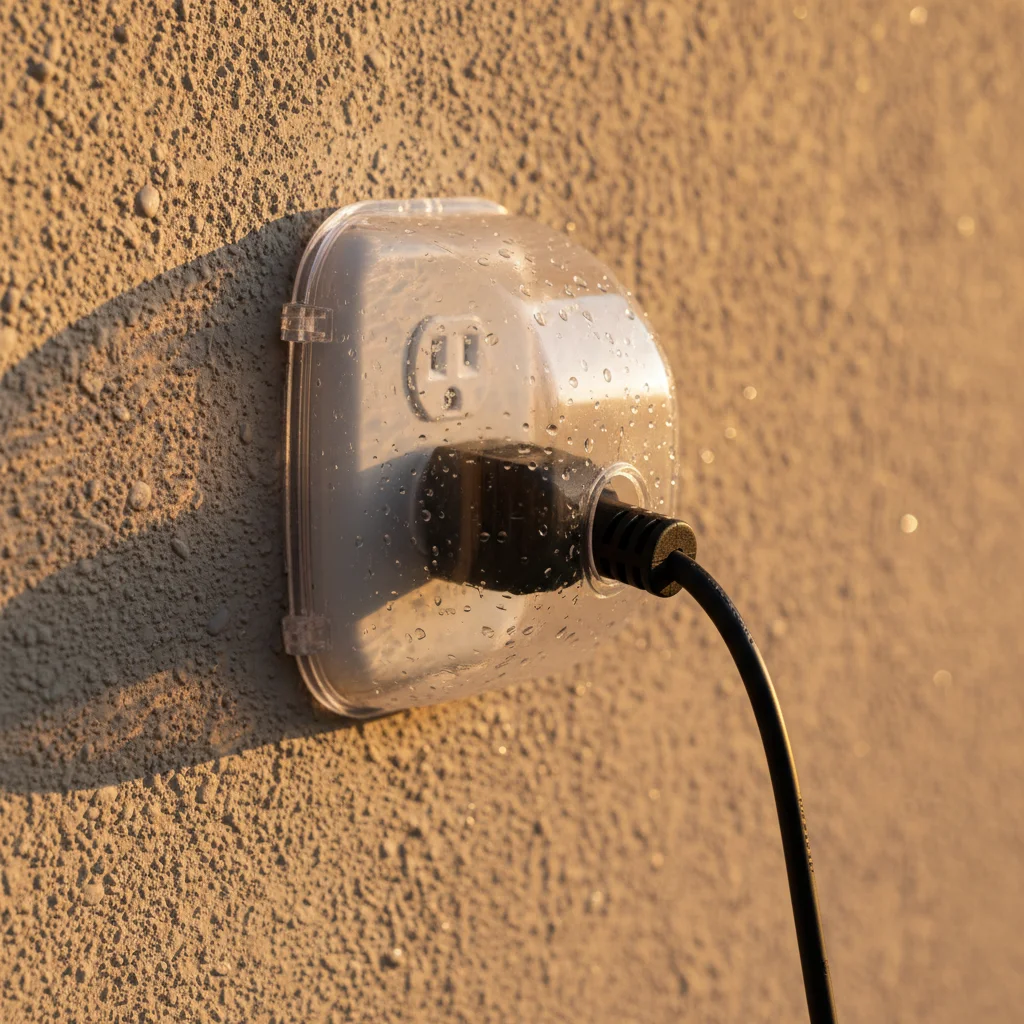
In-use covers are the listed protection for wet-location receptacles that stay in use with a cord plugged in. Confirm damp vs wet listing and the adopted code for that address. A flip-lid is not the same as an in-use cover. This page does not declare an uncovered outdoor outlet unprotected in every case.
A standard “flip-lid” cover protects the outlet only when nothing is plugged in. The moment you run a cord to your string lights or patio speakers, the lid can’t close and the outlet is fully exposed to whatever San Diego’s marine layer delivers overnight: condensation, salt-laden fog, the occasional surprise rain in February.
In-use covers, sometimes called bubble covers or while-in-use covers, have a deeper profile that closes around the cord. When a plug is inserted, the cover still latches shut, keeping the receptacle box sealed. Confirm in-use cover rules against the currently adopted California Electrical Code and whether that location is listed as wet. Rain and condensation are reasons to check the listing. They are not a county-wide wet-location rule written from this page.
Beyond code, the practical case is even stronger. A damp receptacle with a cord plugged in is exactly the scenario that trips GFCI protection at 2am when you’re hosting a dinner party. An in-use cover prevents moisture ingress and keeps the circuit stable.
Outdoor outlets in older Clairemont, Normal Heights, and Bay Park homes often still have flip-lid covers. Upgrading the cover is a cheap device swap: covers typically run $8 to $20 at a hardware store. On a new outlet, don’t accept a flip-lid when the listing wants an in-use cover.
Coastal corrosion: stainless vs. plastic boxes near the ocean
This is the San Diego-specific piece that most generic electrical guides skip entirely.
If the property sits in salt air (Pacific Beach, Ocean Beach, La Jolla, Coronado, Encinitas, or Solana Beach), match the box listing to that exposure. Standard galvanized steel can corrode. That is a screening clue, not a measured year count or a Bright Pro field log from Ocean Beach.
You have two solid options:
PVC/non-metallic boxes are the most common choice. They don’t corrode at all, they’re code-compliant for exterior use, and they’re inexpensive. The tradeoff is that they’re less rigid than metal and can become brittle over 15-20 years in direct sun. For a standard patio outlet, a quality PVC box with a gasket is perfectly adequate.
Stainless steel boxes cost more (expect to pay $25 to $60 for the box alone versus $5 to $15 for PVC) but they’re the right call for high-exposure locations: ocean-facing walls, outlets within 50 feet of breaking surf, or locations that stay damp year-round. 316-grade stainless is significantly more corrosion-resistant than the 304-grade that shows up in cheaper boxes. Ask specifically which grade you’re getting.
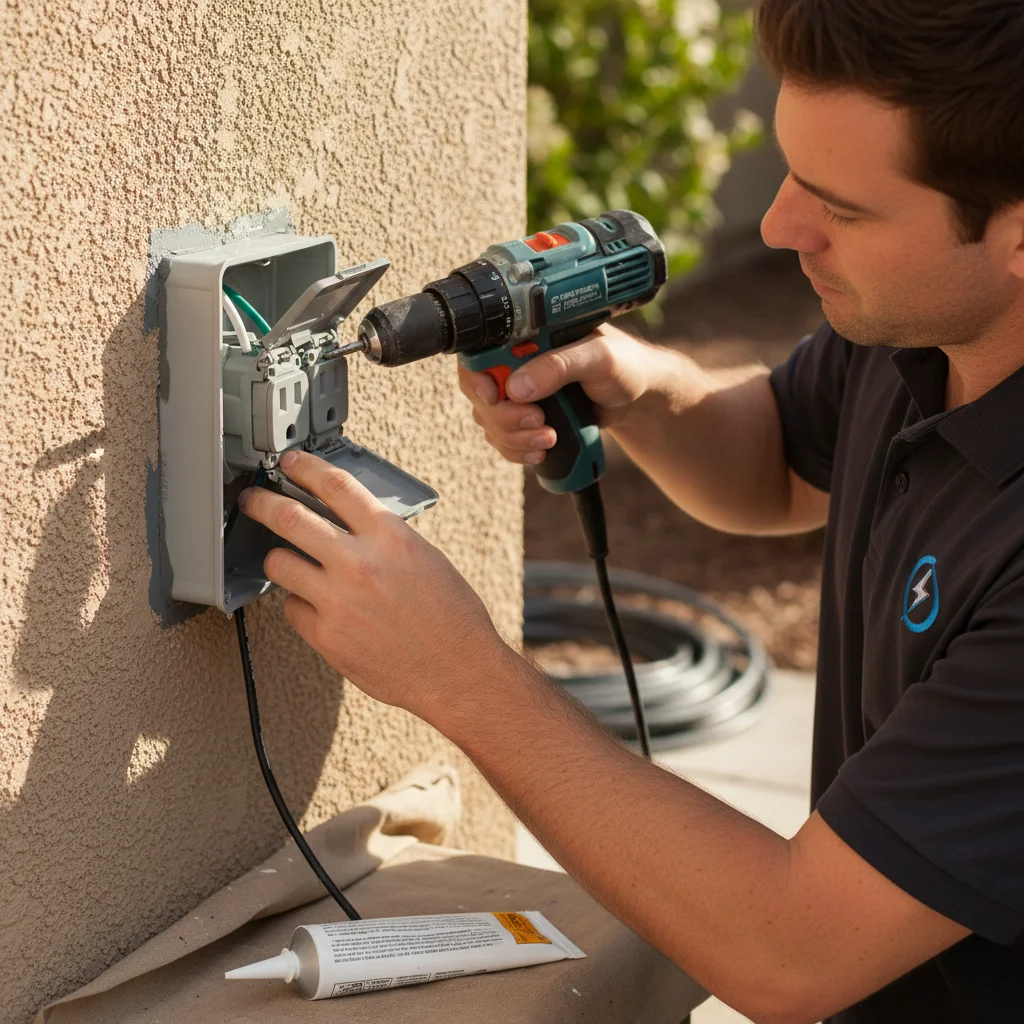
Either way, the box needs a proper gasket seal between the cover plate and the wall surface. Silicone caulk around the box perimeter adds another layer. Near the coast that sealing is the difference between a listed wet-location install and nuisance GFCI trips. This page does not assign a 20-year vs three-year clock.
Cost to add an exterior outlet in San Diego
Adding a single outdoor GFCI outlet in San Diego typically runs between $225 and $550, depending on a few variables.
The biggest cost driver is distance to an existing circuit. If there’s a circuit in the garage or an interior room on the adjacent wall, a short run through the wall keeps labor minimal. If the electrician needs to run new wire across a finished attic or through stucco walls to reach the panel, you’re adding time and materials. Our detailed breakdown of what it costs to add an outlet in San Diego covers the full range of scenarios.
Here’s a rough breakdown for a typical single exterior outlet install:
- GFCI outlet (WR/TR rated): $15–$30
- In-use cover with gasket: $10–$25
- Exterior box (PVC or stainless): $5–$60
- Permit (if required, see below): $75–$150
- Labor: $150–$350 depending on run length and wall type
Stucco walls add cost. Drilling through stucco, fishing wire, and patching cleanly takes more time than a wood-frame exterior. Factor in an extra $50–$100 if that’s your situation.
For anything more complex, like running a new 20A circuit, installing multiple outlets for a full outdoor kitchen, or adding outdoor and landscape lighting on the same project, costs scale accordingly. Outlet and switch installation is the matching page. Bright Pro Electric does not perform that install.
Permits and GFCI requirements
Yes, adding an exterior outlet in San Diego generally requires a permit. The City of San Diego and most surrounding jurisdictions treat new outlet installations as electrical work subject to inspection. The permit exists to ensure the work meets code and the GFCI protection is functioning correctly before you bury or close the walls.
GFCI protection for outdoor outlets has been required by the NEC for decades, and California enforces it strictly. Every exterior outlet must be GFCI-protected, either by using a GFCI outlet device itself or by placing it downstream of a GFCI breaker at the panel. We cover the specifics in detail in our post on GFCI outlet installation costs and requirements. If you’re replacing an aging outdoor GFCI that fails to trip or won’t hold reset, our GFCI outlet replacement guide covers the signs of failure and replacement cost.
A few things worth knowing about the permit process:
Homeowners can pull their own permits for electrical work on their primary residence in California. But the work still needs to pass inspection. If it doesn’t, you’re responsible for corrections. A licensed electrician pulls the permit, does the work, and handles the inspection as part of the job. You don’t have to coordinate anything.
Skipping a required permit leaves the work uninspected. Ask the insurer how they treat unpermitted electrical work. This page does not deny a claim. If you sell the house, unpermitted work can show up in an inspection. The permit fee is cheap relative to those questions.
You can verify any electrician’s license before hiring through the CSLB license lookup. It takes 30 seconds and confirms they’re legally allowed to pull permits in California.
Frequently asked questions
Does adding an outdoor outlet require a permit in San Diego?
Yes. The City of San Diego and surrounding jurisdictions typically treat a new outdoor outlet as permitted electrical work. Confirm for that address. Like-for-like device swaps can be exempt in the City under SDMC 129.0303(a) when they are the same size and type. A licensed electrician pulls the permit when it is in their scope. Bright Pro Electric does not. Owner-builder paperwork, where offered, still gets inspected and does not waive C-10 rules for live wiring. Ask the insurer about unpermitted work. This page does not decide a claim.
What is the difference between a weather-resistant and an in-use cover?
A weather-resistant (WR) rating refers to the receptacle device itself, meaning it’s built to resist degradation from UV, moisture, and salt air. An in-use cover (also called a bubble cover or while-in-use cover) is the physical cover plate that seals around an inserted cord so the outlet box stays protected even when something is plugged in. Confirm both against the listing and the adopted code for that location (wet vs damp). A WR receptacle with only a flip lid is not the same as an in-use cover when the listing wants the box sealed with a cord plugged in.
How much does it cost to add an outdoor outlet in San Diego?
A single outdoor GFCI outlet typically runs $225 to $550 installed. The biggest variable is how far the electrician needs to run wire to reach an existing circuit. If the garage is on the adjacent wall and has a circuit with capacity, costs stay low. A long run through a finished stucco exterior or across the attic adds labor and materials. Stucco walls add $50 to $100 for drilling, fishing, and patching.
What kind of electrical box should I use near the San Diego coast?
Match the box listing to salt exposure. PVC (non-metallic) boxes don’t corrode and are code-compliant for exterior use when listed. For ocean-facing walls or high-exposure locations, 316-grade stainless steel boxes are a common spec. Either option should have a proper gasket plus silicone around the perimeter. This page does not assign a one-mile ocean rule or a year-count for galvanized failure.
When to call us
Outdoor electrical work in San Diego, especially near the coast, is a listing, cover, and adopted-code job. Bright Pro Electric matches you with a licensed electrician. It does not install outlets or pull permits.
Use the contact page. Hours are Monday through Saturday, 7am to 7pm. After hours, leave a message.