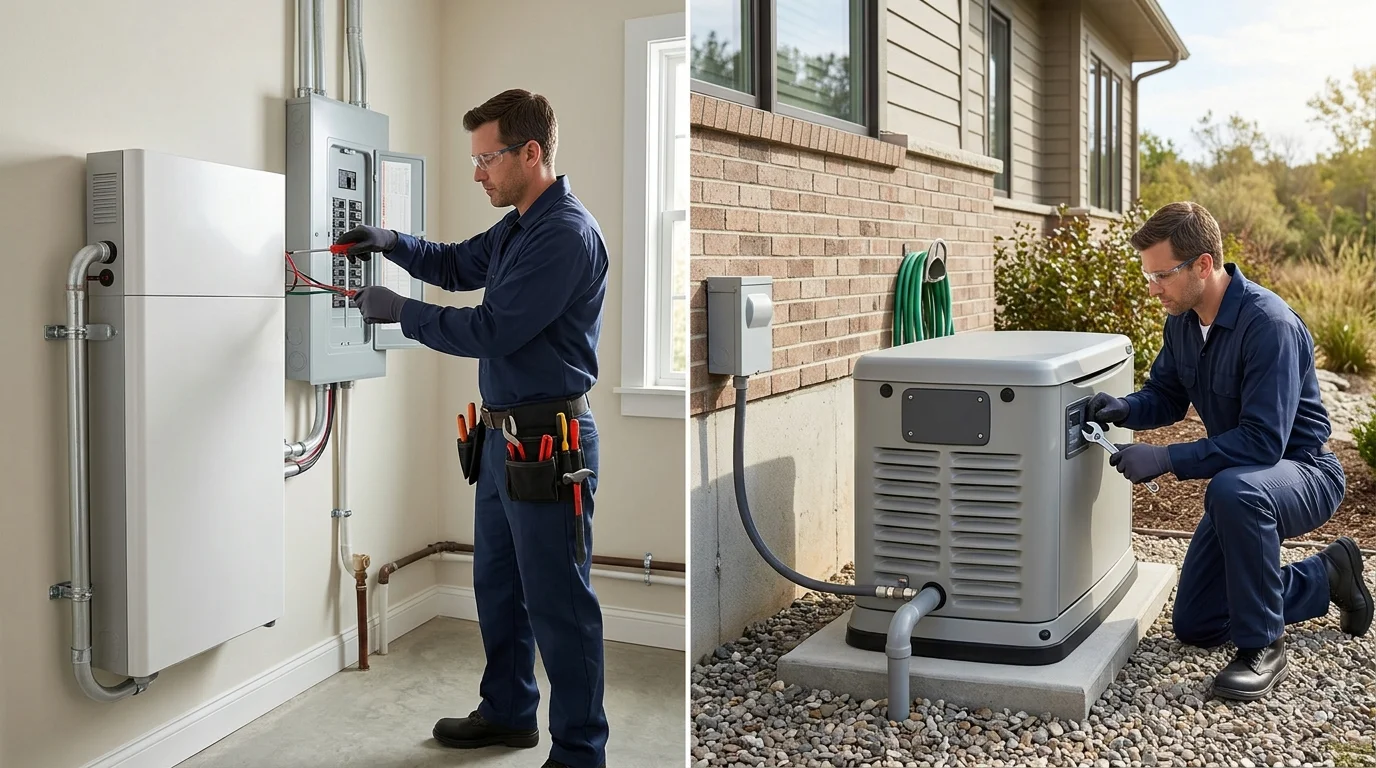
A backup generator and a home battery address the same outage problem differently. Neither wins automatically. The right choice depends on your protected loads, outage plan, existing equipment, and property.
Start with the loads that must stay powered
Start with appliances and circuits, not equipment brands. Decide what needs power during an outage and what can remain off.
A practical list might include:
- Refrigeration
- Selected lights and receptacles
- Internet equipment
- Medical equipment
- A garage door opener
- Heating or cooling equipment
- Cooking or water-heating equipment
Label each item as essential, useful, or optional. That simple exercise gives an electrician something concrete to evaluate. It also prevents “whole-home backup” from becoming a vague promise that means something different to everyone.
Homes across San Diego County have very different electrical starting points. A newer San Marcos home may have different service equipment than an older house in La Mesa. The Census housing data in this site’s claims ledger shows that 23.8% of San Marcos housing predates 1978, compared with 68.7% in La Mesa. Those figures don’t decide which backup system fits, but they explain why the existing panel and wiring deserve review.
Include startup-sensitive equipment, future appliances, and any planned electrification. Don’t assume the largest proposed system automatically offers the best plan. A carefully defined group of protected circuits may match your priorities better.
If you don’t know which circuits serve those loads, a licensed electrician can trace them. The assessment should identify panel condition, available space, service limits, and any wiring concerns before equipment gets selected.
How stored energy and generated power differ
A home battery delivers energy stored in the system. A standby generator produces power while its generating equipment is operating. That basic difference changes the questions a homeowner needs answered.
For a battery proposal, ask the installer to document:
- Which circuits the system will protect
- The usable stored energy available
- The expected demand from those circuits
- How existing solar equipment interacts with backup operation
- What happens when the planned reserve is depleted
For a generator proposal, ask for the proposed load rating, transfer equipment, fuel configuration, placement plan, and operating assumptions. These details should appear in writing. Don’t rely on a broad statement that a unit can “run the house.”
A useful home battery vs standby generator comparison puts both proposals against the same protected-load list. Otherwise, one contractor may quote selected circuits while another designs around a wider group. The equipment names will differ, but the planning target should stay consistent.
Batteries and generators also bring different supporting equipment. The electrical proposal should show how power reaches the protected circuits and how the system coordinates with the utility connection. Our home battery installation guide explains the battery planning side. For generator-specific system planning, review the whole-house generator guide.
The important comparison isn’t technology versus technology. It’s one documented outage plan versus another.
What outage length changes in the comparison
Outage duration changes the job assigned to the backup system. A short interruption and an extended event shouldn’t be treated as identical design problems.
With a battery, stored energy is a central constraint. The proposal should model the chosen loads and show how different usage patterns affect the available reserve. Ask for separate examples based on essential circuits and a broader household load. Don’t accept an unsupported runtime estimate.
A generator proposal needs a different set of assumptions. Ask what must remain available for the unit to continue operating. The installer should identify the fuel arrangement, maintenance needs, operating limits, and any conditions affecting the proposal. Those answers must come from the selected equipment documentation and site assessment.
Load priorities can also change during a longer outage. Refrigeration and medical needs may remain fixed. Laundry, cooking, cooling, and vehicle charging may be postponed or managed differently. Write those choices down before comparing systems.
San Diego homeowners should also distinguish an ordinary utility outage from a planned shutoff scenario. If Public Safety Power Shutoff planning is part of your concern, use our PSPS generator guide to organize the questions you’ll bring to an electrician.
No single runtime claim applies to every house. Equipment, load selection, system condition, and homeowner behavior all matter. Compare written assumptions, not headline promises.
How existing solar, fuel access, and panel capacity matter
Existing solar doesn’t settle the battery backup or generator for home decision. The solar equipment’s design and compatibility still need professional review. Ask whether the current system supports outage operation and what additional equipment would be required.
Don’t assume panels on the roof mean the house already has backup power. Have the electrician or qualified solar professional document how the proposed battery would coordinate with the existing inverter, service equipment, and protected circuits. The answer depends on the installed system, not just the presence of solar modules.
A standby generator proposal should identify its fuel source and the work needed to support it. Fuel access, equipment placement, utility coordination, and property layout belong in the site review. A dense National City lot and a Ramona property can present very different placement questions. The selected professional should verify the actual conditions rather than applying a generic layout.
Panel capacity matters for either path. The review should cover the service rating, breaker space, existing loads, and any planned additions. If changes are needed, ask whether the proposal includes a new subpanel, protected-load panel, controls, or a broader electrical panel upgrade.
Keep solar, fuel, and electrical proposals aligned. If different companies handle those parts, ask who owns each task and who confirms compatibility. Bright Pro Electric can connect homeowners with licensed local pros for the electrical scope, but the matched professionals perform the assessment and physical work.
Which permits, incentives, and operating claims need confirmation
There isn’t one permitting office for every San Diego County address. Inside the City of San Diego, electrical permits are handled by the Development Services Department. Unincorporated communities such as Ramona, Lakeside, Fallbrook, Alpine, and Bonsall use San Diego County Planning & Development Services.
Incorporated cities run their own building departments. Poway, for example, has its own Building Services division and fee schedule. Carlsbad, Chula Vista, Escondido, Oceanside, and other incorporated cities also control permitting within their boundaries.
The approved claims ledger doesn’t confirm one generator or battery permit path covering every installation. Before work begins, give the correct authority the project address, equipment details, and planned electrical scope. Ask which permits, plans, inspections, and current fees apply. The SDG&E website is the place to confirm current utility processes affecting the address.
Battery incentives also require current verification. The California Public Utilities Commission lists residential storage among technologies covered by the Self-Generation Incentive Program. Eligibility and incentive amounts vary. SGIP applies to qualifying storage or generation equipment, not separate electrical infrastructure.
No current standby-generator incentive or 2026 federal electrical-upgrade credit was confirmed in the approved ledger. Don’t include either in your budget unless the responsible agency or tax professional verifies it.
Check operating and warranty claims against the exact model documents. Generac says most home standby models have a five-year limited warranty, while PowerPact and EcoGen have three-year terms. Model, purchase date, maintenance records, and authorized service requirements affect coverage.
What to compare before choosing a system
Put competing proposals into the same format. That makes omissions easier to see and keeps the decision focused on your outage plan.
Compare these items:
- The exact circuits and appliances included
- Documented load calculations
- Battery reserve or generator rating assumptions
- Required panel, subpanel, and transfer equipment
- Solar or fuel coordination
- Equipment placement
- Permit and inspection responsibility
- Utility coordination
- Maintenance responsibilities
- Manufacturer warranty terms
- Items specifically excluded from the proposal
- Future loads the design does or doesn’t support
Ask each professional to separate confirmed facts from estimates. Runtime, operating cost, fuel use, equipment capacity, incentives, and permit fees should trace to current documentation. If a figure can’t be confirmed, treat it as unresolved.
Check the electrician’s classification through the California Contractors State License Board. California’s minor-work exemption doesn’t rescue most electrical installation, alteration, or extension work. Work requiring a building permit also requires a contractor license regardless of price.
Some homeowners may decide one technology clearly fits their priorities. Others may need a revised protected-load list before choosing among backup power options for outages. Either result is useful. The goal is a system matched to the house, not a purchase driven by an equipment label.
For a generator-focused assessment, see our generator installation service. The licensed independent pro you’re matched with can review the panel, proposed loads, property constraints, and supporting equipment.
When to call us
Call when backup equipment will connect to your panel, protected circuits, solar system, or service equipment. Call us at (858) 988-5580 and we’ll connect you with a licensed local electrician.