A Public Safety Power Shutoff on an inland San Diego County street can last through a hot afternoon. A tri fuel generator burns gasoline, propane, or natural gas, so you are not tied to one pump. The useful work starts with the loads you keep on, then with transfer gear a licensed electrician installs.
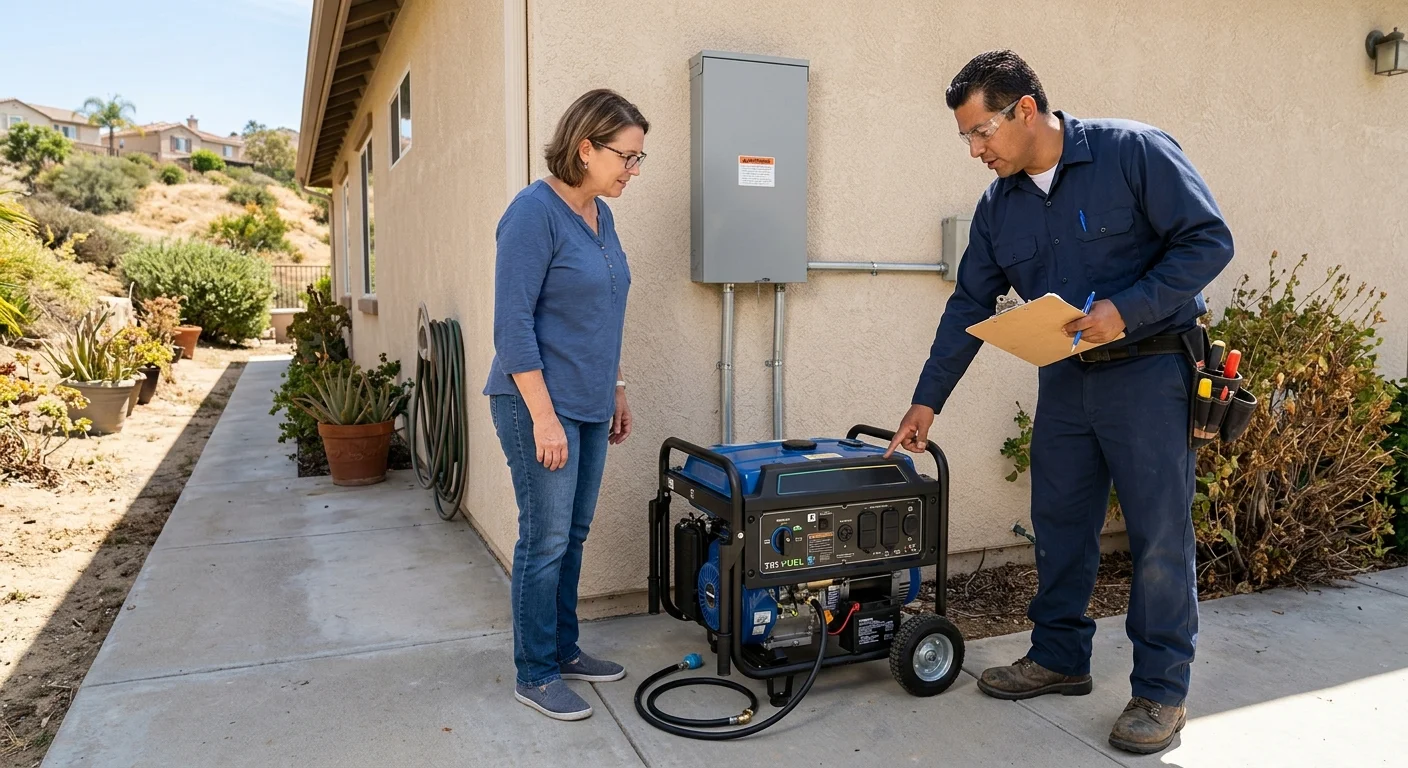
Start with the loads you want during an outage
Before you shop a portable tri fuel generator, write the circuits that matter if SDG&E goes dark. A fridge and a few lights are one plan. A well pump in Ramona or Valley Center, a medical device, and some cooling in El Cajon heat is another.
Coastal Encinitas and Carlsbad nights stay milder. East County and inland north county houses heat up after a shutoff. The marine layer never reaches those ridges. Put that difference on the list. Add whether you work from home and need the router. Add whether a garage door is the only way off a steep Alpine or Lakeside driveway.
Skip marketing wattage charts. Those figures are not verified here. They also skip starting loads, panel limits, and rooms you can leave off. Walk the house. Note what must stay on, what can wait, and what you will not run. Then have a licensed electrician look at the panel.
Older housing stock in El Cajon, La Mesa, and Lemon Grove is more likely to predate 1978. Census figures put the pre-1978 share at 62.5% in El Cajon, 68.7% in La Mesa, and 69% in Lemon Grove. That age is a proxy for smaller panels and aging branch wiring. The electrician we connect you with can say whether the panel can take transfer equipment.
Check the SDG&E outage map and Public Safety Power Shutoff notices for your address. A neighbor’s lights do not prove your house is on the same circuit. SDG&E has said different parts of a neighborhood may sit on different circuits. They may not restore together. Your load list is about your house, not the block.
If you already compared dual-fuel home backup, keep that page for two-fuel shopping. This page stays on the third fuel, natural gas, and on whether that extra inlet is worth the install work on your lot.
How a tri-fuel portable unit differs from dual-fuel and standby
A dual-fuel portable unit typically runs on gasoline and propane. A tri fuel generator for home backup adds a natural gas connection on top of those two. That is the whole meaning of the name. Three commercial fuels, one engine, one frame you can roll.
The extra inlet is only useful if the house already has gas service, or if licensed trades can evaluate a new path. Many San Diego County homes cook and heat with natural gas. Some do not, including newer all-electric tracts in places like San Marcos. Confirm the meter and the piping with the electrician. For the gas side, confirm with whoever is licensed for that work. Do not treat a barbecue hose or a dryer stub as the right connection. This page does not give hookup steps.
Standby generators are a different product. They sit on a pad. They usually stay on one fuel, natural gas or propane. They use an automatic transfer switch so the house can pick up when utility power drops. A portable tri fuel generator is something you store, move, and start. It can cover selected loads through transfer equipment a licensed electrician installs. It does not become a whole-home standby system just because it has three inlets.
Fuel choice also collides with propane versus diesel shopping. Diesel is its own class of machine. Consumer tri-fuel portables are built around gasoline, propane, and natural gas. If you already keep a large propane tank for a range or a pool heater in Fallbrook or Bonsall, that tank is a planning fact. If you only have a small cylinder for a grill, treat runtime as unconfirmed until you read that unit’s manual. No tank-duration figure is verified for this page, including a 20-pound cylinder.
During a PSPS shutoff, gasoline can be hard to buy if nearby stations lose power. Propane you already own does not depend on a pump. Natural gas can keep a compatible unit running without a refill, if service at your address stays available during that electric shutoff. Confirm gas availability with SDG&E for the event. Do not treat it as guaranteed. PSPS is address-specific. A canyon lot in Valley Center is not automatically in the same shutoff as a street in Oceanside.
What transfer equipment changes the backup plan
The generator is only half the plan. The other half is how selected house circuits get power without feeding the utility. Backfeeding through a receptacle is unsafe. This site will not describe that method.
A licensed electrician can install transfer equipment that isolates the house from the grid before the generator feeds chosen circuits. The comparison of interlock kits and transfer switches is the place to sort those options. This article does not walk connection steps, inlet wiring, or breaker sequence.
What you do need to decide is scope. A small critical-load setup covers a fridge, lights, and a medical circuit. A larger transfer switch can cover more of the house if the generator and the panel can support it. Automatic transfer belongs with a permanently installed standby unit. A portable tri fuel generator is usually a manual start and a manual transfer. Someone has to be home, able, and trained on that specific setup.
Inlet placement, cord routing, and whether the panel can accept the hardware are electrician questions. So is whether your jurisdiction treats that work as a permitted electrical alteration. In the City of San Diego, electrical installation, alteration, addition, or replacement needs an electrical permit unless a narrow municipal exemption applies. Simple No-Plan is still a permit path, not a skip. Unincorporated addresses in Ramona, Lakeside, Fallbrook, Alpine, and Bonsall go through San Diego County Planning & Development Services. Poway runs its own Building Services division. Chula Vista, El Cajon, Escondido, and the other incorporated cities each run their own building department. Use the agency named on the actual permit, not the mailing city.
Generator installation through Bright Pro Electric means we match you with an independent licensed electrician. The electrician we connect you with pulls the permit and does the work. We do not own the truck or set the switch.
Fuel storage, placement, and permit details to confirm
Outdoor placement and carbon monoxide belong in the plan before you buy. Generators produce exhaust. They belong outside, away from windows, doors, and vents. Exact setback distances were not confirmed in our claims ledger. Confirm them with the unit manual, the fire authority, and the electrician. ESFI is a general electrical-safety resource for households.
Gasoline storage, propane cylinders, and a natural gas hose are three different hazards. Do not invent a shed layout from a blog. Ask the local fire department and the building department what they allow on your lot. That matters on a dry wildland-urban parcel in Valley Center, Alpine, or the back side of Poway, especially in Santa Ana wind season. HOA rules can add another layer. Those rules are private. Read yours.
Natural gas to a portable unit is not homeowner work. The search “can you hook up a portable generator to a natural gas line” has a narrow honest answer. Only if the generator is built for it, the gas service can support it, and licensed trades make the connection under the rules at that address. This page will not tell you how. If the electrician we match you with says the house is not a candidate, believe that.
Ask, in writing, who pulls the electrical permit, whether gas work needs a separate permit, whether the city or county wants a site inspection, and whether a HOA or wildfire overlay adds conditions. Fee amounts for generator work are not in our verified ledger. Do not budget from a forum number. City of San Diego publishes electrical permit fees for some work types. Other cities keep their own schedules. Poway’s amount lives in that city’s Master Fee Schedule and was not read for this page. Ask the office that will actually issue the permit.
Keep people and pets away from a running unit. Use a flashlight, not candles, during an outage, per SDG&E outage-safety guidance. If you smell gas, leave, then call 911 and SDG&E from a safe place. Downed electric lines are a 911 and SDG&E 800-411-7343 problem, not a generator problem.
What to compare before you buy or hire an installer
Compare the machine to the house, not the machine to a review site.
Fuel at the address comes first. Gasoline only, dual-fuel, or a backup generator tri-fuel setup only matters if you can store or receive those fuels during a shutoff. A natural gas meter on a Chula Vista or central San Diego street is a different starting point than an all-electric remodel. An inland lot that already keeps propane for a range is a third starting point.
Who starts it comes next. If nobody is home, a portable unit sits. Standby with automatic transfer is the product for empty houses and medical loads that cannot wait.
Get a written scope. Inlet or transfer equipment, which circuits, who pulls the permit, and who handles gas if natural gas is in play. CSLB recommends at least three written bids on the same scope. Check the license on the CSLB lookup before you sign. A C-10 classification covers placing and connecting electrical equipment that uses electrical energy. That does not make every worker on site an individually licensed C-10, and it does not settle the gas piping. Ask which licensed business is on the contract.
Panel reality has to win. If the electrician says the panel cannot accept the transfer hardware, that is the project. Do not buy a tri-fuel frame and hope. A South Bay yard with tight setbacks is also a different install than a wide inland lot. Confirm placement before delivery.
Warranty and service stay with the manufacturer of that portable unit. That is not the same as a Generac home standby limited warranty, which routes engine and controller work through an authorized dealer. Keep the paperwork with the machine.
If the better answer is a pad-mounted standby on natural gas, say so early. The electrician we connect you with can walk both paths. Bright Pro Electric is a referral service. We match San Diego County homeowners with licensed, vetted electricians. We do not sell generators, hold a contractor license, or warrant the install.
Frequently asked questions
What does tri fuel generator mean?
A tri fuel generator is built to run on gasoline, propane, and natural gas. Dual-fuel units skip natural gas. Confirm the inlets on the specific model, because the name on the box is not a substitute for the fittings on the machine.
What size natural gas generator do I need for my house?
Size follows the loads you listed and what a licensed electrician calculates for your panel. No wattage target is verified on this page. A portable unit covering selected circuits is not the same product as a whole-home standby generator. Bring the load list to the bid.
How long will a 20 lb propane tank last running a generator?
That runtime is not confirmed here. It changes with load, model, and conditions. Read the manufacturer’s chart for that unit, then treat it as a planning estimate, not a promise.
Can you hook up a portable generator to a natural gas line?
Only through licensed work, and only when the unit and the house support it. Do not improvise a connection. Ask the electrician and the gas utility first.
When to call us
Call when you want a licensed electrician to size loads, specify transfer equipment, and pull the right local permit for a portable or standby backup plan. We do not install the gear ourselves. Call us at (858) 988-5580 and we’ll connect you with a licensed local electrician.