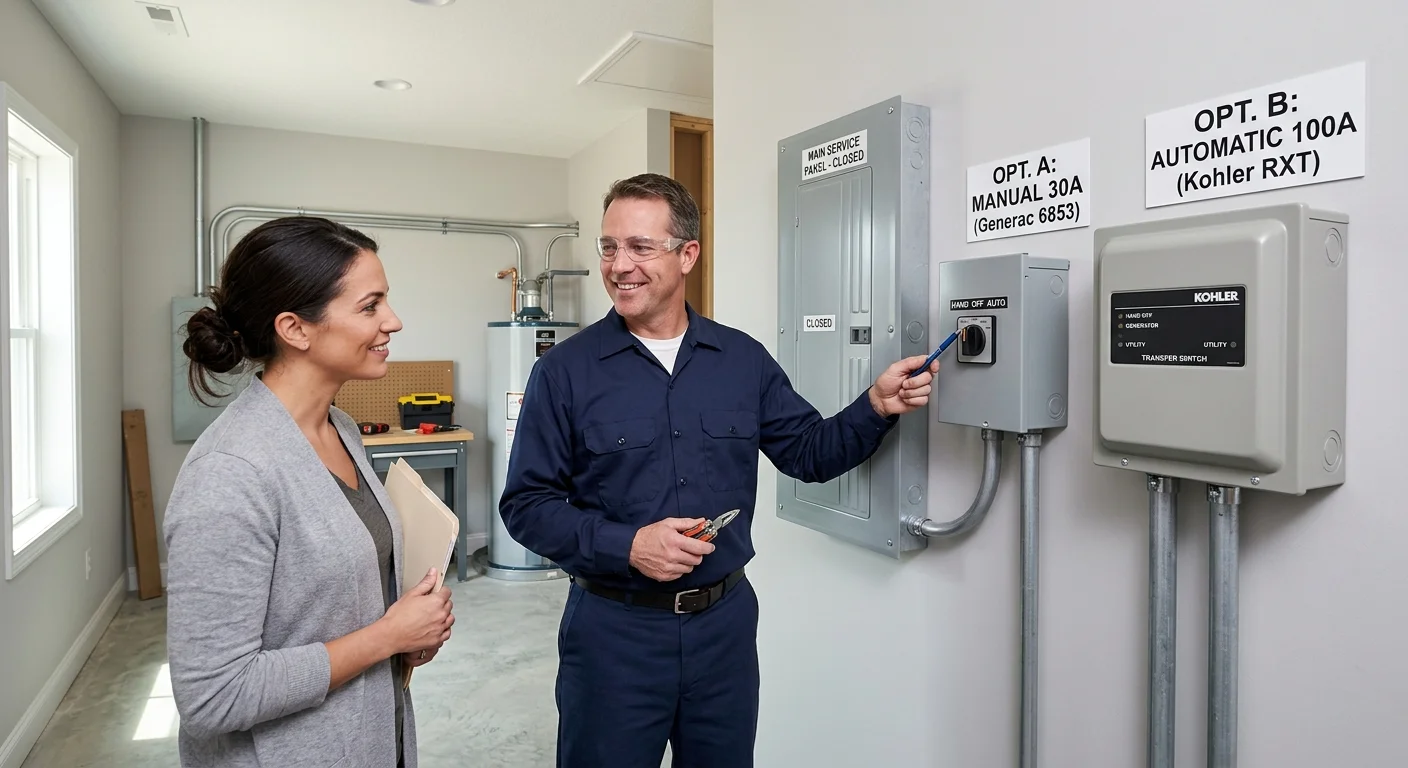
An automatic transfer switch fits an outage plan that shouldn’t depend on someone being home to start the changeover. A manual switch gives the homeowner direct control, but it requires someone onsite who knows the approved operating sequence. The right choice starts with your backup source, essential loads, and existing electrical equipment.
Start with the backup source and loads that matter
Start by listing what must remain available during an outage. That list might include refrigeration, lighting, communications, medical equipment, or selected comfort systems. Don’t begin with a promise to power everything. Begin with the loads that matter to your household.
Next, identify the backup source you actually plan to use. A permanently installed standby generator, portable generator, and home battery aren’t interchangeable inputs. Their connection requirements come from their listed equipment and manufacturer documentation. The transfer equipment must match that source and the proposed electrical design.
Your outage plan matters too. Automatic operation may fit a home that’s often empty. It may also matter when an occupant can’t safely manage manual equipment. Manual control can make sense when a capable adult will be present and prefers to decide when backup power serves selected loads.
San Diego County adds another planning layer. A coastal home, an inland property, and a rural unincorporated parcel may have different service equipment and outage priorities. The permitting authority also changes by address.
Write down three things before requesting proposals: the backup source, the essential loads, and who will operate the system. That short brief helps an electrician compare equipment without guessing. Our generator installation referral service can connect you with a licensed local pro for that assessment.
How automatic and manual switching differ
An automatic transfer switch monitors the normal power source and initiates the planned changeover when its control conditions are met. It’s selected when the system needs to act without waiting for someone to reach the electrical equipment.
A manual transfer switch waits for a person to operate it. The homeowner follows the approved sequence for the specific equipment. That makes human availability part of the outage plan.
Automatic doesn’t mean uninterrupted. Don’t accept that word as a promise about timing or continuity. Ask the proposal to describe what the selected equipment does when utility power fails and when it returns. Any expected delay should come from the product documentation, not a sales assumption.
Manual also doesn’t mean improvised. It refers to listed transfer equipment operated by a person. It isn’t permission to create a temporary connection or invent a switching sequence. The licensed electrician should identify the approved controls and explain them during handoff.
This is the central automatic versus manual transfer switch decision:
- Choose automatic operation when absence or limited mobility makes onsite action unreliable.
- Consider manual operation when a trained occupant expects to be present.
- Revisit both choices when the backup source, essential-load list, or panel arrangement changes.
A transfer switch comparison should focus on the whole outage plan. The label alone can’t tell you whether a particular unit works with your source, service, and selected loads.
When standby and portable generators change the choice
Standby and portable generators create different planning conversations. A standby proposal may include automatic transfer equipment, but the exact pairing still needs confirmation. The electrician should match the generator, controls, transfer equipment, service arrangement, and manufacturer instructions.
A portable generator plan often starts with manual operation. Even then, don’t assume any manual transfer switch will work. Ask the electrician to confirm the generator connection, supported loads, required transfer equipment, and approved operating sequence for the specific models.
Fuel planning belongs in the same conversation, without guessing. Record the fuel used by the proposed generator and how your household plans to keep it available. Then ask the generator provider to put any operating limits or storage requirements in writing. Bright Pro Electric doesn’t set those requirements.
The deciding question isn’t simply whether one switch type is better. It’s whether the complete system matches the way your household will handle an outage. A person who travels often may value automatic operation. A homeowner who plans to run only selected loads while onsite may prefer manual control.
Our guide to how a standby generator powers a home can help you frame the larger system. If you’re still choosing the source, compare a home battery with a standby generator before selecting transfer equipment. Changing the source later can change the switch decision.
What existing panel equipment can change
The existing panel can narrow your choices before brand preferences matter. The electrician needs to inspect the service equipment, panel arrangement, available spaces, connected loads, and the proposed transfer location. A photo may help with initial discussion, but it can’t replace an onsite assessment.
Older and remodeled San Diego homes often need closer documentation because labels and previous changes may not tell the full story. Don’t assume a panel is suitable because its door closes or its rating looks large enough. Ask the electrician to identify what equipment was actually inspected and what remains unconfirmed.
The project may also affect service-upgrade planning. SDG&E reviews load requirements, meter location, and system capacity when its service-planning process applies. An upgrade with no added load may qualify for SDG&E’s Express Program, but eligibility depends on the project. SDG&E doesn’t publish one reliable completion timeline for every service upgrade.
If the transfer project includes panel replacement or service changes, review the electrical panel upgrade service separately. That keeps optional improvements from disappearing inside one broad generator proposal.
Existing solar, battery equipment, or other power controls should also appear in the written scope. Don’t assume separate products will coordinate. The electrician and equipment manufacturers should confirm compatibility for the proposed configuration.
Which compatibility and permit details need confirmation
No single San Diego County permit answer covers every address. The City of San Diego Development Services Department issues electrical permits within city limits. San Diego County Planning & Development Services handles unincorporated communities such as Ramona, Lakeside, Fallbrook, Alpine, and Bonsall.
Poway is separately incorporated. Its Building Services division runs its own process and fee schedule. Other incorporated cities, including Chula Vista, Carlsbad, Oceanside, Escondido, and El Cajon, also use their own building departments.
The approved claims ledger doesn’t confirm a transfer-switch permit trigger or fee for every local jurisdiction. Ask the correct building department to confirm the current requirement for your address. Don’t rely on a fee quoted for another city or for unincorporated county property.
California’s current electrical code is the California Electrical Code based on the adopted National Electrical Code with state amendments. Local jurisdictions may add requirements. The electrician should identify the code edition and local process used for your proposal.
Compatibility needs the same discipline. Ask for written confirmation covering:
- The exact generator or battery model
- The transfer-equipment model
- The normal and backup power arrangement
- The circuits or loads included
- Existing solar, storage, or control equipment
- The manufacturer’s required accessories
- The permit and inspection authority
Electrical installation or alteration generally requires a properly licensed contractor. Before hiring, check the individual contractor through the CSLB license lookup. Bright Pro Electric is a referral service and doesn’t hold the trade license or perform the installation.
What to compare in installation proposals
A useful proposal names the equipment and explains the scope. “Automatic transfer switch included” isn’t enough. You should be able to identify the proposed model, backup source, served loads, panel work, controls, permit responsibility, inspection steps, and exclusions.
Compare proposals line by line. One electrician may include panel changes that another lists separately. Another may assume existing equipment is compatible without documenting it. Ask each pro to separate confirmed conditions from items that require inspection or manufacturer review.
The operating handoff also belongs in the proposal. For automatic equipment, ask what the homeowner should expect during utility loss and restoration. For a manual transfer switch for a generator, ask who will demonstrate the approved operating sequence. Keep those instructions with the equipment documentation.
Don’t compare warranty language without reading its limits. If the project involves a Generac home standby unit, warranty engine and controller work routes through an Independent Authorized Servicing Dealer. The term varies by model and purchase date, so check the paperwork for that unit. Electrical work outside the warranty may follow a different service path.
A clear proposal should answer these points:
- What equipment is included
- Which loads the design covers
- What existing conditions were verified
- What compatibility remains subject to confirmation
- Who handles permit coordination
- What owner decisions are still needed
- What support follows installation
Be cautious when a proposal skips the existing-panel assessment or treats permitting as identical throughout the county. Those gaps can hide important differences between an automatic transfer switch plan and a manual one.
When to call us
Transfer equipment should be assessed and installed by a licensed electrician when it connects backup power to a home’s electrical system. The pros we connect you with are licensed and insured independent local electricians. Call us at (858) 988-5580 and we’ll connect you with a licensed local electrician.