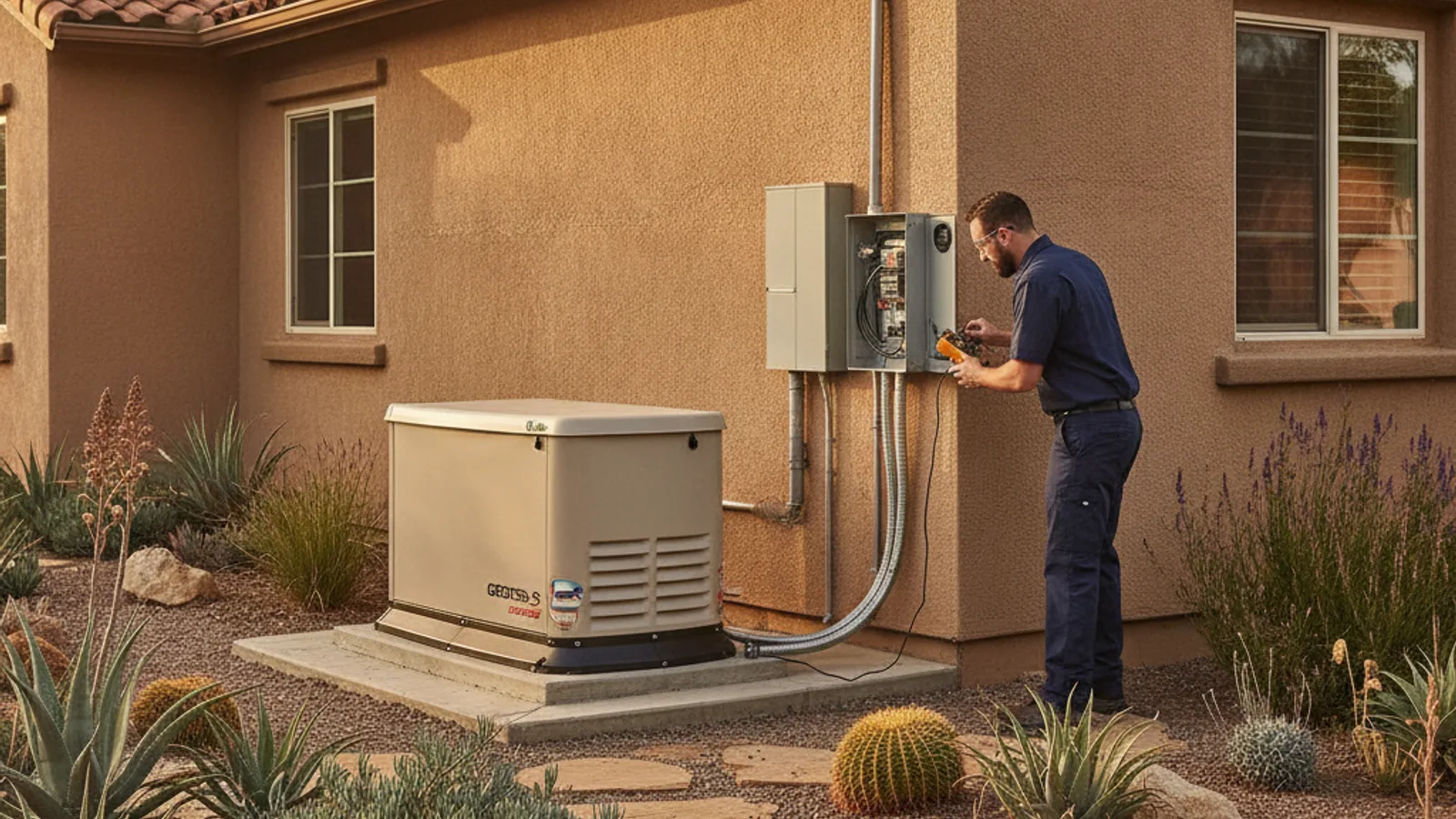
The power drops, the house goes quiet for a second, and then the lights come back on before you’ve even reached for a flashlight. That’s a standby generator system doing exactly what it’s designed to do, but most homeowners who have one installed couldn’t tell you what actually happens between the outage and the lights turning back on.
Where backup power enters the home’s electrical system
A standby generator doesn’t plug into an outlet or feed power in through the front door of your electrical system. It connects at the panel level, through dedicated wiring run between the generator unit outside and a transfer switch installed next to (or sometimes inside) your main electrical panel. That connection point matters because it’s what lets the generator supply an entire circuit, or a whole panel, the same way the utility does, rather than powering one appliance at a time the way a portable generator and extension cords do.
The generator itself sits outside on a pad, usually running on natural gas or propane so it doesn’t need refueling during an extended outage. It stays off and silent until it’s needed, then starts on its own once the transfer switch calls for it.
This is the core difference between a standby system and a portable generator with extension cords running through a window. A portable unit powers whatever you plug into it, one appliance or a couple of circuits at a time, and someone has to be home to start it, refuel it, and manage what’s drawing power. A permanently installed standby system is wired directly into the home’s electrical system through its generator installation scope, so it can power an entire panel of pre-selected circuits without anyone touching a switch, whether you’re home or not.
What the transfer switch does when utility power changes
The transfer switch is the part of the system actually making decisions. It constantly monitors incoming utility power. When that power drops out, whether from a storm, an equipment failure, or an SDG&E Public Safety Power Shutoff, the switch recognizes the loss, signals the generator to start, and once the generator is up and stable, disconnects the home from the utility line and connects it to the generator instead.
That disconnect step is not optional and it’s not just good practice. Without it, a generator feeding power backward into a de-energized utility line creates a serious hazard for utility crews working to restore power, who have every reason to assume a downed line is dead. A properly installed transfer switch makes it physically impossible for the home to be connected to both sources at once, which is what keeps that backfeed from happening. When utility power returns, the switch reverses the process: it disconnects from the generator, reconnects to the grid, and lets the generator run for a short cool-down period before shutting off.
The whole sequence, from sensing the outage to running on generator power, happens without anyone flipping a switch or making a decision in the moment. That’s the entire point of an automatic system: the household doesn’t have to be paying attention, awake, or even home for the transfer to happen correctly.
How an electrician decides which circuits receive backup power
Not every standby generator is sized to run an entire house at full load, and that’s a decision made during planning, not something you discover mid-outage. A licensed electrician works through which circuits matter most: refrigeration, medical equipment, a well pump, home office equipment, and enough HVAC to keep the house livable are common priorities. Everything else can be left off the backup circuit list if the generator’s capacity doesn’t support running the whole home at once.
That decision gets built into the transfer switch itself, which is wired only to the circuits chosen for backup. Our generator interlock vs. transfer switch comparison covers the different equipment options for this step, including the difference between a switch that requires you to manage load manually and a fully automatic system that manages it on its own.
Households that lean toward whole-home coverage instead of a priority-circuit list usually have a specific reason: a well pump that the whole house depends on, a medical need that makes partial power feel too risky, or simply a preference for not thinking about it during an outage. Either approach is valid. What matters is that the generator’s rated output and the transfer switch’s wiring actually match the choice you made, which is exactly what the electrician’s load planning is checking.
Fuel, ventilation, and placement questions to verify
Standby generators need combustion air and a way to vent exhaust safely away from windows, doors, and vents into the home. Clearances for the pad and the equipment are set by the authority having jurisdiction and by the manufacturer’s installation instructions. The licensed electrician and the permitting office confirm them for the specific property. None of this is something to guess at or copy from a neighbor’s setup, since lot size, home layout, and local ordinances all vary.
Fuel source is its own decision. A generator plumbed to natural gas draws from the same utility line as your stove or furnace and doesn’t need refueling, which matters most during an extended outage. Propane requires an on-site tank sized to the generator’s run time. Whichever fuel you choose, the gas line work is licensed plumbing or gas-fitting scope that has to be coordinated with the electrical installation, not treated as an afterthought.
What homeowners should compare before choosing a system
Generator sizing, transfer switch type, and fuel source all interact, so compare systems as a whole rather than picking pieces separately. Most Generac home standby units carry a five-year limited warranty covering the generator for five years or 2,000 hours of run time, whichever comes first, and warranty repairs have to go through a Generac-authorized servicing dealer. That warranty covers the generator itself; it doesn’t extend to the transfer switch, breakers, or wiring on the electrical side, which stays regular licensed-electrician scope.
Ask any installer for a written scope that separates the generator, the transfer switch, the electrical work, and any gas line work into distinct line items, and confirm which circuits are included in the backup plan before the pad gets poured. Our whole-house generator installation guide walks through the fuller planning process, and if you’re deciding whether a standby system makes sense at all versus riding out shorter outages, our power outage guide covers what to do in the meantime.
When to call us
Sizing a standby generator and choosing the right transfer switch setup is not a DIY decision, and improperly connecting backup power to a home’s wiring creates a real safety hazard. A licensed electrician should handle the load planning, the transfer switch installation, and the permit.
Call us at (858) 988-5580 and we’ll connect you with a licensed local electrician.