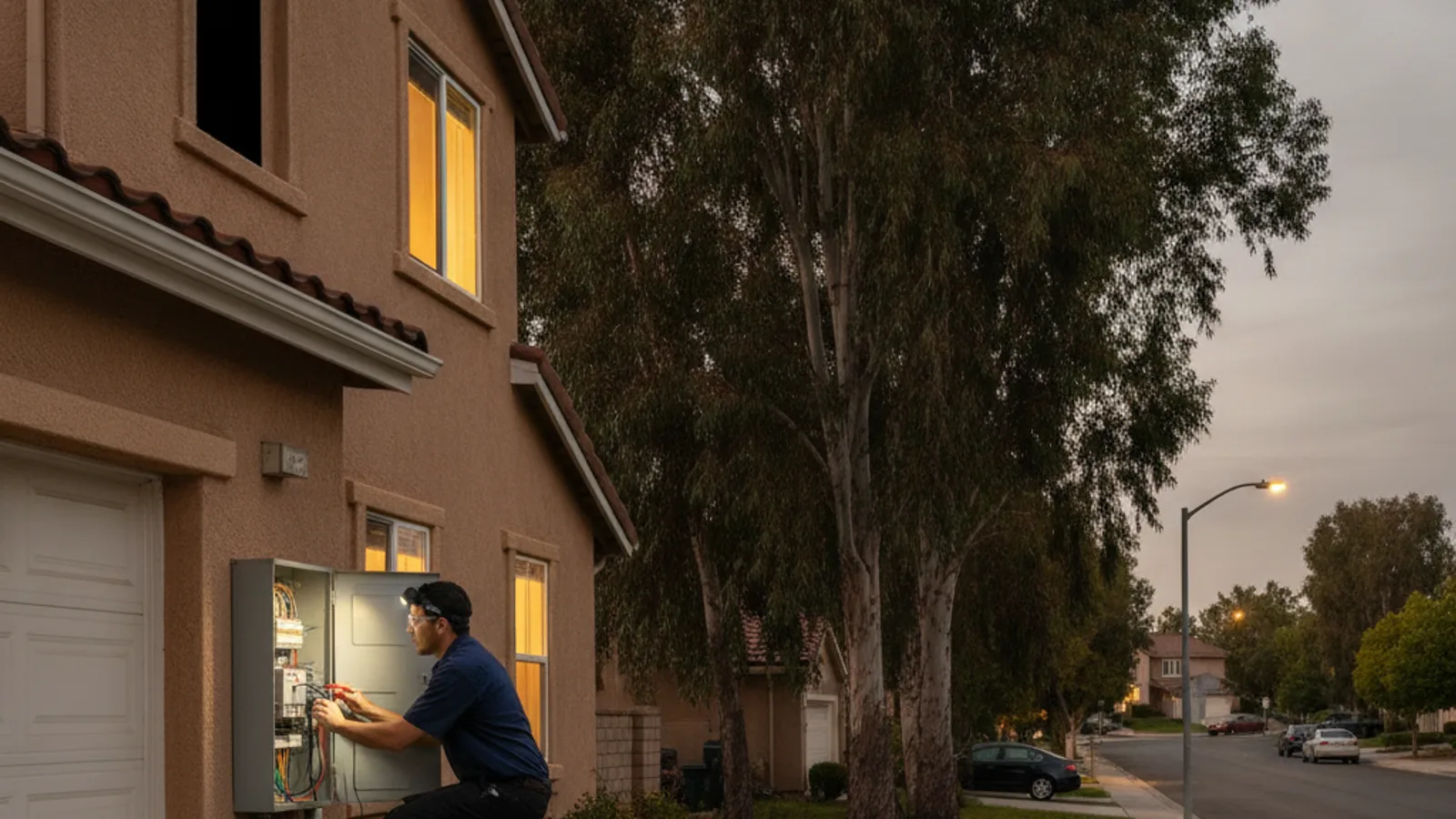
When an electrical problem shows up after hours in Scripps Ranch, start with the hazard. Then check the utility. Then get a licensed electrician. Fire, smoke, sparking, or a shock risk is a 911 call from a safe place. A dark house or a possible grid outage is an SDG&E status check. Follow-up repair waits until you’re out of danger.
Bright Pro Electric matches San Diego County homeowners with local licensed, vetted electricians.
Call 911 first for fire, smoke, or sparking
Scripps Ranch is in the City of San Diego, so City Fire-Rescue’s 911 page is the local procedure.
If there’s fire or smoke in the house, leave immediately and don’t re-enter. Call 911 once you’re outside. Don’t delay that exit to inspect the panel. Don’t stop for photos, a breaker reset, or a message to us.
City Fire-Rescue says to call 911 for sparking electrical hazards and smoke in a building. Electrical shorts and sounding smoke or carbon monoxide alarms belong on that list too. If you’re unsure whether it counts, call 911.
Give the dispatcher the address or location. Add a cross street if you know it. Give a short description of what you see and a callback number. Stay on the phone until they tell you to hang up. If emergency vehicles need a gate code, give it. On a cell phone, your location may not display, so say where you are.
Check SDG&E before you assume it’s your wiring
A dark house after hours isn’t a home-wiring diagnosis. SDG&E’s outage safety page sends you to the live outage map and to the utility’s reporting app. Check your address there, and report the outage. Neighbors without power are a reason to report, not proof your equipment is safe. A listed outage, a missing map entry, or lights returning nearby is information, not a diagnosis of your wiring.
Use a flashlight, not candles.
SDG&E may shut power during high-fire-risk conditions. Check SDG&E’s PSPS page for your own address. A missing listing doesn’t prove your house is unaffected. Power comes back after conditions are safer, lines are inspected, and needed repairs are done. Don’t plan on a promised restore time.
Different parts of a neighborhood may sit on different circuits. Those circuits may not restore together. A lit house next door doesn’t prove the fault is in your panel. A dark house next door doesn’t prove it isn’t.
Warning signs that need a licensed electrician
The Electrical Safety Foundation International lists warning signs that call for a licensed electrician. Those include breakers that trip often, flickering lights, arcs or sparks, and unusual sizzling or buzzing. They also include an odor of hot insulation, hot or discolored receptacle covers, shocks or tingles, and damaged insulation. Treat any of those signs as a reason to get a licensed electrician. A single trip, a dead outlet, or a flicker still needs that same follow-up.
From a safe place, keep the facts you already have. Note where it showed up and when it started. Note whether you already checked or reported utility status. Don’t touch gear to test heat. Don’t reset equipment to reproduce a symptom. Don’t pull covers or photograph exposed parts.
SDG&E’s electric safety guidance says only qualified people should repair or maintain electrical equipment. Stay away from water around that equipment. Don’t touch appliances with wet hands. If an appliance smokes, sparks, or shocks, stop using it. Don’t wade in to reach a switch or panel.
Report downed lines to 911 and SDG&E
Never touch a fallen wire. Don’t remove anything caught on a line, including an animal. Keep people and pets back. Don’t walk in to identify an owner or to measure distance.
SDG&E’s outage safety page says to report downed lines to 911 and to call the utility right away at 800-411-7343. Use that same number for other electric emergencies.
What you can report from a safe place
Once you’re safe, report information you already observed. Which area of the house was involved, and whether all or part of it went dark. Any odor, sparking, or shock you already noticed. Whether you already used the outage map or filed a report. The time it started, if you know it.
Don’t create a new test or switch loads to prove a circuit. If you later use the contact page, send that same already-safe list.
Permits and licensing after the immediate problem
Power coming back isn’t the end. Follow-up work in the City of San Diego needs an electrical permit unless a specific municipal exemption applies. The City’s Simple No-Plan option is still a permit. Whether an exemption fits depends on the exact task and this city’s rules. Confirm the current requirement with City Development Services for the work you actually need.
Licensing is a separate check. Read whether a handyman can do electrical work in California. It covers C-10 work, the small-job exemption, and Class B electrical rules. Verify the business, classification, and status on the CSLB license lookup. A license doesn’t guarantee insurance, quality, permit approval, or a warranty. Ask for written scope and who performs the work. Ask who is responsible for the permit. Ask for an itemized quote, insurance evidence, and warranty terms.
After 911 and the utility, ask about a match
If 911 and the utility steps are handled, contact Bright Pro Electric. Tell us what you already observed. We’ll match you with a licensed, vetted electrician who serves San Diego County. Ask us to confirm current contractor availability.