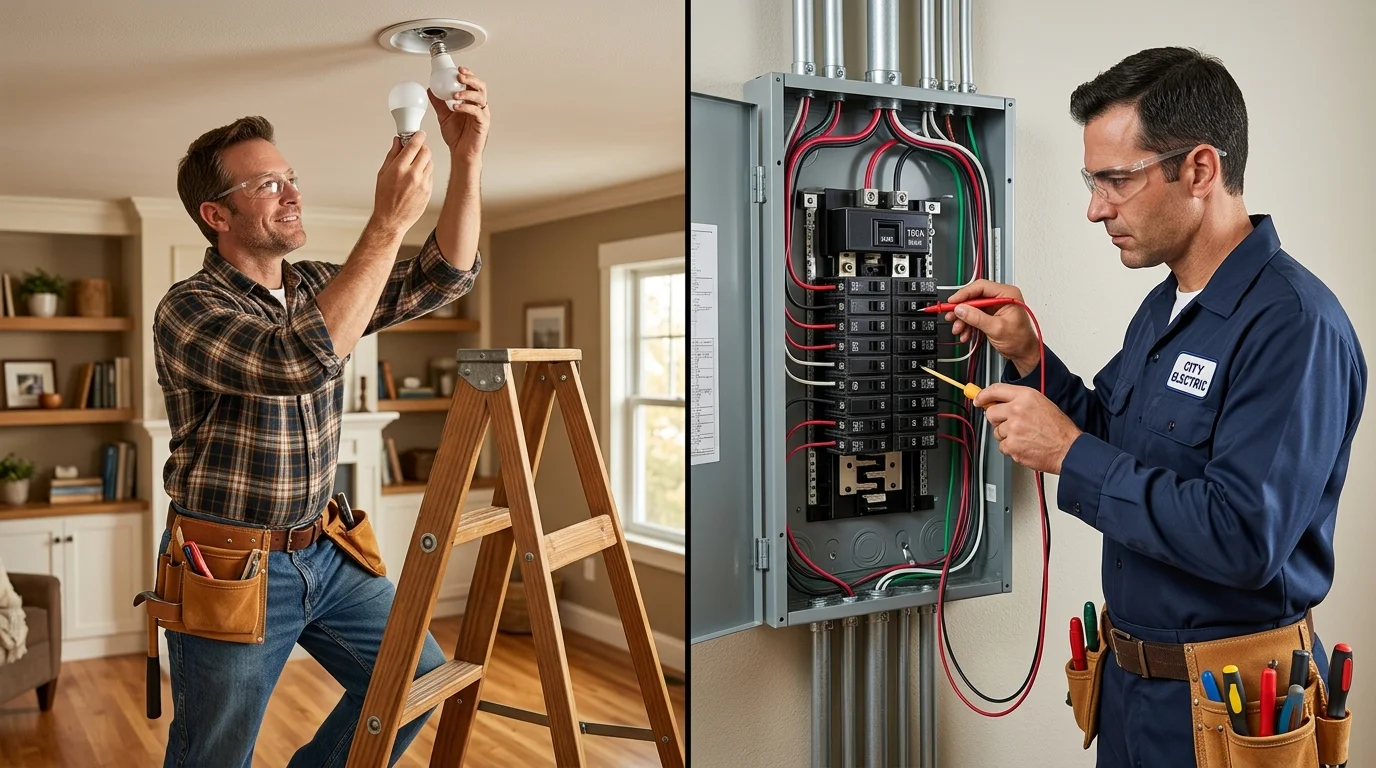
When you have a small electrical task at home, it’s natural to wonder if a local handyman can take care of it or if you need a licensed electrician. In California, the law is quite clear about who can perform electrical work, and understanding these rules protects your home, your family, and your wallet. Knowing the difference between minor repairs and jobs requiring professional certification is essential for every San Diego homeowner.
California’s ‘$500 rule’ for handyman work explained
The Contractors State License Board (CSLB) sets the rules for who can perform construction and home improvement work throughout California. For homeowners in San Diego and across the state, understanding these regulations is crucial, especially concerning electrical tasks. The most important rule to know is California’s “$500 Rule,” which defines the scope of work an unlicensed individual, often referred to as a handyman, can legally undertake.
This rule states that an unlicensed person can perform minor work if the total cost of the project – encompassing both labor and materials – does not exceed $500. It’s a critical distinction because many people mistakenly believe it only applies to labor costs. However, if a handyman charges $400 for their time, and you purchase $150 worth of materials for the job, the total project cost is $550. In this scenario, the work legally requires a licensed contractor.
The $500 rule is not specific to electrical work; it applies to all trades. Its purpose is to allow for truly minor repairs, maintenance, and odd jobs that don’t demand extensive technical knowledge, adherence to complex codes, or the pulling of permits. The moment a project’s combined labor and material value surpasses $500, a contractor’s license, such as a C-10 for electrical work, becomes a legal necessity. This regulation is firmly in place to protect consumers from potential hazards, ensure quality workmanship, and maintain safety standards across California. You can always verify a contractor’s license status directly on the CSLB website.
What electrical jobs fall under the handyman exception?
Given California’s strict $500 rule, the types of electrical jobs a handyman can legally perform are very limited, especially when you factor in the cost of even basic electrical components. Generally, these tasks are restricted to highly cosmetic or simple maintenance duties that involve no modification to existing wiring, circuit protection, or electrical infrastructure.
Examples of tasks that might fall within the handyman exception include:
- Changing a lightbulb: This is the quintessential handyman task, requiring no electrical expertise beyond knowing how to twist a bulb.
- Replacing a decorative light fixture: If it’s a direct, identical swap where no new wiring is run, no junction boxes are moved, and the total cost (fixture + labor) stays under $500.
- Resetting a tripped circuit breaker: If the issue is a simple overload, not a persistent problem indicating deeper electrical issues.
- Installing a smart plug into an existing outlet: This is a plug-and-play task, not electrical wiring.
What’s crucial to understand is what these tasks don’t involve. They don’t include installing new circuits, adding or relocating outlets, upgrading electrical panels, installing new ceiling fans where wiring isn’t pre-existing, or troubleshooting complex electrical problems. Even seemingly simple tasks like replacing a standard outlet with a new GFCI outlet can quickly exceed the $500 threshold when labor and materials are combined, pushing it into the realm of requiring a licensed professional. Any job that requires opening up a wall, accessing a breaker panel, or modifying existing wiring connections legally requires a licensed electrician.
Why most electrical work requires a C-10 licensed electrician
For nearly all meaningful electrical work in your San Diego home, a C-10 Electrical Contractor license isn’t just a suggestion; it’s a legal and safety imperative. This license signifies that an individual or company has met stringent state requirements, including extensive experience (typically at least four years at the journeyman level), passing comprehensive exams, and demonstrating a thorough understanding of electrical theory, safety protocols, and codes.
A C-10 licensed electrician is an expert in the National Electrical Code (NEC) and all applicable local San Diego electrical codes. This knowledge is vital because electrical systems are complex and inherently dangerous if not handled correctly. Incorrect wiring can lead to catastrophic consequences, including electrical fires, electrocution, and severe property damage. A licensed professional ensures that all work complies with these critical standards, safeguarding your home and family.
Furthermore, licensed electricians are bonded and carry comprehensive insurance, including liability and workers’ compensation. This provides crucial financial protection for you, the homeowner. If an accident occurs on your property, or if there’s damage caused by the work, these policies ensure that you are not left financially responsible. For tasks like electrical panel upgrades, EV charger installation, new lighting installation, or any significant wiring modification, a C-10 license guarantees that the work is performed by qualified hands. Homeowners in San Diego should also familiarize themselves with critical code requirements, as we discussed in our article about what San Diego homeowners should know about the NEC.
The risks of hiring an unlicensed person for electrical work
Opting for an unlicensed handyman to handle electrical work, even if it seems minor, introduces a host of serious risks that far outweigh any perceived cost savings. The primary concern is safety. Electrical systems are intricate, and incorrect installations or repairs can lead to hazardous situations. Faulty wiring is a leading cause of residential electrical fires, posing a direct threat to your home and loved ones. Electrocution and serious injuries are also real possibilities when untrained individuals tamper with live circuits.
Beyond immediate safety, unlicensed work is almost guaranteed to violate electrical codes. The National Electrical Code (NEC) and specific San Diego County regulations exist to ensure safe, functional electrical systems. Unlicensed individuals typically lack the expertise to adhere to these codes. Code violations can create long-term problems, making it difficult to sell your home, potentially voiding your homeowner’s insurance policy, or requiring costly remediation by a licensed professional down the line. Imagine trying to sell your home only to find a home inspector flagging improperly installed wiring that now needs complete replacement.
Another significant risk is the absence of accountability. Licensed electricians provide warranties for their work and are subject to regulatory oversight. If an unlicensed handyman’s work is substandard or causes damage, you’ll have little recourse. They often don’t carry the necessary insurance – like liability or workers’ compensation – which means if they’re injured on your property, or if their work damages your home, you could be held financially responsible. This contrasts sharply with licensed professionals who are fully insured, protecting both themselves and the homeowner from unexpected costs. Unlicensed work might lead to common problems like flickering lights or outlets not working in one room that a licensed pro would properly diagnose and fix.
Insurance and liability: what happens if something goes wrong
The financial and legal implications of hiring an unlicensed person for electrical work are substantial and often overlooked. Your homeowner’s insurance policy is designed to protect your investment, but it typically includes clauses that can deny claims stemming from work performed by individuals who are not licensed or when necessary permits were not obtained. If an electrical fire or damage occurs due to unlicensed work, your insurance company may refuse to cover the repairs, leaving you with a massive financial burden.
Consider the aspect of personal liability. If an unlicensed handyman is injured while working on your property, you, as the homeowner, could be held directly liable for their medical expenses, lost wages, and other damages. Licensed contractors carry workers’ compensation insurance, which protects their employees and, by extension, shields you from such claims. This is a critical layer of protection that unlicensed individuals simply do not offer.
Furthermore, most significant electrical projects in San Diego require permits from local building authorities. A licensed electrician understands these requirements and will obtain the proper permits before starting work. This process ensures that the work is inspected and approved by city or county officials, verifying it meets safety and code standards. Unlicensed individuals frequently bypass this crucial step, which can lead to severe consequences. Without permits, you might face fines, demands to demolish and redo the work, or complications when trying to sell your property. The peace of mind that comes from knowing your electrical work is not only safe but also fully compliant with all legal and insurance requirements is truly invaluable.
When to call a handyman vs. when to call an electrician
Deciding between a handyman and a licensed electrician boils down to the nature and complexity of the task, always keeping California’s $500 rule in mind.
Call a Handyman for:
- Simple, non-electrical tasks: General home maintenance like hanging shelves, minor painting, or repairing a leaky faucet that doesn’t involve complex plumbing.
- Extremely minor electrical cosmetic work: Tasks like changing a lightbulb in a high ceiling, installing battery-operated smoke detectors, or plugging in a new appliance. These must be basic, low-risk, and unequivocally fall within the $500 total project cost limit. If it involves any wiring or touching an electrical box, it is generally not handyman work.
Call a Licensed Electrician for:
- Any work involving wiring, circuit breakers, or electrical panels: This includes new installations, repairs, replacements, or modifications to existing electrical infrastructure.
- Tasks requiring permits: Such as electrical panel upgrades, adding new circuits, EV charger installation, or significant lighting installation.
- Troubleshooting electrical issues: If you’re experiencing flickering lights, frequently tripping breakers, outlets not working, or strange smells, a licensed electrician can safely diagnose and resolve the problem.
- Appliance hookups: Especially for 240V appliances like electric dryers, ovens, or water heaters that require dedicated circuits.
- Safety inspections: If you have an older home or concerns about your electrical system’s integrity, a licensed professional can perform a thorough safety inspection.
- Whole-home rewiring or major renovations: These complex projects always demand the expertise and licensing of a certified electrician.
Ultimately, for anything beyond the most basic, plug-and-play operations, a licensed electrician is the safest, most legal, and most responsible choice for your San Diego home. They provide expertise, insurance, and peace of mind that your electrical system is both functional and safe. Always verify a contractor’s license on the CSLB website before hiring.
When to call us
For any electrical work in your San Diego County home that goes beyond the simplest, lowest-risk tasks, Bright Pro Electric is here to help. We are C-10 licensed, insured, and deeply familiar with all California electrical codes, ensuring your work is done safely, legally, and to the highest standards. Don’t risk your home or family’s safety with unlicensed work. Call us at (858) 925-5546 for a same-day estimate.