A 20-amp breaker that keeps tripping needs more than another reset. The pattern may point toward excessive demand, breaker trouble, or a fault elsewhere on the circuit.
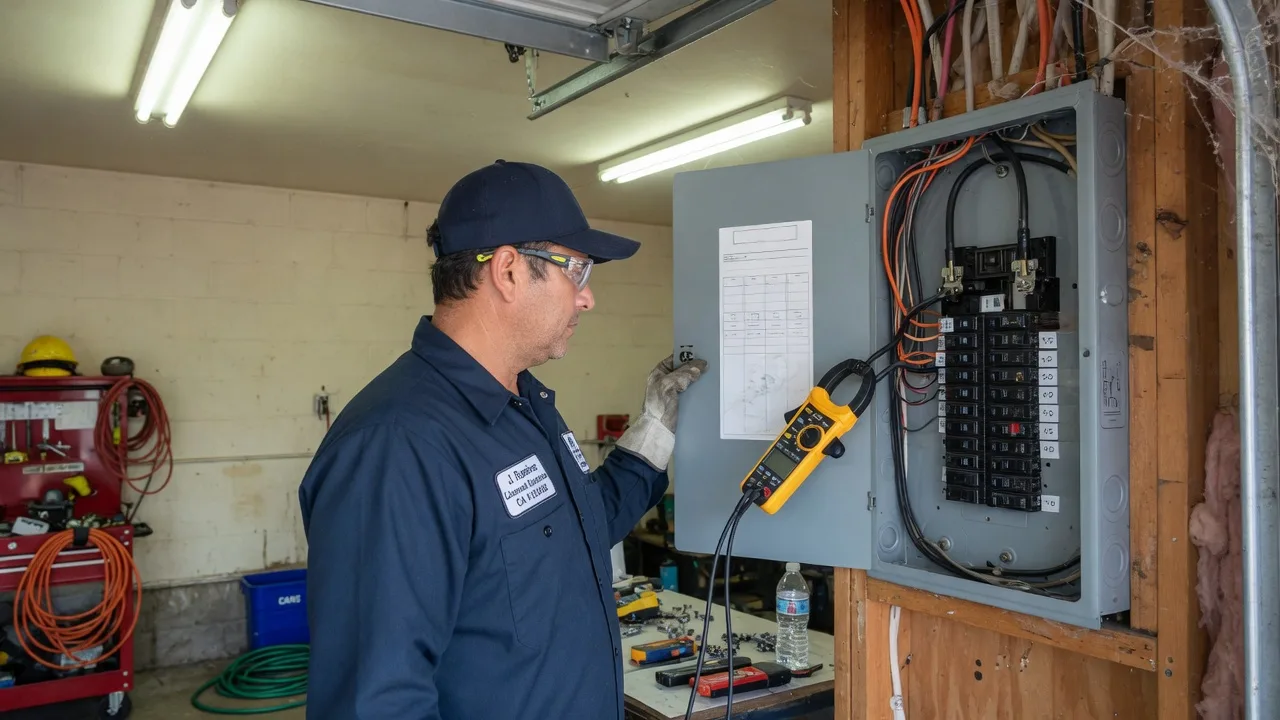
Start with what was running when the 20-amp breaker tripped
Begin with the moment before the trip. Write down which appliances, tools, lights, or chargers were running. Note whether several devices started together or one device had just switched on.
This matters in San Diego homes because one circuit may serve several ordinary loads. A kitchen appliance may share a circuit with other countertop equipment. A garage circuit may have tools, a refrigerator, or chargers connected. The panel label alone may not reveal everything the circuit serves.
Don’t unplug or move equipment that’s smoking, sparking, wet, or visibly damaged. Keep away from it. If there’s active smoke or fire, leave the building and call 911 from safety.
For a trip without those warning signs, unplug or turn off connected appliances before considering a reset. An identified tripped breaker may appear off or between on and off. Follow the instructions for your equipment. Don’t cycle unrelated breakers or repeatedly reset the same breaker to recreate the problem.
Record a few practical details:
- Which rooms or outlets lost power
- What equipment was operating
- Whether the trip happened immediately or later
- Whether you noticed buzzing, sparks, odor, discoloration, or flickering
- Whether the breaker had tripped before
These observations aren’t a diagnosis. They give an electrician a clearer starting point. For broader causes beyond one 20-amp circuit, read our guide to why a breaker keeps tripping.
How overload, a weak breaker, and a wiring fault differ
An overload, a weak breaker, and a wiring fault can produce the same visible result: the breaker opens and the circuit loses power. The difference can’t be confirmed from the handle position alone.
An overload pattern may appear when the trip follows a repeatable combination of connected equipment. That pattern is useful, but it doesn’t prove the circuit is otherwise safe. The electrician still needs to review what the circuit serves and how the problem occurs.
Breaker trouble is another possibility. Age, damage, fit, heat, and compatibility may be relevant to the electrician’s review. Homeowners shouldn’t remove the panel cover or swap the breaker as a test. A replacement also shouldn’t be selected from the amperage marking alone. The electrician must evaluate the existing equipment and circuit.
A wiring or connected-equipment fault may be suspected when the trip happens with little connected, starts after damage or water exposure, or accompanies warning signs. Those clues don’t identify the exact fault. Stop using affected equipment and arrange professional troubleshooting.
Arc-fault protection can add another layer to the diagnosis. If the device is identified as an AFCI or dual-function breaker, see our separate guide to an arc-fault breaker that keeps tripping. That page addresses AFCI-related patterns without treating every trip as a nuisance.
Bright Pro Electric connects homeowners with independent local pros for electrical troubleshooting. The matched electrician performs the inspection and explains the findings.
What homeowners should not reset, hold, or test
A reset doesn’t establish that the underlying problem has been resolved.
Skip any reset when there’s water exposure, visible damage, smoke, sparks, a burning odor, or discolored equipment. Don’t touch an outlet or switch to judge its temperature. Don’t remove a panel’s screwed-on cover, remove an outlet faceplate, or insert probes into a receptacle.
A device that isn’t operating doesn’t prove its wiring is de-energized. That’s why the safe homeowner role is limited to observations made without opening electrical equipment.
Warning signs that deserve qualified follow-up include frequent breaker trips, flickering lights, arcs or sparks, unusual sizzling or buzzing, a hot-insulation odor, discolored receptacle covers, shocks, tingling, and damaged insulation. Stop using affected equipment. Don’t reproduce the symptom for a photo or video.
If an identified breaker tripped without those hazards, equipment instructions may allow moving it fully off and then on after connected appliances are unplugged or turned off. If it trips again or the problem continues, leave it alone and contact an electrician.
The Electrical Safety Foundation International offers additional home electrical safety resources. General guidance can’t replace an inspection of your circuit, panel, and connected equipment.
When outlet rating and the rest of the circuit belong in the review
The “20 amp” marking doesn’t answer every question about the circuit. It doesn’t reveal all connected outlets, the installed wiring, device condition, breaker compatibility, or whether earlier changes were completed correctly.
Searchers often ask how many outlets can be connected, whether a 15-amp breaker can become a 20-amp breaker, or whether a particular wire size is allowed. No universal answer to those questions is approved in this page’s verified claims ledger. Don’t use a search snippet or product listing as permission to alter a circuit.
An electrician should review the full installed circuit before recommending a breaker-size change. Simply replacing a 15-amp breaker with a 20-amp model isn’t a homeowner troubleshooting step. The breaker, wiring, connected devices, equipment instructions, and local requirements all belong in the assessment.
Outlet appearance also doesn’t settle the issue. Our guide to 20-amp versus 15-amp outlets explains why the receptacle is only one part of the review.
Permitting depends on the work and location. In the City of San Diego, electrical installation, alteration, addition, and replacement generally require an electrical permit unless a specific municipal exemption applies. A narrow exemption can cover minor replacement or repair using the same size and general type, but it isn’t blanket permission for circuit changes.
Other incorporated cities run their own building departments. San Diego County Planning & Development Services handles unincorporated communities such as Alpine, Fallbrook, Lakeside, and Ramona. The electrician should confirm the authority for the property before proposing permit-dependent work.
What to compare in a troubleshooting proposal
A useful proposal separates diagnosis from a guessed repair. It should identify the reported symptom, the circuit being reviewed, and the equipment included in the scope. It should also explain what happens after the cause is found.
Compare proposals using the same questions:
- Does the scope cover the breaker, circuit, outlets, and connected equipment?
- Is troubleshooting separated from optional repair work?
- Who will perform the electrical work?
- Which licensed business is responsible for the contract?
- Will the electrician confirm permit responsibility for the exact address?
- Are parts, labor, exclusions, and warranty terms written clearly?
- Does the proposal explain how added work will be approved?
Don’t assume the lowest quote includes the same investigation. Ask each electrician to price the same written scope. A substantially lower figure deserves questions about omitted work, but it doesn’t prove anything improper.
If replacement is proposed, ask why it addresses the observed pattern. Our breaker replacement cost guide explains which scope details can affect a quote without promising a universal price.
You can verify a contractor’s business identity, license status, and classifications through the California Contractors State License Board. A license lookup doesn’t guarantee workmanship, insurance coverage, or a particular result. Ask for insurance documents and warranty terms separately.
Bright Pro Electric is a referral service. We match San Diego County homeowners with licensed, vetted, independent electricians. The matched professional evaluates the circuit, sets the project price, and performs any approved work.
When to call us
Call when a 20-amp breaker trips repeatedly, won’t stay reset, or accompanies buzzing, odor, discoloration, sparks, or flickering. A licensed electrician should inspect the circuit before anyone changes the breaker, wiring, or outlets.
Call us at (858) 988-5580 and we’ll connect you with a licensed local electrician.