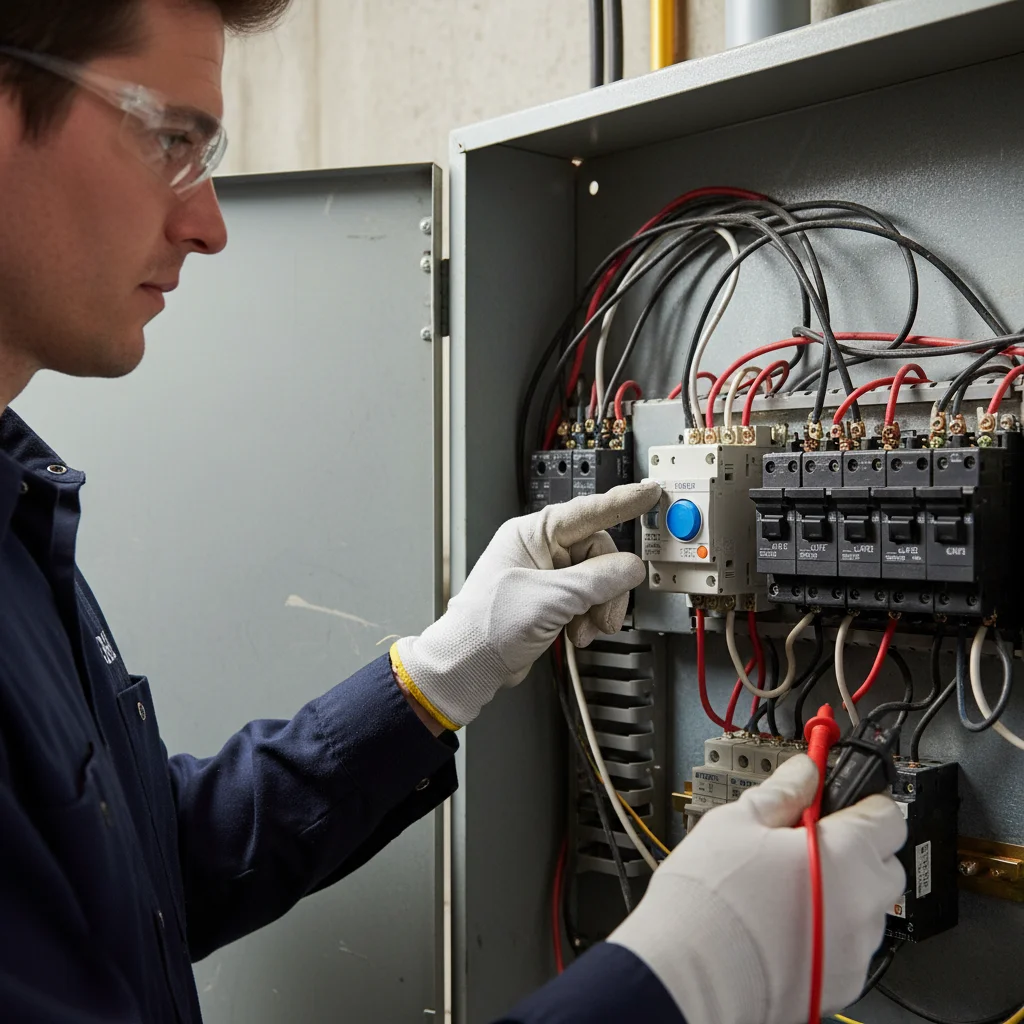
An AFCI breaker that keeps tripping is telling you one of two things: there’s a genuine arc fault somewhere in the wiring (a real fire hazard), or it’s a nuisance trip triggered by a brushed-motor appliance, an incompatible dimmer, or a shared-neutral circuit. If the breaker trips with everything unplugged, that’s a wiring problem. Call a licensed electrician immediately. If it trips only when you run a specific device like a vacuum or treadmill, that is still a category: the load, the breaker, or the circuit. It is not automatically safe wiring.
AFCI breakers are different from standard breakers: they detect the tiny electrical sparks that standard breakers miss entirely, which is why they trip on things a regular breaker would ignore. Understanding the difference between a real arc fault and a nuisance trip is the key to fixing the problem correctly rather than just bypassing your fire protection.
TL;DR
- AFCI breakers detect arc faults (tiny electrical sparks inside walls or cords) that standard breakers miss entirely. They’re required in most living areas per current code.
- A breaker that trips when you plug in a vacuum, use a dimmer, or have a shared-neutral circuit is a symptom category. Appliance noise, dimmer incompatibility, shared-neutral wiring, a tired breaker, or a real arc can all show up that way. It is not proof the wiring is safe.
- If the breaker trips with nothing plugged in, the problem is in the permanent wiring and needs a licensed electrician right away.
- Never replace an AFCI breaker with a standard breaker to stop the tripping. That’s a code violation and removes fire protection.
- Diagnosis in San Diego is listed here at $150 to $300 for the first hour. Some device-side causes finish in that visit. Hidden wiring work does not. Bright Pro does not promise same-day dispatch.
What an AFCI breaker actually detects
A standard circuit breaker, the kind we’ve had for decades, is a simple device. It protects against two things: overloads (too much power drawn on a circuit) and short circuits (a sudden, massive surge of current). It’s great at preventing wires from overheating and melting, but it’s completely blind to a much more common cause of electrical fires: arcing.
An arc fault is a small spark of electricity that jumps a gap in a circuit. A spark you can actually see at a receptacle: leave, call 911, then a licensed electrician. Do not stay to diagnose. See outlet sparks when plugged in. Arcs inside walls or cords can be hot enough to ignite nearby wood, insulation, or dust.
An AFCI breaker is a smart device with a microchip inside. It constantly monitors the sine wave, the electrical “heartbeat” of the circuit. It’s programmed to recognize the unique, sputtering electrical signature of a dangerous arc fault.
There are two main types of arcs it looks for:
- Parallel Arcs: A spark between two different wires, like a hot and a neutral. This can happen if a nail pierces a cable or insulation fails.
- Series Arcs: A spark along a single wire, often caused by a loose connection at an outlet or a frayed appliance cord.
When the AFCI’s chip detects a pattern that matches a dangerous arc, it shuts the circuit down in a fraction of a second, long before a standard breaker would ever notice a problem. This is a huge leap in home electrical safety, mandated by the National Electrical Code (NEC) for most living spaces.
Real arc faults vs. nuisance trips
An AFCI breaker tripping is stressful because you don’t know which of two scenarios you’re facing. Is it a life-saving intervention or a frustrating false alarm?
A real arc fault is the reason AFCIs exist. It means there is a genuine fire hazard somewhere on the circuit. This could be a frayed lamp cord hidden under a rug, a loose wire inside an electrical box, or wiring damaged by a drywall screw. In this case, the breaker is your first and only warning that something is dangerously wrong. Ignoring it or simply resetting it over and over is a serious gamble.
A nuisance trip, on the other hand, happens when the AFCI misinterprets a normal electrical signal as a dangerous arc. The breaker’s sensitive electronics see the electrical “noise” from certain devices and react defensively, shutting off the power even though there’s no actual danger. This is a common source of AFCI breaker problems. While it’s not a fire hazard, it can make entire rooms of your home unusable until the source is identified. If you’re dealing with any kind of breaker issue, it’s helpful to understand the basics of why a breaker keeps tripping before diving deeper into AFCI specifics.
The challenge for a homeowner is that it’s nearly impossible to tell the difference between the two without proper diagnostic tools. The breaker trips the same way regardless of the cause.
Common causes: vacuum motors, dimmers, and shared neutrals
While a real arc fault can happen anywhere, nuisance trips are often triggered by specific types of devices or wiring configurations. If your AFCI breaker tripping happens consistently when you use a certain appliance, you might be dealing with one of these common culprits.
Older appliances with brushed motors
Appliances like vacuum cleaners, treadmills, sewing machines, and older power tools use “brushed” motors. By design, these motors create tiny, continuous sparks as they run. It’s a normal part of their operation. However, to a sensitive AFCI, this constant sparking can look very similar to a dangerous series arc, causing it to trip. Newer, high-quality AFCIs are better at filtering this out, but it’s still a frequent cause of nuisance trips.
Incompatible dimmer switches
Modern lighting, especially LEDs, requires compatible dimmer switches. Older dimmers, or even new ones that aren’t specifically rated for your LED bulbs, work by rapidly chopping up the electrical waveform. This creates a messy electrical signal that the AFCI’s microprocessor can easily mistake for an arc fault. If your breaker trips when you adjust the lights, an incompatible dimmer is a likely suspect.
Shared neutrals (multi-wire branch circuits)
This is a more complex and common issue, especially in San Diego homes built decades ago. A multi-wire branch circuit (MWBC), or shared neutral, is a wiring method where two different circuits share a single neutral wire back to the panel. It was a cost-saving measure that is perfectly safe with standard breakers.
However, a standard single-pole AFCI breaker cannot function on an MWBC. The AFCI monitors the current on the hot and neutral wires, expecting them to be perfectly balanced. On a shared neutral circuit, the neutral is carrying the return current for two circuits, so the AFCI sees an imbalance and immediately trips, assuming there’s a fault. This isn’t a nuisance; it’s a fundamental incompatibility. Fixing this requires either rewiring or installing a special (and more expensive) two-pole AFCI breaker that’s designed for MWBCs.
When a tripping AFCI means hidden damage
The biggest mistake a homeowner can make is assuming a tripping AFCI is always a nuisance. Sometimes, it’s a critical warning of hidden danger that could lead to a devastating fire. You should never, under any circumstances, replace a required AFCI breaker with a standard one just to stop it from tripping. That’s a code violation that puts your family and property at risk.
A persistent arc fault breaker tripping could be pointing to:
- Punctured Wiring: A drywall screw, nail, or staple may have pierced a wire inside the wall. It might not cause a full short circuit, but it can create a slow, dangerous arc as current jumps the tiny gap. The difference matters, and what causes an electrical short explains where electrical shorting fits alongside arc faults.
- Damaged Cords: An extension cord or appliance cord that has been pinched by furniture, walked on, or bent repeatedly can have broken internal strands that arc.
- Loose Connections: Over time, vibrations and temperature changes can cause wire connections at outlets, switches, or light fixtures to loosen. A loose connection is a classic cause of a series arc fault.
- Old or Cracked Insulation: In older homes, the insulation on wires can become brittle and crack or flake off, especially in hot attics. This can expose the conductor and lead to arcing against wood framing or other wires.
- Rodent Damage: Mice and rats love to chew on the plastic insulation of electrical wires in attics, crawl spaces, and walls. This exposes the copper and is a very common cause of difficult-to-find arc faults.
If you’ve unplugged everything from the circuit and the breaker still trips, the problem is likely in the permanent wiring of your home. This requires professional attention immediately.
What an electrician will check first
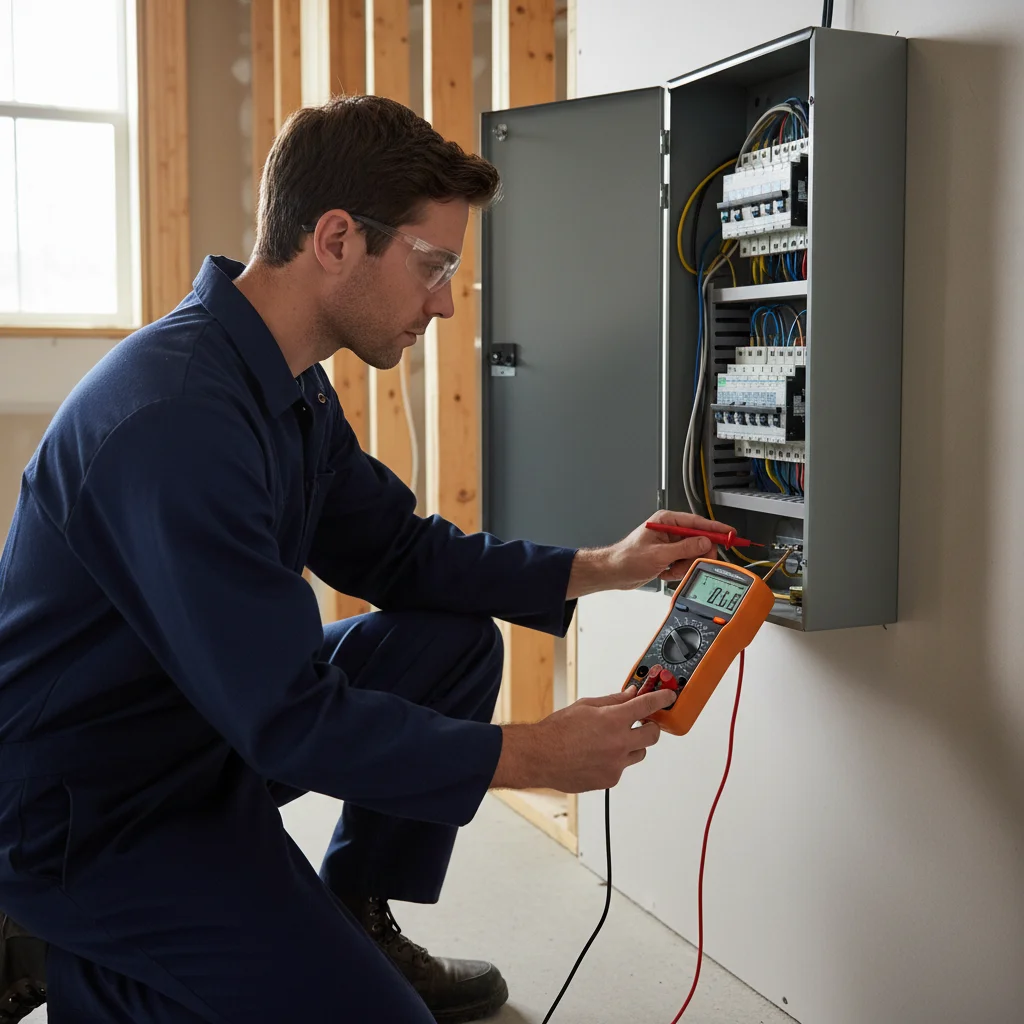
When you call an electrician for a tripping AFCI, a licensed electrician isolates devices from the circuit and tests whether the trip is in the wiring or in a load. Bright Pro matches you with that electrician. Bright Pro does not diagnose the circuit. See electrical troubleshooting.
Here’s what a licensed electrician typically checks. Bright Pro does not run this process.
- Isolate and verify: Confirm whether the breaker holds with loads unplugged. If it trips with nothing on the circuit, the fault is treated as wiring until proven otherwise.
- Device-by-device testing: Plug loads in one at a time, starting with the item in use when it last tripped.
- Physical inspection: Look at accessible outlets, switches, and fixtures for scorch, melted plastic, or loose terminals.
- Diagnostic tools: An AFCI tester and insulation testing can be used on hidden cable. That is electrician equipment, not a homeowner step.
- Panel connection: A loose landing at the breaker can arc in the can. FPE or Zinsco branding is an inspection flag, not a replacement verdict from this page. See panel upgrade if the inspection goes that way.
Cost to diagnose and repair in San Diego
The cost to resolve an AFCI tripping issue in San Diego County depends entirely on the cause. The first step is always the diagnostic service call.
You can typically expect a licensed electrician to charge a service fee for the visit, which usually covers the first hour of troubleshooting. This fee in the San Diego area often ranges from $150 to $300.
From there, the cost is determined by the fix:
- Simple Fix: If the issue is a faulty appliance, an incompatible dimmer switch, or a loose wire in an accessible outlet, the repair is often quick and can be completed within that first hour. The total cost might just be the initial service fee.
- Moderate Fix: If the AFCI breaker itself is faulty and needs replacement, you’ll pay for the part (around $50-$80) plus a small amount of additional labor. If it’s a shared neutral issue that requires installing a two-pole AFCI, the part is more expensive.
- Complex Fix: The most time-consuming and expensive repairs involve tracing a fault inside a wall. This requires more diagnostic time and could involve cutting and repairing drywall to access and fix the damaged wire. These jobs are billed hourly, and the final cost can vary significantly.
The electrician who does the visit quotes any repair after diagnosis. Bright Pro does not.
Frequently asked questions
Why does my AFCI breaker trip when I turn on the vacuum?
Older vacuums with brushed motors create small, continuous sparks as part of their normal operation. A sensitive AFCI can read that noise as a possible arc. That is one category, not proof the wiring is safe and not proof the vacuum is the only cause. An electrician can test the breaker, the cord, and the circuit.
My AFCI trips even with nothing plugged in. Is that dangerous?
Yes, that’s a serious warning sign. When the breaker trips with the circuit completely unloaded, the problem is almost certainly in the permanent wiring, not an appliance. Possibilities include damaged wire insulation in the walls, a nail or screw that pierced a cable, or a loose connection inside an outlet or junction box. Don’t keep resetting it. Call a licensed electrician.
Can I replace my AFCI breaker with a regular one to stop it from tripping?
No. AFCI breakers are required by the National Electrical Code in bedrooms and most living areas. Replacing one with a standard breaker is a code violation that removes the fire protection the AFCI provides. It may also create problems during a home sale or insurance claim. The right fix is finding and correcting the cause of the tripping, not bypassing the protection.
What is a shared neutral, and why does it cause AFCI problems?
A shared neutral (also called a multi-wire branch circuit) is a wiring method where two circuits share one neutral wire back to the panel. It was common in San Diego homes built decades ago. A standard single-pole AFCI can’t function correctly on a shared neutral because it sees an imbalance and trips. The fix is either rewiring the circuit or installing a two-pole AFCI breaker designed for this configuration.
When to call us
While you can try unplugging appliances to isolate a problem, any work involving opening outlets, switches, or your electrical panel should be left to a professional. AFCI circuits are complex, and diagnosing them requires specific knowledge and tools. Never simply replace an AFCI with a standard breaker to solve a tripping problem.
If your AFCI breaker keeps tripping and you can’t easily identify the cause, you’re dealing with either a wiring incompatibility or a genuine fire hazard. Independent licensed electricians have the right equipment to find the source of the problem quickly and safely. Bright Pro Electric matches San Diego County homeowners and property managers with independent licensed electricians. It does not hold a C-10, pull permits, or guarantee dispatch. Hours are Monday through Saturday, 7am to 7pm. After hours, leave a message. Use the contact form.