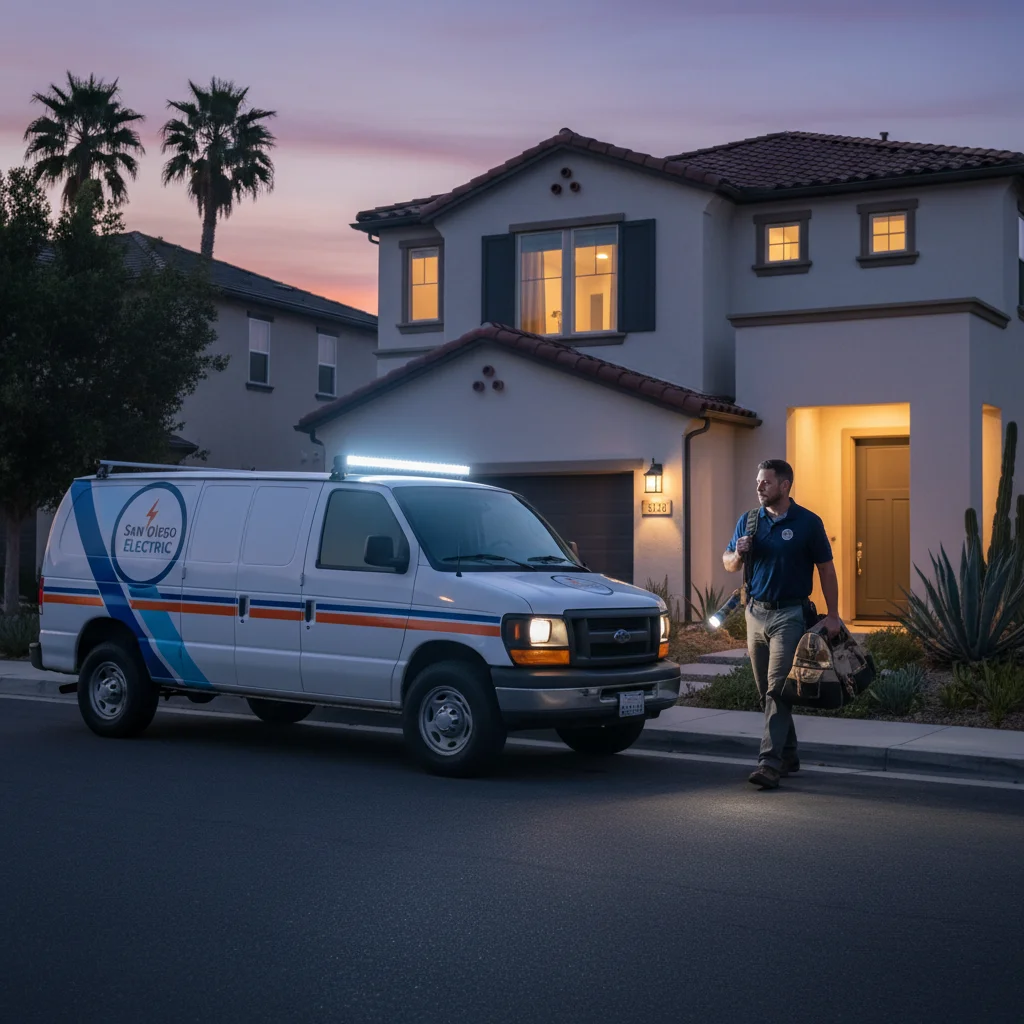
Storm damage electrical repair in San Diego starts by separating utility damage from a problem inside the home. Call SDG&E and 911 if a line is down or arcing. If the utility side is clear, a licensed C-10 electrical contractor should inspect wet equipment, repeated breaker trips, partial power loss, or outlets that stay dead after one safe reset.
San Diego’s Pacific storms and atmospheric rivers can bring heavy rain, wind, and occasional lightning. Most arrive from November through March. Wind-driven rain can reach outdoor panels, meter equipment, outlets, and fixtures. Grid voltage changes and transformer switching can also interrupt power without causing a wiring fault inside your home.
The next step depends on what lost power, what got wet, and where the damage sits.
First checks after the storm passes
Start from a dry location. Don’t remove a panel cover, touch a wet outlet, or approach damaged service equipment. A visual check can still reveal useful details for SDG&E or an electrician.
Look for these signs:
- A downed service line or wire touching a tree
- Arcing, sparking, smoke, or active fire
- Water staining near the panel or meter
- Moisture behind an outdoor outlet cover
- A tripped GFCI outlet or breaker
- One dead room while the rest of the house has power
- Lights that remain unusually dim or bright
- A breaker that trips again after one reset
- A burning smell near an outlet, switch, or panel
A whole neighborhood outage usually points to the utility system. Check SDG&E’s official outage information and report any visible line damage. An electrician can’t restore a utility feeder, transformer, service drop, or utility meter.
A problem limited to your home is different. It may involve a tripped protective device, wet outdoor wiring, damaged equipment, or a fault on the homeowner’s side of the service.
San Diego neighborhoods also face different storm conditions. Low areas around Mission Valley and Old Town can experience localized flooding. Parts of National City and San Ysidro near the Tijuana River can also see water collect during heavy rain. In Alpine, Julian, and Ramona, wind and branches near overhead lines deserve closer attention.
Storm damage electrical repair in San Diego: who to call
SDG&E owns and handles the service drop and utility meter. The homeowner is responsible for electrical equipment beyond the meter. That boundary gives you a starting point, but damaged equipment around the meter can involve both parties.
Use this call order:
| What you see | Who to call first | What happens next |
|---|---|---|
| Downed line, arcing line, or wire on a tree | 911 and SDG&E | Keep away until the utility confirms the line is de-energized |
| Several nearby homes have lost power | SDG&E | Check the official outage information and report visible damage |
| Damaged meter or utility service drop | SDG&E | The utility determines what belongs to its system |
| Wet meter base, panel, or homeowner-side wiring | SDG&E if utility equipment may be involved, then an electrician | Electrical inspection starts after the area is confirmed safe |
| One room or circuit has lost power | Electrician if a single safe reset doesn’t restore it | The electrician traces the affected circuit |
| GFCI trips again after the area dries | Electrician | Moisture or another fault may still be present |
| Burning smell, heat, smoke, or scorch marks | 911 for active fire, then an electrician | Leave damaged equipment alone until it’s safe to inspect |
Never approach a fallen line to determine whether it’s energized. A line that looks quiet can still be dangerous. Keep people and pets away, then report it to SDG&E and 911.
Once utility damage has been cleared, emergency electrical service can address faults on the home’s side. A licensed contractor can also coordinate with SDG&E if the repair involves both systems.
Why outlets stop working after heavy rain
Outlets can stop working because a GFCI has detected moisture. The affected GFCI may be in a garage, bathroom, kitchen, or outdoor area rather than beside the dead outlet.
That trip is the protective device doing its job. It doesn’t automatically mean the outlet is broken.
Wait until the outlet, surrounding wall, and connected equipment appear dry. Press the GFCI reset button once. If it won’t reset or trips again, leave it alone. Repeated resets can re-energize a circuit that still has moisture or another fault.
Some homes have several outlets downstream from one GFCI. One tripped device can make multiple outlets appear dead. The guide to outlets not working in one room explains how to narrow down that pattern without opening electrical boxes.
An outdoor cover can look intact while moisture sits behind it. Wind-driven rain may enter around worn seals, conduit openings, or loose covers. A contractor providing outlet and switch service can inspect the box, device, cover, and nearby wiring.
Breakers, voltage swings, and partial power
A storm-related outage doesn’t always mean water entered the wiring. Lightning, a grid voltage swing, or transformer switching can trip breakers or affect sensitive electronics. That’s different from a loose connection or damaged branch circuit inside the home.
Check the panel only if the floor, wall, and panel exterior are dry. A tripped breaker may sit between the fully on and off positions. Move it fully off, then back on once.
Stop if it trips again. Don’t keep resetting it.
A repeated trip means the protective device is still detecting a problem. Why a breaker keeps tripping covers common patterns and the details an electrician will ask about.
Partial power needs closer attention. One dead circuit may be a branch-circuit problem. Several dead circuits, unusually bright lights, or unusually dim lights can point to a larger service issue. Start with SDG&E if the utility service may be involved. Otherwise, schedule electrical troubleshooting for the homeowner-side system.
Unplug sensitive electronics if you can reach them without entering a wet area. Note which rooms, appliances, and lights are affected. Those details help distinguish a single-circuit fault from a broader service problem.
When not to wait for the system to dry
A single GFCI trip after rain may clear once the affected area dries. Other signs call for immediate attention.
Don’t wait if you see water inside electrical equipment, repeated breaker trips, damaged service hardware, smoke, arcing, or scorch marks. A persistent burning electrical smell also needs prompt action.
Don’t assume the problem is solved because power returned. A wet connection may work intermittently. An electrician can inspect accessible equipment, test affected circuits, and identify what needs repair or replacement.
If diagnosis leads to a panel upgrade, circuit addition, rewiring, or outlet relocation, the City of San Diego lists those projects within its electrical permit process. Homes outside city limits follow their own local jurisdiction. The contractor should identify the correct permitting agency before permanent work begins.
California defines C-10 contractors as those who work on electrical wires, fixtures, appliances, raceways, conduits, and related electrical systems. Most electrical installation, replacement, substantial alteration, or extension requires a licensed contractor regardless of price. You can verify a contractor through the official CSLB license lookup before hiring.
Frequently asked questions
Who should handle storm damage electrical repair in San Diego?
Call SDG&E first for a downed service line, damaged utility meter, neighborhood outage, or possible utility-side problem. Call a licensed C-10 electrical contractor for wet homeowner-side equipment, dead circuits, or breakers that won’t stay reset.
Why did my outlets stop working after last night’s storm?
A GFCI may have tripped after detecting moisture. Check accessible GFCI outlets and breakers from a dry location. Reset the device once, then call an electrician if it won’t hold.
Can I keep resetting a breaker after rain?
No. Try one reset only when the panel exterior and surrounding area are dry. If the breaker trips again, leave it off and arrange an inspection.
Who repairs a line damaged by a tree branch?
SDG&E handles the utility service drop and other utility-owned lines. Report the line to SDG&E and 911, then keep everyone away. An electrician shouldn’t begin nearby work until the utility confirms the line is de-energized.
Does storm damage electrical work need a permit?
It depends on the repair. In the City of San Diego, panel upgrades, added circuits, rewiring, and outlet relocation are handled through the electrical permit process. Other cities and unincorporated areas use their own permitting agencies.
For storm damage electrical repair in San Diego, Bright Pro Electric can connect you with a local pro who can inspect the homeowner-side system. Call (858) 988-5580 and describe what lost power, what got wet, and whether SDG&E has cleared the utility side.