New backsplash tile or wall paneling can leave an outlet sitting behind the finished surface. An electrical box extender may be part of the repair, but only after a licensed electrician checks the existing box, conductors, device, and proposed accessory.
Start with how tile or paneling changed the wall surface
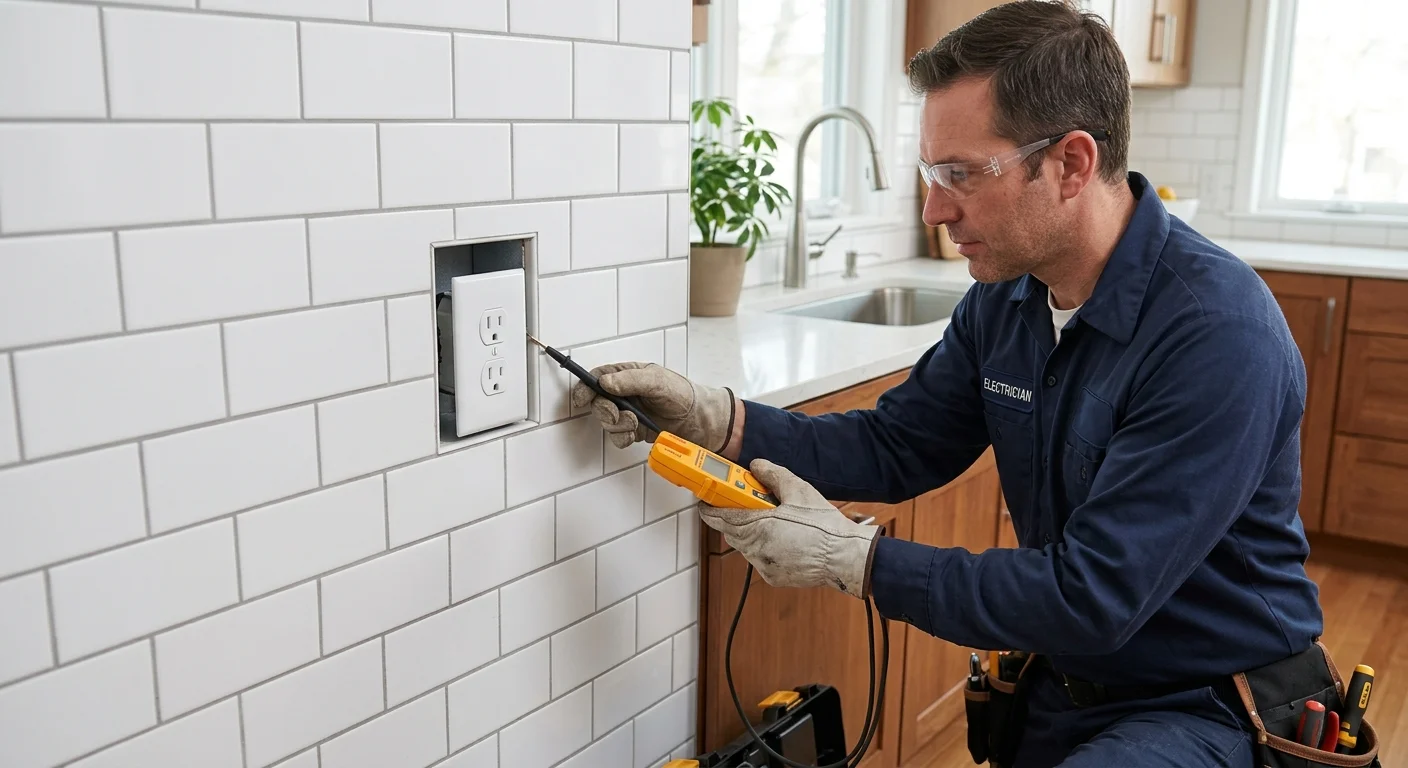
Start with the wall, not the accessory. In many backsplash remodels, the electrical box stays where it was while tile and setting material move the finished surface forward. Decorative wall panels can create the same mismatch. The outlet may look sunken, the cover may sit unevenly, or the edges around the opening may remain visible.
That visual change doesn’t identify the right repair by itself. An electrical box extender may be considered, but the wall finish is only one part of the decision. The electrician also needs to understand what was already in the wall before the tile or paneling went up.
Give the pro a simple timeline. Note whether the outlet sat evenly before the remodel, whether a tile installer changed the opening, and whether the device now moves when a plug is inserted. Photos from before the finish work can also help define what changed without anyone removing the device.
This problem appears across the county, but the setting varies. A North Park kitchen backsplash, a Chula Vista bathroom finish, and a Carlsbad wall panel may reach different building departments. The useful local detail is the property address, not a countywide guess.
Why a recessed device can change the repair scope
An outlet that sits behind the new surface isn’t automatically an extender-only job. The visible recess tells you where the symptom appears, not what the electrician will find inside the opening. The repair scope depends on whether the existing box, device, conductors, and proposed accessory can remain together in an acceptable assembly.
The approved claims ledger doesn’t give a universal depth cutoff or a rule that every recessed outlet needs the same product. So this page won’t invent one. It also won’t treat a neat cover plate as proof that the concealed parts are suitable.
California licensing rules matter once the scope involves electrical installation, replacement, substantial alteration, or extension. The $1,000 minor-work threshold applies as of January 1, 2026, but the exemption doesn’t rescue most electrical work. Any work requiring a building permit also requires a license.
That makes contractor verification part of the decision, not an afterthought. Homeowners can check a contractor’s status through the California Contractors State License Board before approving the work. Bright Pro Electric is a referral service. We connect homeowners with licensed, independent local pros, and the selected electrician defines and performs the repair.
How an electrician checks the existing box and conductors
The assessment should answer four connected questions: what changed at the wall surface, what condition the existing box is in, whether the conductors and device support the proposed scope, and whether the finished repair will sit correctly. Those answers come from an electrician’s on-site review, not from a product photo.
The pro may document the box type, its attachment, the shape of the tile opening, and the amount of recess. The same review can identify visible damage, previous modifications, crowding, or conductor conditions that limit the available repair choices. This isn’t a removal guide. Device removal, box modification, and conductor handling stay with the licensed electrician.
Context also matters. Tell the electrician whether the circuit had problems before the remodel. A cosmetic mismatch that began after tile work presents differently from an outlet that was already loose, intermittent, or damaged. Those histories can lead to different proposals even when two outlets look equally recessed.
For homeowners comparing outlet and switch installation service, ask for the assessment to be written into the scope. It should say what the electrician found, what stays, what changes, and which questions still depend on further access.
When replacement makes more sense than extension
An extender may remain under consideration when the electrician finds the existing components suitable and the issue is limited to the changed wall plane. Replacement may enter the proposal if the electrician documents a damaged or unstable box, previous modifications, conductor concerns, or an opening that changes the available repair choices.
Those are possible reasons for a wider scope, not universal replacement rules. The claims ledger doesn’t establish a single replacement test for every box. It also doesn’t support treating a home’s age as a diagnosis. Older housing can make a careful review more relevant, but only the electrician can evaluate the specific outlet.
There is a real local contrast. The site’s verified Census proxy estimates that 68.7% of La Mesa housing predates 1978, compared with 27.5% in Carlsbad. That difference says something about local housing stock. It doesn’t reveal the material, condition, or history of one electrical box.
Ask the contractor to explain why the proposed scope stops at an electrical box extender or moves to replacement. The explanation should connect each recommendation to an observed condition. It should also separate the electrical repair from optional finish work around tile, grout, or paneling. That keeps the electrical decision clear.
Which product ratings and permit details need confirmation
The exact accessory matters, but no universal product rating is approved in the claims ledger for this repair. The acceptable model, material, size, and device combination couldn’t be confirmed from the approved research. The electrician should identify the proposed product and verify its markings and manufacturer instructions for the box and wall condition actually present.
Ask for that product identification in the proposal. A generic “box extender” line leaves more unanswered than a documented model or specification. If final selection depends on access, the proposal can say so. That’s more accurate than guessing from a photo.
Permit handling also depends on the address and final scope. For property inside the City of San Diego, the Development Services Department issues electrical permits. The ledger confirms that outlet relocation is permit work there, but it doesn’t confirm a universal permit rule for an extender-only repair. Ask the department or matched electrician to confirm the current requirement before work starts.
Unincorporated addresses in Ramona, Lakeside, Fallbrook, Alpine, and Bonsall route through San Diego County Planning & Development Services. Poway has its own Building Services division. Other incorporated cities use their own building departments. Local rules may add to California’s 2025 Electrical Code, effective January 1, 2026.
What to compare in an outlet repair proposal
A useful proposal makes the repair decision visible. It should name the outlet location, describe the finished wall, record the electrician’s findings, and state whether the base scope is extension or replacement. It should also identify any device replacement, finish repair, permit work, or return visit that isn’t included.
Two proposals may not cover the same scope. One may keep the existing box. Another may include replacement after the electrician’s findings. A shared phrase like “recessed outlet repair” doesn’t make them equal.
No verified countywide price for an electrical box extender repair appears in the approved claims ledger. This page therefore doesn’t publish a guessed range. Ask each contractor to separate labor, product, permit, and wall-finish allowances. Confirm how added work will be approved if the box can’t stay.
The proposal should name the contractor performing the electrical work and show the license details you can verify with CSLB. Bright Pro Electric doesn’t hold the trade license, set the contractor’s price, or provide the workmanship warranty. Ask the selected pro to put any warranty terms in writing.
Also compare who protects the finished tile and handles cosmetic touchups. A clear boundary helps you compare the same work instead of choosing between vague totals.
When to call us
When a recessed outlet repair may affect the box, device, or conductors, it needs a licensed electrician’s assessment. Bright Pro Electric can match you with a licensed, independent local pro.
Call us at (858) 988-5580 and we’ll connect you with a licensed local electrician.