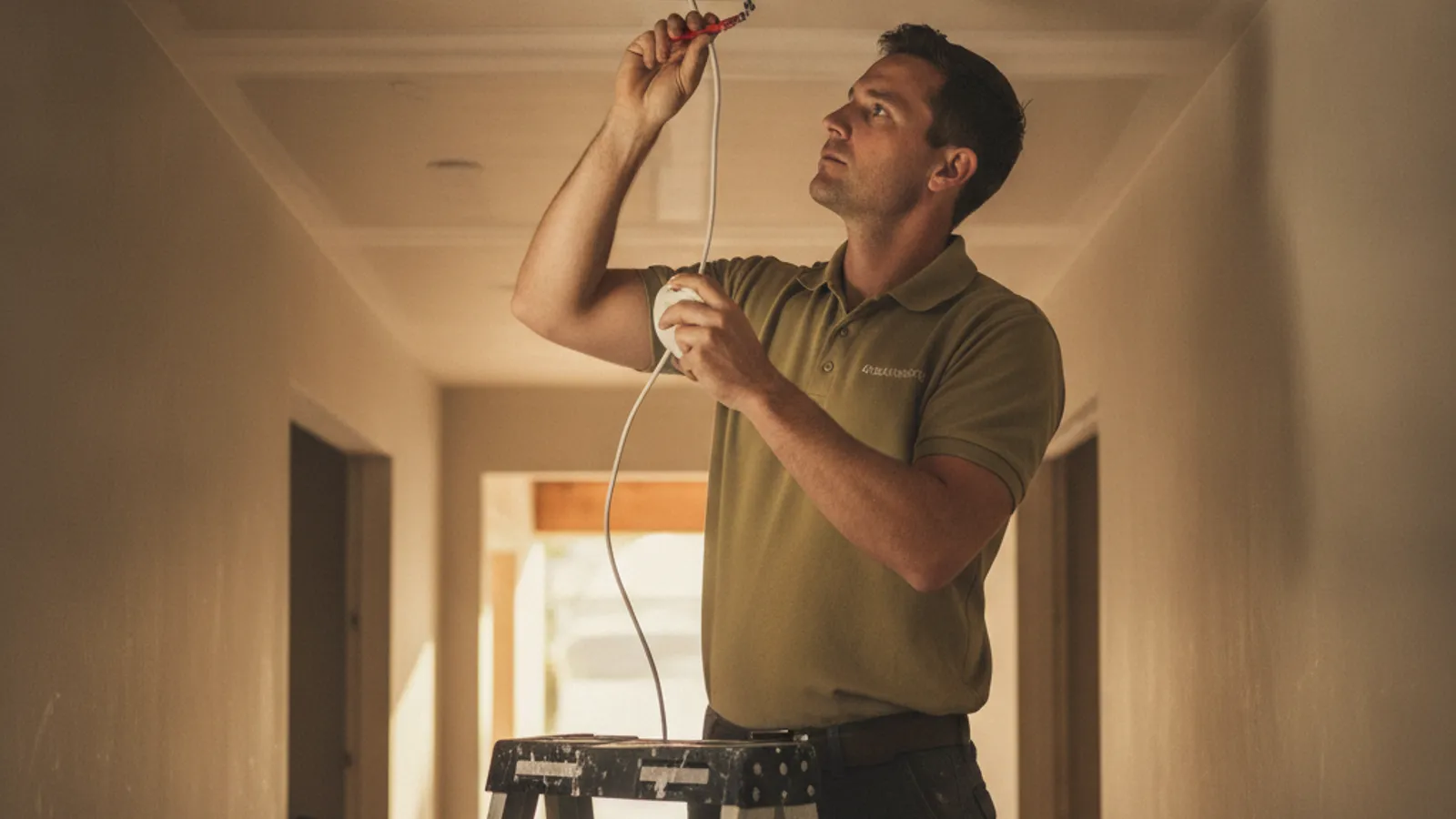
Replace a household smoke alarm 10 years after the date printed on the back of the unit. That is the NFPA smoke-alarm guidance and the same 10-year replacement CPSC staff publishes in CPSC Pub. 559. US Fire Administration says the same: pull the alarm, read the manufacture date, replace it at year 10. A battery change does not reset that clock.
Bright Pro Electric matches San Diego County homeowners with licensed C-10 electricians. You hire and pay the electrician directly.
This page is about age and replacement. If a permit already opened your walls, the rule that upgrades the whole house to hardwired, interconnected alarms is a different job. That is covered in smoke detector requirements when you pull an electrical permit.
How to read the date
Take the alarm off the ceiling or wall. The manufacture date is on the back. Add 10 years. That is the replacement date, not the day you last changed a 9-volt.
If there is no date, treat the unit as expired. If it chirps after you put in a new battery, the unit itself is at end of life. NFPA says that chirp is a replacement signal, not another battery.
Sealed 10-year lithium alarms are still replaced at year 10. You throw the whole unit away. You do not open it for a cell.
Battery-only vs hardwired
A listed battery-only alarm on a finished ceiling is a homeowner swap if you can reach it safely and the new unit is listed. That is not electrical work.
A hardwired alarm with an interconnect conductor in the box is live 120-volt work. Do not twist those wires. A licensed C-10 is the usual contractor for that landing. B&P §7048 is a narrow under-$1,000 path that still cannot need a building permit and still cannot be advertised as contractor work. It is not permission to work in a live ceiling box. The electrician you are matched with isolates the circuit, lands the interconnect so listed alarms still sound together, and puts a listed unit back on the same box.
System smoke detectors on a monitored fire-alarm panel are not the same product. Those follow NFPA 72 inspection and sensitivity testing, not a blanket 10-year homeowner swap. If you have a panel in a commercial space or a large house with a fire-alarm contractor, call that company.
What still has to be in the house
Placement is separate from age. California follows the residential smoke-alarm locations in the residential code: inside every bedroom, outside each sleeping area, and on every level, including a basement. Interconnection is required once a qualifying permit opens the framing. Working alarms at sale is a point-of-sale rule, and it can still be met with battery-only units if no permit has opened the walls. Age still applies. An expired alarm is not a working alarm.
Combo smoke and carbon monoxide units often have a shorter CO-sensor life, commonly listed at 7 years by the manufacturer. Read the label on that unit. Do not assume the smoke side and the CO side share the same date.
When to call instead of swapping it yourself
Call if any of these are true:
- The alarm is hardwired, or you see more than a battery snap in the box.
- Several units need to stay interconnected so one smoke event sounds the whole house.
- You are already in a permitted remodel, panel upgrade, or rewire. That is the permit-trigger path.
- You cannot reach the unit safely.
If the box is warm, the wires are scorched, or you smell plastic or smoke, leave. Call 911 if there is smoke or fire. Then use contact from outside. That is an emergency electrician match, not a detector swap. Do not operate the main.
Use contact and say whether the alarms are battery-only, hardwired, or mixed. Hours are Monday through Saturday, 7am to 7pm. After hours, leave a message. Bright Pro matches you with a licensed electrician who covers your city.