The car already has a parking spot. The Level 2 charger has to meet that spot, the panel, and the City of Vista, in that order. On an older North County house, those three rarely line up on the first look.
Start with parking location and daily charging use
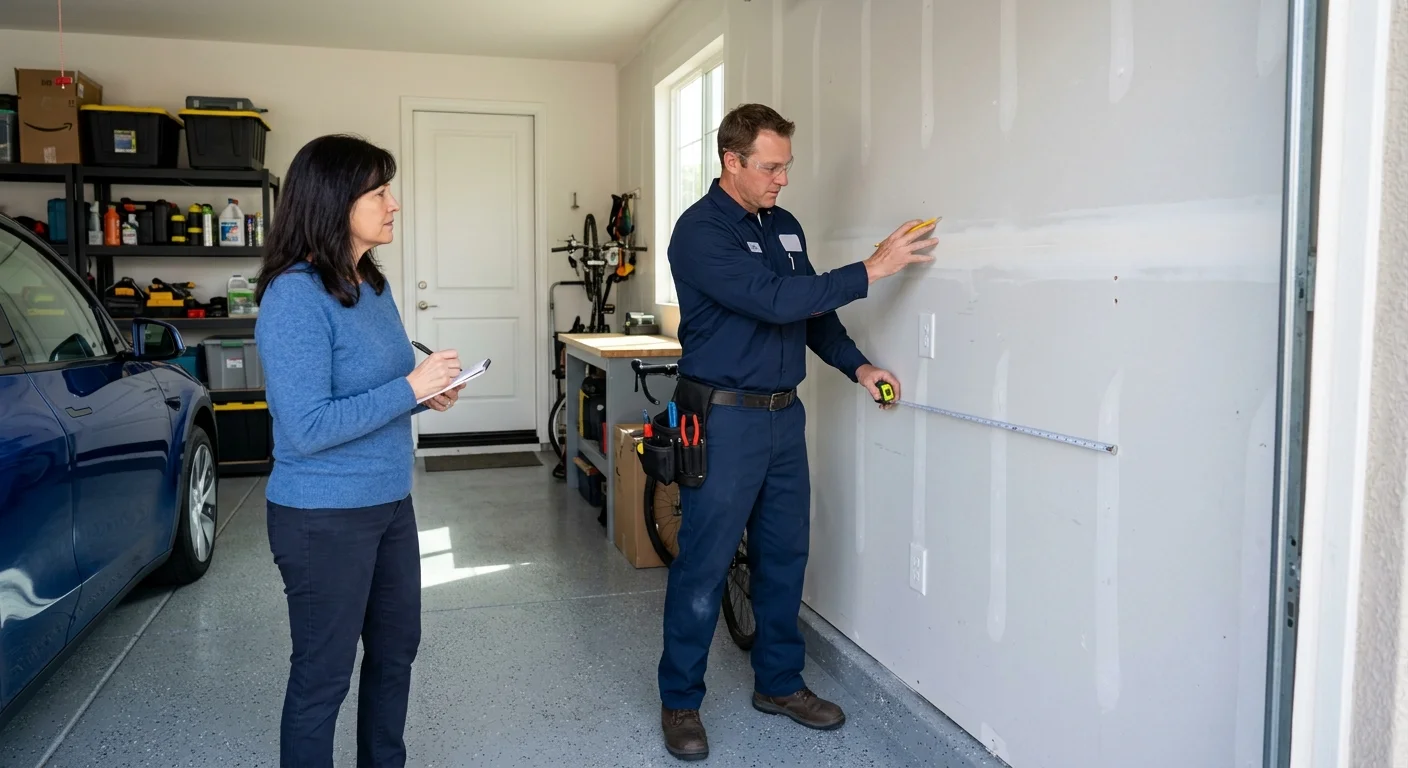
Stand where the car sits overnight. That is the install, not the aisle, the driveway apron, or the wall that looks easiest to drill. In Vista, that spot is often an attached two-car garage in an 1980s tract, a detached garage on an older lot near downtown, or a side-yard park next to the house on a narrower street. The charger belongs on the wall the charge port actually faces.
Daily use sets the circuit plan the electrician draws. A short commute that plugs in every night is a different load than two cars that both need a full charge before morning. Tell the electrician how many vehicles, which stall they use, and whether anyone will charge during late afternoon. That last detail matters on SDG&E time-of-use service. On EV-TOU-5, bundled residential rates effective August 1, 2026 run 13.1¢/kWh in super off-peak, 49.6¢/kWh off-peak, and 80.2¢/kWh on-peak from 4 p.m. to 9 p.m. every day. On-peak is about 6 times super off-peak. Those figures exclude the monthly Base Services Charge. The dollar amount of that charge is not published on SDG&E’s EV plans page, so confirm it on your bill.
A 40-amp Level 2 charger at about 7.7 kW, used 9 hours a week, is about 3,600 kWh a year. At 13.1¢ that energy is about $470 a year. At 80.2¢ it is about $2,880 a year. The spread is about $2,400 if the same hours land on-peak instead of super off-peak. Super off-peak on that plan is weekdays midnight to 6 a.m. and 10 a.m. to 2 p.m., and weekends midnight to 2 p.m. Schedule charging there when the plan allows it.
Front wall versus side wall is a parking question, not a style question. If the port is on the street side, a front-wall unit may be the short, clean run. If the car noses in and the port sits toward the yard, a side wall or an interior garage stall is the better mount. Outdoor-rated gear belongs outside. Indoor gear belongs inside. The electrician who walks the stall with you should say which of those you actually have, then route the cable so nobody drags a connector across a walkway every night.
Bright Pro Electric matches Vista homeowners with licensed, independent electricians for EV charger installation. The matched pro assesses the stall, the panel, and the route. The brand does not install the unit, pull the permit, or own the truck.
How Vista garages and older 100-amp homes change the plan
Vista is inland North County, not the Encinitas coast and not Escondido’s further-inland grid. Census ACS 2023 5-year data (table B25034) counts 32,589 housing units in Vista. The peak building decade is 1980 to 1989, at 29.6% of units. About 34.6% of units predate 1978. That older slice is where 100-amp services, crowded panels, and long garage runs show up together.
An 1980s Shadowridge or Rancho Vista garage is often attached, with the panel on a side wall or in the garage itself. The charger can sit a few studs from the panel if the stall matches. Downtown Vista, Buena, and older lots off the SR-78 corridor more often have a detached garage, a side-yard park, or a panel on the house while the car sits twenty or thirty feet away. That is a different job. The electrician is planning a feeder, a subpanel, or a protected outdoor run, not a short garage whip.
A 100-amp main is not an automatic no. It is a reason to stop and calculate. The house may already carry air conditioning, an electric range, a dryer, and a spa. Adding a Level 2 charger on top of that is a load question, not a guess. Electricians commonly use a load calculation (NEC 220.87 is the standard-practice reference) on the existing service before they size a new circuit. That calculation can support a charger on the current service, point to a load-management device, or show that the service has to change first. Do not treat a spare breaker space as proof the service can take the charger.
Older stock also concentrates Federal Pacific Stab-Lok and Zinsco panels, aluminum branch wiring, and ungrounded two-prong circuits. If the cover on your garage wall is one of those, the charger conversation starts with the panel, not the mounting bracket. A matched electrician should say so on the first visit. For a wider Vista electrical snapshot, see our Vista electrician guide.
HOA streets in Vista still follow California Civil Code section 4745. The homeowner pays for installation and the electricity. The homeowner must use a licensed contractor. An application not denied in writing within 60 days is deemed approved. Since January 1, 2026, SB 770 removed the extra rule that the association be named as an additional insured. The liability policy, the 14-day certificate, and the annual certificate still apply. A board can still deny in writing and can still set reasonable conditions.
What panel capacity can change before a charger is added
The panel is the gate. Until someone reads the label, counts the loads, and looks at the bus, charger talk is incomplete. The electrician is checking four things: the main-breaker rating, the bus rating, spare spaces or the need for tandem or replacement breakers, and whether the grounding and bonding are fit for a new 240-volt circuit.
Not every charger needs a brand-new circuit. Some houses already have a 240-volt path in the garage. That path still has to be identified, protected, and confirmed for the unit you actually buy. Reusing the wrong breaker or sharing a dryer circuit is not a shortcut. It is a failed inspection waiting to happen. If the existing path does not fit, the electrician adds a dedicated circuit, a subpanel in a detached garage, or a service change.
When the calculation does not clear, the usual forks are a service upgrade, a load-management setup that sheds other loads while the car charges, or a smaller dedicated circuit that matches what the service can spare. None of those is a default. They are outcomes of the same visit. Nearby city pages on this site quote smart-panel add-on ranges for Carlsbad, San Marcos, and other coordinated solar-plus-EV jobs. Those figures are tied to those city pages and those scopes. They are not a Vista price and they are not a county average. Do not import them.
If SDG&E has to change the service, that is a utility step on top of the city permit. Applications go through SDG&E’s project tools. The Express Program is for panel work with no added load. A charger is added load, so do not count on Express as the path. SDG&E does not publish a standard timeline on its service-planning pages. Do not let anyone promise you one.
A C-10 electrical contractor’s classification covers installing and connecting the wiring, raceway, and equipment that will feed the charger. Check the business on the CSLB license lookup before you sign. A license number is digits only, at most eight of them. Ask which licensed business is on the contract, who pulls the permit, and who meets the inspector. A general building contractor can be on a job that includes electrical work only under the tests in Business and Professions Code section 7057: two unrelated trades besides framing, the right specialty classification, or a subcontract to an appropriately licensed electrical contractor. For electrical-only charger work, that usually means a C-10 on the contract.
Confirm Vista permits and utility steps for the address
Vista is its own city. The City of Vista building department issues electrical permits inside city limits. That is not the City of San Diego Development Services desk, and it is not County Planning & Development Services. County PDS covers unincorporated places such as Bonsall and Fallbrook. A Vista street address uses Vista’s counter, Vista’s forms, and Vista’s inspection request. Confirm the current packet, who may apply, and how inspections are booked on the city’s own pages. Fees and triggers change. No Vista fee is published in this site’s claims ledger, so do not take a number from memory or from another city’s schedule.
A countywide explainer still helps you know what to ask. Read EV charger permits in San Diego County for the questions, then take those questions to Vista. Ask whether the job is a no-plan route or a plan review. Ask what photos, load calculation, and equipment cut sheets they want. Ask whether the electrician or the owner-builder is listed on the permit. City of San Diego rules about Simple No-Plan EV chargers in private garages do not travel to Vista. Do not treat them as local law here.
If the house sits in a different city, the office changes with the city line. EV charger installation in Escondido is a different building department, even though both towns sit on the inland SR-78 corridor. San Marcos, Oceanside, and Carlsbad each run their own shops too. Use the city on the permit, not the city on the mailing label.
Utility steps sit beside the permit when the service changes, the meter moves, or SDG&E has to sign off on added load. The electrician should say, in writing, who files that paperwork. If nothing on the weatherhead or the meter is changing, the city permit and inspection may be the whole public process. That is an address-level call, not a Vista-wide rule.
Insurers can deny claims tied to unpermitted or unlicensed work, and unpermitted work creates disclosure problems at resale. That is not the same as saying a policy is automatically void. Ask your carrier what it needs to see after a charger goes in.
What to compare in charger installation proposals
Line the bids up on the same stall, the same panel photo, and the same charger rating. CSLB recommends at least three written bids on the same scope. A much cheaper number is a prompt to ask what was left out, not proof of a bargain.
Every proposal should name the mount location, indoor or outdoor rating, circuit and breaker, raceway route, who pulls the Vista permit, who calls for inspection, and whether a panel change or load-management device is in or out. If a bid is silent on the permit, treat it as incomplete. If two bids disagree on whether the 100-amp service can hold the charger, ask each electrician to show the load calculation, not a shrug.
Hardware and labor are separate lines. Countywide ranges for the full install live on our EV charger installation cost in San Diego page. This Vista page does not invent a local average. Ask for an itemized quote so you can see the unit, the homerun, the permit handling, and any service work as distinct pieces. Compare warranty language from the manufacturer and from the installing contractor. Bright Pro Electric does not warrant the work. The matched electrician does.
Skip testimonials on a card or a truck wrap. Verify the license, the classification, insurance documents with the carrier, and a written scope. Ask who will be on site and how that crew relates to the licensed business. A business license does not mean every person on the driveway holds an individual C-10.
If solar, a battery, or a second charger is coming later, say so now. A panel that barely clears one 40-amp circuit may not clear the next project. The electrician can leave space, a subpanel, or a load-management path that keeps you from opening the wall twice.
Frequently asked questions
How much does a home EV charging unit cost?
The wall unit and the install are different costs. Unit pricing depends on the model you buy. Installation depends on the garage run, the panel, and whether the service has to change. This site does not publish a Vista equipment price. Use the county cost guide linked above for the install side, then get a written Vista quote on your stall and panel.
How difficult is it to install an EV charger?
It is licensed electrical work: a 240-volt circuit, a load calculation, a city permit, and an inspection. Difficulty tracks the house, not the brochure. A short run from a garage panel with spare capacity is a smaller job than a detached garage on a 100-amp service. Do not treat it as a weekend add-on. California’s contractor licensing chapter has a minor-work dollar threshold, but that threshold does not turn charger wiring into casual work, and work that needs a building permit needs a license at any price.
Should an EV charger be installed on the front or side of the house?
Put it where the charge port sits when you park the way you actually park. Front walls fit street-facing ports and some driveway stalls. Side walls fit yard-side ports and many attached garages. Outdoor locations need outdoor-rated equipment. The matched electrician should walk the stall with you and pick the wall that keeps the cable short and off the walking path.
What does it cost to put in an EV charger?
There is no verified Vista average in the claims ledger, and this page will not invent one. Cost moves with circuit length, indoor versus outdoor gear, permit path, and whether the panel or service has to change. Compare itemized bids on the same scope, and read the county cost article for the ranges this site does publish.
When to call us
Call when you have a Vista parking stall, a panel photo, and you want a licensed electrician to say whether that stall can take a Level 2 charger without a service change. Independent matched electricians do the assessment, the permit, and the install. Call us at (858) 988-5580 and we’ll connect you with a licensed local electrician.