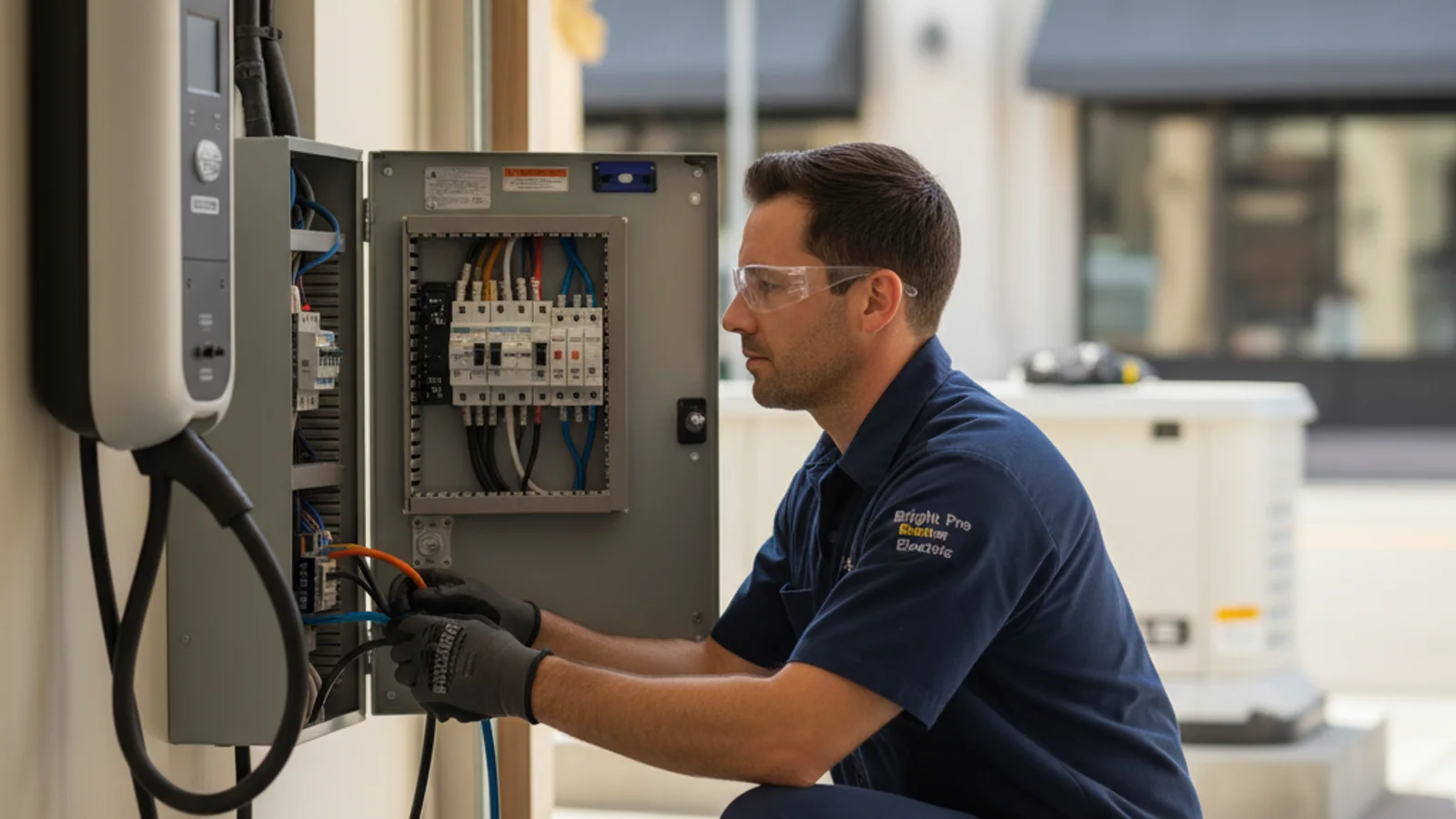
Del Mar electrical work runs at a different tier than most of San Diego County. The city sits on a coastal bluff with full ocean exposure, which means salt-air corrosion drives outdoor service equipment failures faster than anywhere north of Coronado. The estate-grade housing inventory across Beach Colony, Olde Del Mar, and Del Mar Mesa demands 320-amp and 400-amp services, multiple EV chargers, standby generator backup, and full smart-home electrical infrastructure as a baseline. And when the Del Mar Fairgrounds opens for racing season, the Camino Del Mar restaurant and retail corridor generates steady commercial tenant improvement work on top of the residential load. If you need a licensed electrician in Del Mar, here’s what to expect.
Estate electrical scope in Del Mar
Most Del Mar residential work is coordinated, multi-trade scope rather than single-task calls. A typical bluff-top estate project combines a 320-amp or 400-amp service upgrade, installation of two to four Level 2 EV chargers, a standby generator with automatic transfer switch, smart-home electrical infrastructure, pool and spa equipment circuits, and landscape lighting runs. All of that often gets planned and permitted as one coordinated project.
The housing inventory reflects the city’s coastal character. The Beach Colony stretch from 15th Street through 28th Street includes some of the oldest estate properties in the city. Olde Del Mar around 15th Street and Camino Del Mar has a mix of original mid-century construction and heavily renovated custom homes. Del Mar Mesa on the east side runs toward Carmel Valley with newer custom-build inventory. Del Mar Heights and Crest Canyon fill out the balance. Across all of these, the working assumption is that original service equipment is undersized, original service wiring doesn’t meet current NEC capacity requirements, and any smart-home renovation triggers a full NEC 220.87 load calculation before independent licensed electricians size the new service.
For estate properties, a licensed electrician coordinates with architects, AV integrators, landscape architects, and pool trades. That covers scope split, rough-in timing, concealed conduit routing, and access with the property manager. Bright Pro does not run that crew.
Salt-air corrosion and marine-grade equipment
Del Mar bluff-top homes face the strongest north-coastal salt exposure outside Coronado. That direct ocean exposure accelerates corrosion on standard outdoor service equipment much faster than you’d see five miles inland. Outdoor equipment on a bluff lot needs listed weather-rated enclosures. Replacement interval is a manufacturer and inspection finding, not a five-to-eight-year Bright Pro cycle.
Ask the electrician which listed NEMA enclosure, gaskets, and terminations the listing and the adopted code require at that location. There is no Bright Pro materials spec. When a service is upgraded, replacing only one corroded outdoor part and leaving the rest can fail inspection. That is a coordination question, not a guaranteed package.
On interior work, salt air can reach attic and crawlspace junction boxes on properties within a few hundred feet of the bluff. Salt through ventilation can corrode unprotected wire nuts and terminals, especially on older splices. A licensed electrician may inspect and re-terminate accessible interior splices when they quote a bluff-side service upgrade. Bright Pro does not write that as a standard line item.
Typical project costs in Del Mar
Del Mar estate electrical work runs at the higher end of San Diego County pricing, driven by project size, permit coordination, and marine-grade material requirements. For common project types:
Service upgrades: A 200-amp service upgrade on a standard home runs $3,500-$6,000 with permit. On a Del Mar estate requiring a 320-amp or 400-amp service, with marine-grade outdoor equipment and SDG&E coordination, total project cost typically runs $8,500-$18,000 depending on panel location, metering configuration, and whether a meter socket replacement is included.
Standby generators: Full standby generator install with automatic transfer switch on a Del Mar estate typically runs $30,000-$85,000 depending on generator size (22-50kW covers most estates, 75-100kW on the largest homes), fuel infrastructure (propane vs. natural gas), and architectural concealment scope. The NEC 702 transfer equipment requirements, concrete pad, and sound enclosure placement all factor into cost. See our generator installation service page for more on what goes into sizing and scope.
EV charger installation: Level 2 EV charger installation on a single run from a panel with capacity runs $800-$2,000. On a Del Mar estate with two to four chargers, requiring a service upgrade to support the additional load, the EV scope alone often runs $4,000-$12,000 before the service upgrade cost. For a full breakdown, see EV charger installation in San Diego.
Smart-home electrical infrastructure: The electrical infrastructure portion of a smart-home project typically runs 20-35% of total integration project cost. Dedicated low-voltage runs, neutral wires in every switch box, structured wiring for media rack and AV closets, and dedicated circuits for AV equipment racks are the core line items. On a full estate build or renovation, smart-home electrical scope often runs $15,000-$45,000.
For a broader look at how Del Mar pricing compares across the county, how much an electrician costs in San Diego gives useful context.
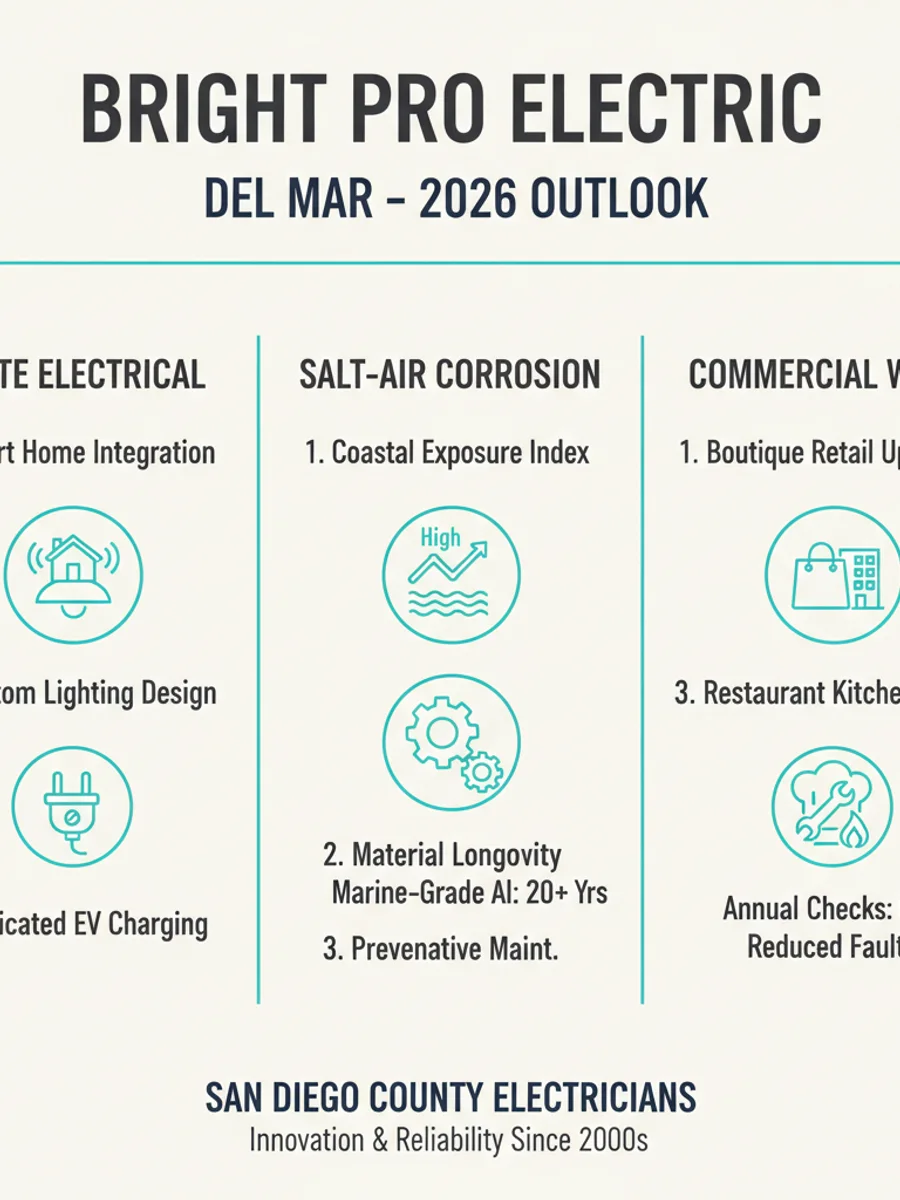
Commercial work on the Camino Del Mar corridor
Del Mar’s commercial electrical work is concentrated on the Camino Del Mar restaurant and retail corridor, with volume that spikes noticeably during Del Mar Thoroughbred Club racing season from mid-July through early September. Restaurant tenants opening or refreshing space for the summer season, seasonal retail buildouts, and commercial building owners catching up on deferred electrical maintenance all compress into a short window.
Typical commercial tenant improvement scope on Camino Del Mar: kitchen circuit packages for restaurant tenants (dedicated 20-amp and 30-amp circuits for commercial equipment, hood circuit, walk-in refrigeration, POS and AV), commercial lighting design and installation, GFCI protection throughout per NEC 210.8(B), and panel capacity assessments for building owners adding new tenants. Some of the older commercial buildings on the corridor have service panels that predate current NEC editions by two or three cycles, which creates capacity and code-compliance issues when a new commercial tenant wants to add modern kitchen or HVAC equipment.
For deeper background on commercial TI work in the county, commercial electrician tenant improvements in San Diego covers what typically triggers a permit and how the inspection process works on commercial scope. Del Mar’s building department follows San Diego County permit procedures for the Camino Del Mar corridor, so the timelines and documentation requirements are consistent with what’s described there.
Our commercial electrical service page covers the full scope of commercial work independent licensed electricians handle, including tenant improvements, panel upgrades, and code-compliance retrofits.
Permits, SDG&E coordination, and coastal/architectural review
Del Mar electrical permits for residential scope go through the City of Del Mar Building Department. Simple panel replacements and EV charger additions can often be pulled over the counter or within a few business days. Service upgrades involving SDG&E meter socket work require SDG&E coordination alongside the city permit, which adds one to two weeks to the timeline for new service equipment. Independent licensed electricians handle both the city permit and the SDG&E service work coordination as part of the project.
For estate properties in Beach Colony or Olde Del Mar with exterior architectural constraints, visible exterior electrical work sometimes requires review under the city’s design review or coastal development permit process depending on the scope and location. New exterior service equipment, conduit routing on exterior walls facing the street or ocean, and standby generator placement in visible locations can all trigger this review. The homeowner or the hired electrician flags coastal review. Bright Pro does not.
SDG&E coordination matters on any Del Mar service upgrade. The utility’s process for meter socket approval, service entrance conductor sizing, and meter base requirements has its own timeline separate from the city permit. For 320-amp and 400-amp services, SDG&E engineering review is typically required. Planning for four to six weeks from permit application to a utility-approved service is realistic on larger estate upgrades.
A full electrical panel upgrade page covers the permit process. The electrician, not Bright Pro, stages SDG&E coordination with the city inspection.
Del Mar neighborhoods and what drives the work
The electrical scope in Del Mar varies enough by neighborhood that it’s worth understanding what you’re working with:
Beach Colony (15th-28th Street): Direct bluff-top exposure, older estate construction, highest corrosion rate in the city. Most outdoor service equipment on properties here is in active replacement cycle. Service sizes often need upgrading from original 200-amp single-phase to 320-amp or 400-amp to support current estate loads.
Olde Del Mar (Village center area): Mix of original mid-century homes and fully renovated estates. The mid-century originals often have original 100-amp or 150-amp service panels that can’t support EV chargers, smart-home loads, and HVAC simultaneously. Renovation scope on these properties can involve full rewires, new service, and a coordinated smart-home package in one project.
Del Mar Mesa: Newer custom-home inventory further from the bluff, with less corrosion exposure but similar estate-grade scope requirements. EV charger installations and smart-home infrastructure upgrades are the primary work here. Properties with solar installations often need service upgrades to support the solar interconnection plus EV charging load together.
Del Mar Heights and Crest Canyon: Residential properties with more typical single-family scope, though the higher-end housing stock still drives above-average service sizes and EV charger volume.
Whether you’re near the coast in Beach Colony or further inland on Del Mar Mesa, you can see full scope options on our electrician in Del Mar city hub page.
Frequently asked questions
What service size do I need for a Del Mar estate with multiple EV chargers, pool equipment, and a smart home?
For a typical Del Mar estate with central HVAC, pool and spa, two to four Level 2 EV chargers, smart-home equipment, and landscape lighting, service size typically runs 320-amp or 400-amp single-phase. The largest properties occasionally need 600-amp service. The original service equipment on most Del Mar estates was sized for a lower combined load. Independent licensed electricians run the NEC 220.87 load calculation to confirm proper sizing for current load plus ten-year future expansion, and they coordinate with SDG&E on the service upgrade approval process.
How do you handle salt-air corrosion on bluff-top homes?
Ask the electrician which listed outdoor enclosure the manufacturer and the adopted code require. Bright Pro does not spec a replacement cycle.
Do you install standby generators on Del Mar estates?
Licensed electricians install full standby generators with automatic transfer switches. Bright Pro does not. Independent licensed electricians size the generator for the property load, coordinate pad and enclosure placement to meet city and HOA rules, and install the transfer equipment. See generator installation and the whole-house generator installation guide.
Do licensed electricians coordinate smart-home electrical with a Control4 or Crestron integrator?
Licensed electricians handle dedicated low-voltage runs, neutrals in switch boxes (required for most smart switches), structured wiring for media and AV closets, dedicated circuits for AV racks, and concealed conduit. They split scope and timing with the AV integrator. Concealed conduit is the usual standard on Del Mar estate work. Bright Pro does not run that crew.
What’s the process for permits on a large Del Mar estate project?
Independent licensed electricians handle the permit application, city plan check submission, and SDG&E coordination as part of the project. For a typical estate project combining a service upgrade, generator, and EV chargers, plan for four to six weeks from permit application to full approval given the SDG&E engineering review timeline on larger services. Approval time is the city’s and SDG&E’s, not a Bright Pro schedule. The inspection process includes both city electrical inspection and a final SDG&E sign-off on the service equipment.
How to reach a licensed electrician
Del Mar estate and commercial electrical work has enough specific requirements that the choice of electrician matters. Marine-grade equipment spec, SDG&E service upgrade coordination, architectural review navigation, and multi-trade coordination with AV integrators and property managers are all part of the working standard here, not premium add-ons. Independent licensed electricians work across all Del Mar neighborhoods and handle the full project scope from permit application through final inspection.
Use contact.