A buzzing electrical transformer near your home creates an immediate routing decision. Contact SDG&E when the sound appears tied to street-side utility equipment. Contact a licensed electrician when it seems tied to your meter area, panel, wiring, or other home-side equipment. If you can’t confirm the source, report it to the utility and arrange an electrician’s review.
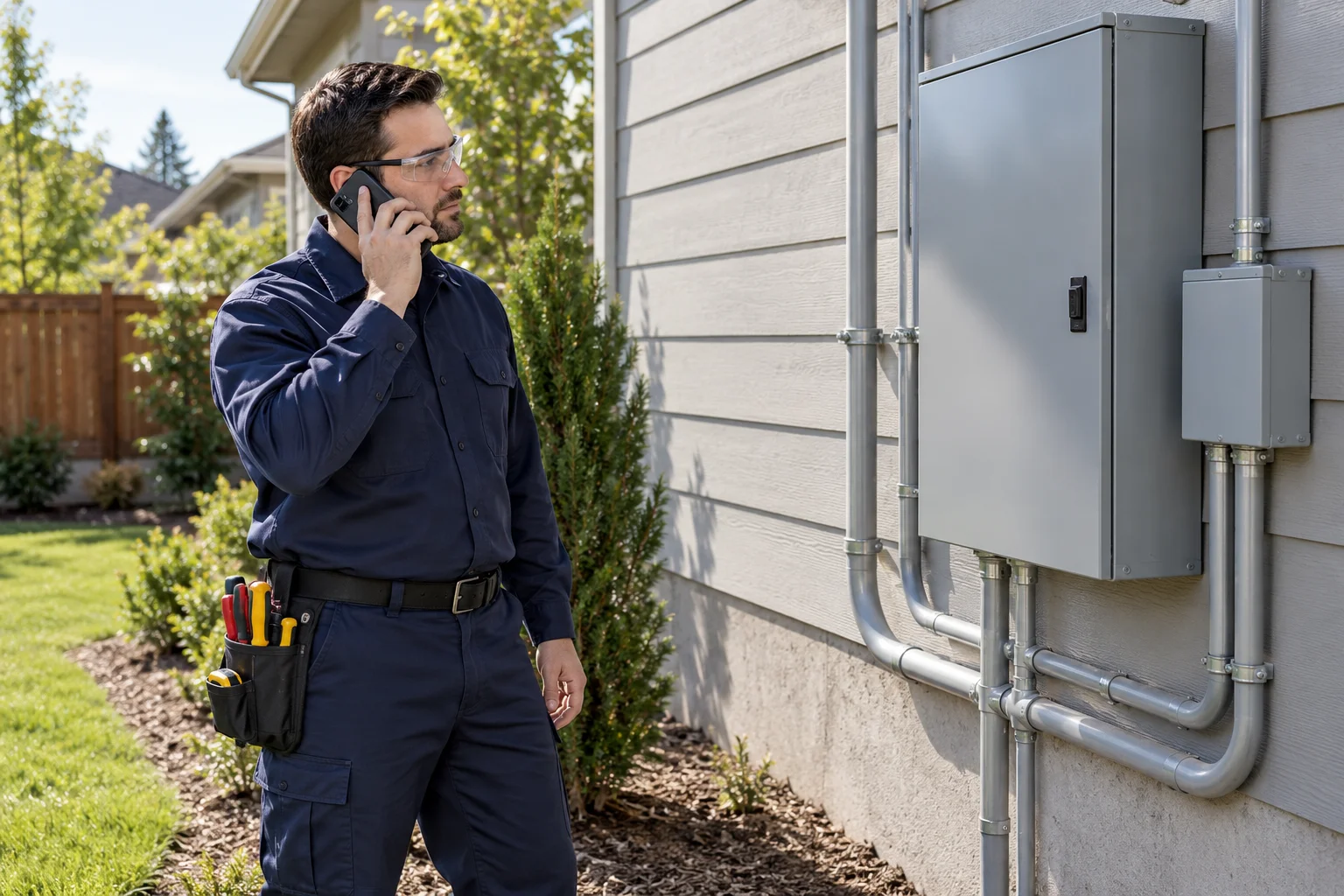
Don’t approach, touch, open, or test the equipment. Its location and appearance don’t reliably establish who owns it or why it’s buzzing.
Start by identifying where the sound seems to originate
Observe only from a safe location. Note whether the sound seems closest to equipment on a pole, a closed cabinet near the street, the meter area, the electrical panel, or something inside the house. Don’t cross a fence, enter water, move vegetation, or touch a cabinet to hear it better.
Treat that location as a clue, not a diagnosis. A sound that seems to come from one enclosure may have another source. Don’t label equipment as an electrical transformer based only on its shape. Photos, plates, and markings aren’t reasons to approach energized equipment.
Write down what you can observe without moving closer:
- The address and nearest visible landmark
- The time the sound began
- Whether power changed inside the home
- Whether nearby properties also appear affected
- Any smoke, sparks, burning odor, or visible damage
- Whether an outage appears on the SDG&E outage map
A utility map entry doesn’t certify your home’s wiring as safe. Neighbors having power also doesn’t prove the problem is inside your house. SDG&E notes that different parts of a neighborhood may use different circuits, and those circuits may not restore together.
If several properties have lost power, report the outage to SDG&E. If only your home appears affected, utility contact may still be appropriate when the sound seems street-side. A licensed electrician can separately assess the home side without claiming authority over utility equipment. Our San Diego outage guide explains that decision in more detail.
How utility equipment and home electrical equipment differ
An electrical transformer is equipment involved in transforming electrical energy. That broad description covers many designs and uses. It doesn’t tell a homeowner who owns a particular enclosure or who should inspect a buzzing sound.
Utility equipment and home electrical equipment require different contacts. SDG&E handles its system. A licensed electrician reviews electrical equipment within the contractor’s authorized scope on the home side. Bright Pro Electric doesn’t decide ownership, operate utility equipment, or perform repairs.
The boundary isn’t always obvious from the sidewalk. Meter-area equipment can make the choice especially confusing. Don’t assume that everything beside a meter belongs to the utility. Don’t assume that everything attached to a house belongs to the homeowner, either. Ownership and service responsibility must be confirmed for the specific address and equipment.
Start with SDG&E when the suspected source appears tied to street-side infrastructure or an active outage. Give the utility the address and your safe observations. Let its representative determine whether the report falls within utility responsibility.
Start with a licensed electrician when the sound seems tied to the home’s panel, wiring, switches, receptacles, or connected equipment. Our guide to electrical meter replacement in San Diego explains why meter-area concerns can require coordination instead of a guess about responsibility.
Questions about transformer parts, power ratings, or design don’t resolve this immediate choice. Don’t open an enclosure to find a rating or inspect internal components. The useful question is simpler: where does the sound seem strongest, and who can safely confirm responsibility?
Which warning signs require emergency services
Buzzing alone doesn’t establish the cause or severity. Don’t call it harmless, and don’t recreate the sound by operating switches or equipment. Watch for conditions that change the situation from a routing question into an emergency.
Leave the building immediately when there’s fire or smoke. Don’t re-enter. Call 911 from a safe location. City of San Diego Fire-Rescue also directs people to call 911 for sparking electrical hazards, electrical shorts, sounding smoke or carbon monoxide alarms, and other emergencies. If you’re uncertain whether the situation is an emergency, call 911.
Other serious warning signs include arcs, sparks, unusual sizzling, burning odors, damaged insulation, shocks, tingling, or hot and discolored receptacle covers. Don’t touch equipment to test whether it feels warm. Don’t remove a panel cover or faceplate. Don’t insert probes into a receptacle.
Water changes the situation, too. Stay away from electrical equipment when water is present. Don’t enter standing water to reach a panel, switch, meter, or cabinet. Keep other people and pets away from damaged equipment and fallen wires.
During an active hazard, don’t delay evacuation to take photos, check an outage map, request a quote, or find an electrician. Emergency services come first. Utility reporting and professional electrical review can follow from safety.
When there’s no fire, smoke, sparking, shock, or visible damage, you may still need prompt professional guidance. Our emergency electrical service page describes the kinds of home-side concerns a matched electrician can review. It doesn’t replace emergency services or utility reporting.
What information to give the utility or an electrician
Clear observations help the right party assess the next step. Describe what you noticed without offering a diagnosis. “Buzzing near the closed cabinet by the street” is more useful than confidently reporting a failed transformer when that hasn’t been confirmed.
Give the utility or electrician:
- Your exact address
- Where the sound seems to originate
- When you first noticed it
- Whether the sound is steady or intermittent
- Any change in lights, outlets, or appliance power
- Whether the whole home or only part seems affected
- Any visible smoke, sparks, discoloration, or damage
- Whether SDG&E shows an outage near the address
- Whether other nearby properties appear affected
Mention only what you’ve already observed safely. Don’t approach the equipment for a closer photo. Don’t remove covers, open doors, reset devices, or repeat an action to demonstrate the problem.
For SDG&E, ask whether the described equipment appears to fall within utility responsibility. Ask what reporting path applies to that address. Don’t assume the utility will inspect equipment it doesn’t own.
For an electrician, explain that utility ownership hasn’t been confirmed if that’s still unclear. Ask whether the electrician can review the home-side service equipment, panel, and affected circuits. A licensed electrician can’t declare utility equipment safe on the utility’s behalf.
Keep any utility report details available for the electrician. Likewise, keep the electrician’s observations available if SDG&E requests more context. That handoff can reduce confusion without either party exceeding its role.
What a matched electrician can review on the home side
A matched licensed electrician can investigate the home-side symptoms and their relationship to the electrical system. The review may include the panel, accessible service equipment, affected circuits, switches, receptacles, connections, or connected loads. The exact scope depends on what the electrician finds and what equipment falls under the property’s responsibility.
The electrician can compare the buzzing report with other symptoms. Flickering lights, repeated breaker trips, partial power loss, unusual odors, or heat discoloration all matter. Those observations don’t prove that a transformer is responsible. They help define a focused electrical troubleshooting visit.
California’s C-10 classification covers placing, installing, and connecting electrical wires, fixtures, appliances, raceways, and related equipment that generate, transmit, transform, or use electrical energy. You can verify a contractor’s business identity, license status, and classifications through the CSLB license lookup. A license record doesn’t guarantee workmanship, insurance coverage, or a specific outcome, so request the work scope and terms in writing.
An electrician may determine that utility coordination is needed. That isn’t wasted effort. It can clarify which observed conditions are on the home side and which questions belong with SDG&E.
Bright Pro Electric connects San Diego County homeowners with independent, licensed local electricians. We don’t inspect equipment, set contractor prices, issue permits, guarantee availability, or perform electrical work. The matched electrician decides what can be reviewed and explains any proposed work directly to you.
When to call us
Call after emergency and utility concerns have been addressed when buzzing appears connected to the home’s electrical system, or when the source remains uncertain. A licensed electrician can review the home side without asking you to open or test equipment.
Call us at (858) 988-5580 and we’ll connect you with a licensed local electrician.