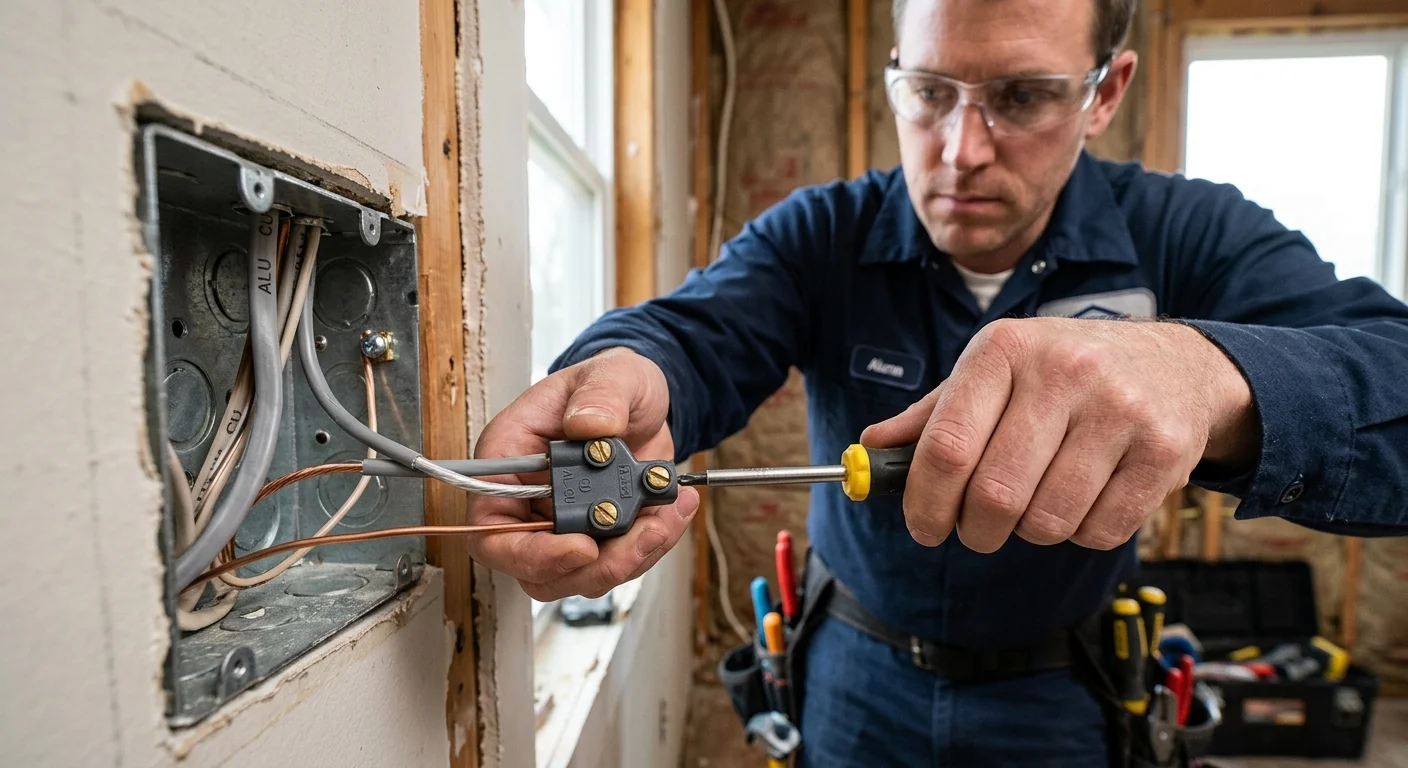
Aluminum branch wiring in homes built between 1965 and 1973 loosens at connection points over time, creating a fire hazard at outlets and switches. The primary repair is pigtailing: attaching a copper pigtail to each aluminum conductor at every device. In San Diego County, that runs $100–$250 per device, or $7,000–$30,000 total for a typical home with 70–120 devices.
TL;DR
- Aluminum branch wiring in homes built between 1965 and 1973 expands and contracts with heat cycles, loosening connections and creating a fire hazard at outlets and switches.
- Pigtailing (attaching copper pigtails to aluminum conductors at every device) is the most common repair. Cost in San Diego: $100 to $250 per device.
- A 1,500 to 2,500 sq ft San Diego home typically has 70 to 120 devices, putting a full pigtailing project at $7,000 to $30,000.
- Warning signs include flickering lights, warm outlets, burning smells, and intermittent power. Sparks, flame, or heavy smoke: leave and call 911 first.
- Proper remediation uses listed connectors a licensed electrician chooses after inspecting the connections. Insurability is the carrier’s call, not a result Bright Pro documents.
Why aluminum wiring can be a safety issue
Aluminum wiring itself isn’t inherently bad, but its properties differ significantly from copper, especially at connection points. The main issue stems from how aluminum reacts to heat and oxidation. Aluminum expands and contracts more than copper when current flows through it, which loosens connections over time. Loose connections create resistance, generating heat. This heat then accelerates oxidation, forming an insulating layer on the wire’s surface.
This cycle of loosening, heating, and oxidation creates a significant fire hazard. Outlets, switches, and light fixtures are common danger spots because they have multiple connection points. When these connections overheat, they can spark, melt insulation, and ignite nearby combustible materials.
For years, concerns over aluminum wiring have been recognized by safety organizations like the U.S. Consumer Product Safety Commission (CPSC). They’ve documented numerous incidents of electrical fires linked to faulty aluminum wiring connections. Home inspectors often flag aluminum wiring as a critical defect, leading to challenges when buying or selling a home, or even when trying to secure or renew homeowners insurance. It’s a legacy issue that requires a careful, expert approach.
Repair vs. replacement: what are your options?
When faced with aluminum wiring, San Diego homeowners generally have two primary pathways: targeted repair or full replacement. Deciding between these options depends on several factors, including the extent of the problem, your budget, and long-term plans for your home.
Targeted repair, often referred to as “remediation,” focuses on fixing the hazardous connection points. This method leaves the existing aluminum wiring in the walls but addresses the areas where problems typically arise: at switches, outlets, light fixtures, and junction boxes. It’s generally less invasive and more cost-effective than a complete overhaul. The goal of repair is to make these critical junctions safe and reliable. (If your older home has knob-and-tube wiring instead of or alongside aluminum, see our guide on identifying knob-and-tube and aluminum wiring in San Diego, because the remediation paths differ.)
On the other hand, a full replacement means removing all the old aluminum wiring and installing new copper wiring throughout your entire home. This process is comprehensive and eliminates the aluminum wiring issue entirely. It’s a significant undertaking, involving opening walls, which can be disruptive and expensive. While it offers the highest level of assurance, it’s a major renovation.
Many homeowners prefer targeted repair because it provides a strong safety upgrade without the extensive disruption and higher cost associated with a full home rewire. While a whole-home rewiring offers a complete solution, it’s important to know that professional, approved repair methods can effectively mitigate the risks. Understanding the cost to rewire a house in San Diego can help you weigh your options against targeted remediation.
The ‘pigtailing’ method explained
Among the various methods for remediating aluminum wiring, “pigtailing” is one of the most widely accepted and effective. It’s an approach that creates a safe, reliable connection between the existing aluminum wires and new copper wires at every electrical device and junction point. The name “pigtailing” comes from the short length of copper wire, or “pigtail,” that gets added to the aluminum wire.
Here’s how it works: An electrician carefully exposes the aluminum wire at a connection point, such as an outlet or switch. They then attach a short piece of copper wire to the end of the aluminum wire. This connection is made using a listed aluminum-to-copper method the electrician chooses after seeing the conductor. That is not the same as installing a CO/ALR receptacle. CO/ALR is a device listing for terminals that can land aluminum or copper. AlumiConn and COPALUM are listed pigtail connectors. Do not treat those as one product.
Once the pigtail is securely attached, the electrician connects the new copper pigtail to the outlet, switch, or light fixture, rather than connecting the aluminum wire directly. This ensures that all connections to devices are made with copper, eliminating the problematic aluminum-to-device interface. This method is meticulous and must be performed by an experienced electrician who understands the specific requirements and best practices for aluminum wiring remediation. It’s not a DIY project; improper pigtailing can be just as dangerous as the original faulty connections. When done correctly, pigtailing restores the integrity of your home’s electrical system at every critical junction.
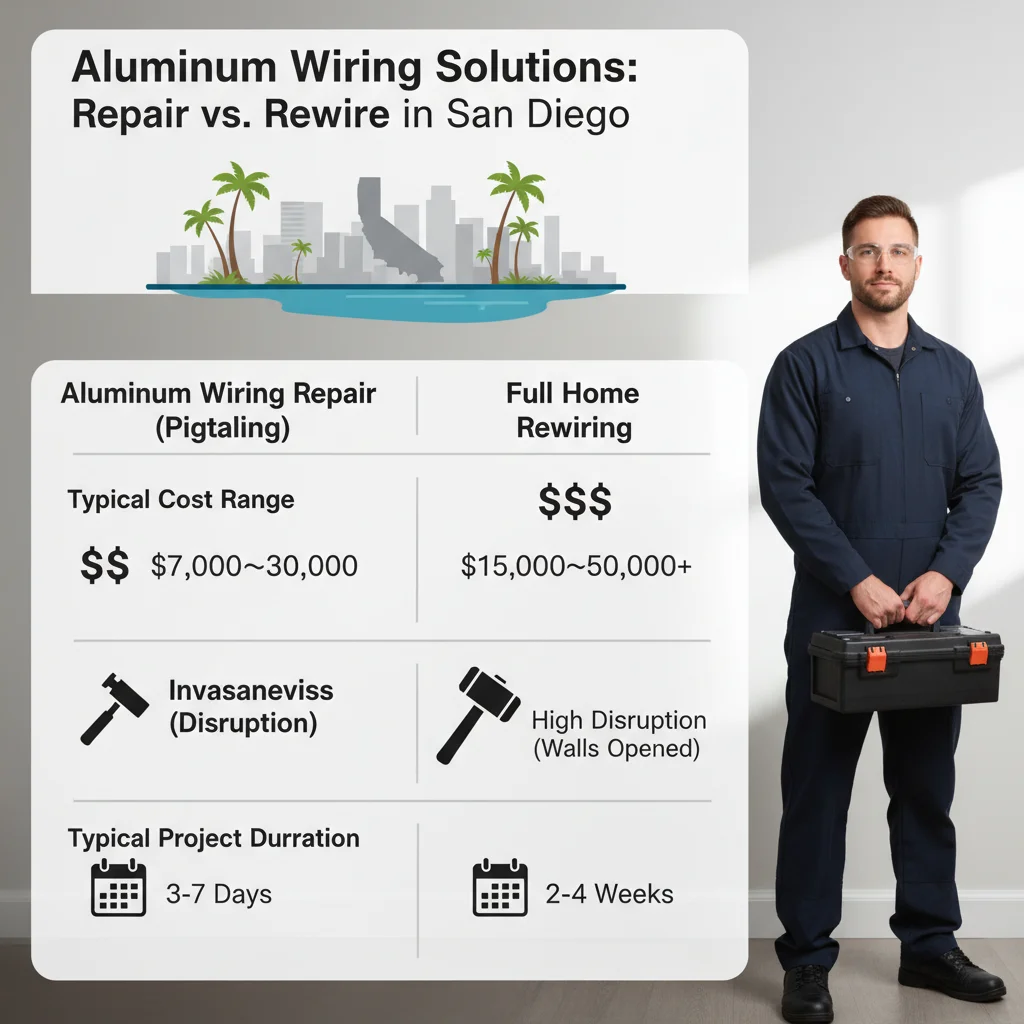
What does aluminum wiring repair cost in San Diego?
The cost of aluminum wiring repair in San Diego varies based on several factors, but it’s generally significantly less expensive than a full home rewire. The primary determinants of cost include the size of your home, the number of electrical devices (outlets, switches, light fixtures) that need remediation, and the complexity of accessing these points.
For typical pigtailing remediation, homeowners can expect to pay anywhere from $100 to $250 per device in San Diego County. This estimate includes labor and specialized materials like the approved connectors. For an average 1,500 to 2,500 square foot home, with 70 to 120 devices, the total project cost might range from $7,000 to $30,000. These figures are approximations, and a professional on-site estimate is always necessary for accurate pricing.
Factors that can influence the cost include:
- Accessibility: If devices are difficult to reach or require minor wall modifications, labor costs could increase.
- Number of devices: More outlets, switches, and fixtures mean more pigtails and more labor.
- Type of connectors: While most reputable electricians use UL-listed AlumiConn or similar approved connectors, slight variations in material costs can occur.
- Permit fees: Electrical work in San Diego usually requires permits to ensure compliance with local codes. These fees are a small but necessary part of the overall cost.
- Additional electrical work: Sometimes, during the inspection for aluminum wiring, other issues might be discovered, like an outdated electrical panel or non-compliant grounding, which could add to the project scope and cost.
It’s important to remember that this investment is about connection safety, not a rate Bright Pro can promise. A licensed electrician quotes after seeing the devices. Bright Pro Electric does not perform the work or issue completion letters.
Signs that your aluminum wiring needs professional attention
Recognizing warning signs matters. Flame, heavy smoke, or sparks: leave the area, call 911, then a licensed electrician. Do not stay to diagnose from this list. Do not open the panel or operate the main from this page.
Here are the key signs to watch for:
- Flickering lights: Lights that flicker, dim, or go out when other loads start can be a loose or arcing connection. That is licensed evaluation, not a DIY cover-plate job.
- Warm or discolored outlets/switches: Warm plates, scorching, yellowing, or browning around a device is an overheating cue. Stop using that device. If you see flame or heavy smoke, leave and call 911.
- Strange odors: A burning plastic smell with smoke: leave and call 911. A faint odor without smoke still needs a licensed electrician, not a wait-and-see.
- Intermittent power: Devices or circuits that drop and return later can be a loose connection.
- Sparks or arcs: Visible sparks at a plug or switch: leave, call 911, then licensed work. Do not keep flipping the switch to confirm.
- Strange sounds: Buzzing or crackling at a device can be arcing. Treat it as licensed work. If it is accompanied by smoke or sparks, 911 first.
Even without these overt warning signs, if your home was built during the peak aluminum wiring era (mid-1960s to early 1970s), a professional inspection is highly recommended. Many homes with aluminum wiring have hidden problems that aren’t immediately apparent. A qualified electrician can identify these risks before they escalate, providing peace of mind and protecting your property. You can verify any electrician’s license through the California Contractors State License Board website at CSLB.ca.gov.
How repair relates to safety and insurance
Remediation is about listed connections at devices. It is not a Bright Pro insurance product. Some carriers ask about aluminum branch wiring. Whether they write, renew, or change a policy is the carrier’s call. This page does not state that San Diego or California insurers are generally reluctant, and it does not promise that repair makes the home insurable.
When a licensed electrician remediates aluminum connections with listed methods (COPALUM, AlumiConn, or copper pigtails as the listing allows), they are addressing the device interface. Bright Pro Electric does not perform that work and does not write insurance files.
Ask the electrician whether they will give you a completion letter with a CSLB number. What a carrier does with that letter is the carrier’s decision. See aluminum wiring and insurance. Do not treat “better rates” or dropped exclusions as a guaranteed outcome.
Frequently asked questions
How do I find out if my San Diego home has aluminum wiring?
Have a licensed electrician confirm conductor metal. Do not pull cover plates or the panel dead front from this FAQ.
Is pigtailing aluminum wiring a permanent fix?
Pigtailing done with approved connectors (AlumiConn or COPALUM) is a long-term repair recognized by the U.S. Consumer Product Safety Commission. It doesn’t remove the aluminum wiring from the walls, but it eliminates the most dangerous part of the problem: direct aluminum-to-device connections at outlets and switches. The fix is durable when done correctly by a licensed electrician using proper materials.
What is the difference between AlumiConn and COPALUM pigtailing?
COPALUM uses a listed crimp tool. AlumiConn is a listed mechanical connector. Both appear in CPSC consumer material. Whether a carrier accepts either method is a question for that policy, in writing. This page does not speak for State Farm or Mercury.
Do I need a permit for aluminum wiring repair in San Diego?
Pigtailing or rewiring is electrical alteration and usually needs a permit from the city or County that has the house. Unpermitted work can be harder to show a carrier. That is not a guarantee they will refuse. Bright Pro does not pull permits.
When to call us
Aluminum connections are licensed work. Compatibility of a connector with a given conductor is a professional evaluation, not a DIY match. Bright Pro Electric matches San Diego County homeowners with independent licensed electricians. Hours are Monday through Saturday, 7am to 7pm. Use the contact form.