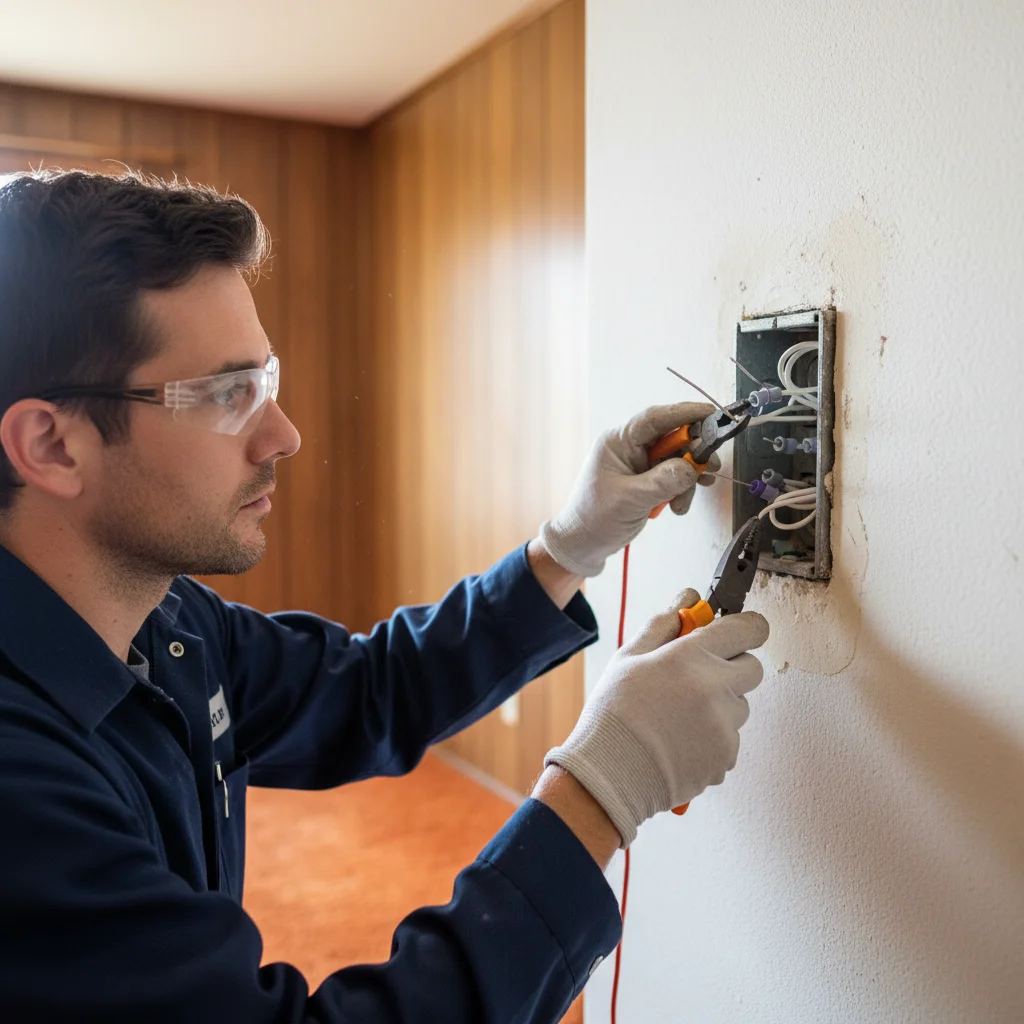
If a carrier asked about aluminum branch wiring, the next step is a licensed electrician’s written findings and a letter from the insurer that names the method they will accept. This page does not republish State Farm, Allstate, or Mercury underwriting rules, deadlines, or denial language. Those change and were not verified here. Published remediation ranges stay parked: COPALUM pigtailing $2,500-$5,000 for a typical 3-bedroom on this site; full rewire $8,000-$18,000.
Fire-cause statistics belong on the held home electrical fire data article. This page does not add counts or percents.
TL;DR
- Solid aluminum on 15- and 20-amp branch circuits is the product insurers usually mean, not aluminum service-entrance cable.
- Do not pull receptacle covers or the panel dead front to self-identify conductors. A licensed electrician confirms material and connection condition.
- COPALUM, listed mechanical connectors such as AlumiConn, and copper rewire are different methods. Which one your policy accepts is a question for the carrier in writing.
- Documentation, when a carrier asks for it, is typically a licensed contractor letter with a CSLB number plus whatever the AHJ issued for the permit. This page does not invent a 30-60 day clock.
- Bright Pro Electric matches you with an electrician. It does not remediate wiring, write insurance letters, or pull permits.
Why aluminum branch wiring is a different conversation than SE cable
Builders used aluminum for some 15- and 20-amp branch circuits in a window that is often described as the mid-1960s through early 1970s, when copper prices were high. Large aluminum feeders at the service are still common and are not the same issue.
Aluminum and copper expand differently. Older small-gauge aluminum terminations at devices can loosen. Loose connections can arc. The U.S. CPSC published consumer guidance on this decades ago. That is a reason to inspect, not a diagnosis that your house will fail a claim.
Clairemont ranches and El Cajon split-levels from that era are qualitative examples. This page does not publish a housing-age percent for those neighborhoods.
How aluminum is confirmed (without DIY cover-plate checks)
A licensed electrician identifies conductor metal at devices and in the panel as part of an inspection they are trained to open. Homeowners should not pull cover plates or the dead front because a blog listed it as a “quick visual.”
Building records sometimes list conductor material. Many do not. A written assessment that states which circuits are aluminum, how many devices are involved, and connection condition is what a carrier can actually read.
For older wiring types in the same houses, see knob-and-tube and aluminum.
COPALUM, AlumiConn, and rewire
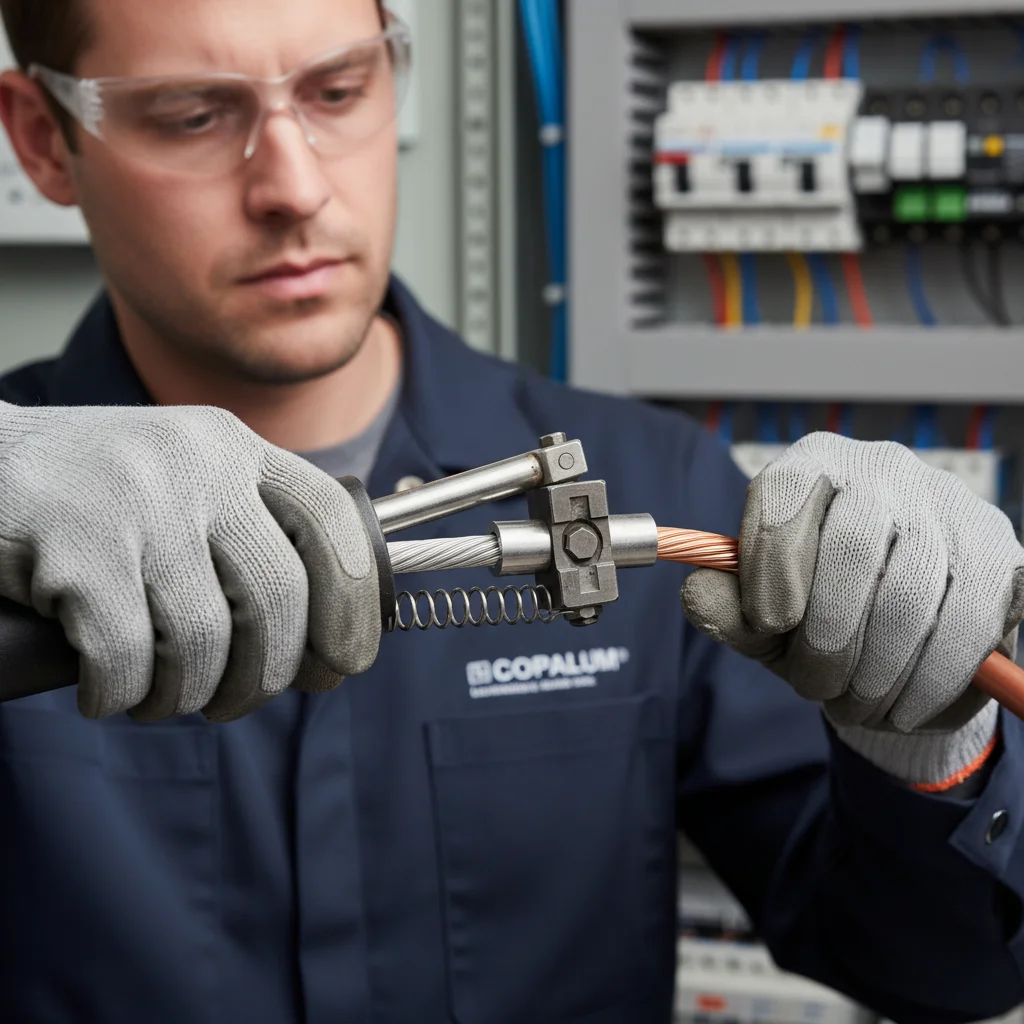
COPALUM is a proprietary crimp system (TE Connectivity / AMP lineage) that joins aluminum to a copper pigtail with a listed tool. CPSC has discussed it as an accepted repair method. The tool is not a hardware-store item. This site’s per-connection range: $50-$80.
AlumiConn and similar listed mechanical connectors are another CPSC-discussed approach. Some carriers accept them; some do not. Confirm in writing before you pay for a whole-house pass.
Copper rewire of aluminum branch circuits removes the aluminum instead of managing each device. It is the most invasive option. See whole-home rewiring and aluminum wiring repair.
If the panel is also an FPE or Zinsco line, that is a separate inspection topic: panel replacement for those brands. Challenger is a different product.
What a carrier might ask for (without naming fake rules)
Ask the agent or underwriter for the acceptable method, the documents they want, and any date they put in the letter. Do not treat a blog’s “State Farm requires COPALUM” line as your policy.
CSLB lookup: check a license.
Cost ranges in San Diego County (parked)
- COPALUM: $50-$80 per connection, plus trip and report. Typical 3-bedroom, 40-60 points: $2,500-$5,000 including a certification letter when the electrician provides one.
- AlumiConn-style: $35-$55 per point; same house $1,800-$3,500 on this site.
- Aluminum circuits only: $4,000-$8,000 for a typical 1,500 sq ft house with attic access. Stucco and no attic access cost more.
- Full rewire: $8,000-$18,000 for many single-family houses.
Combining a rewire with a panel change can share mobilization and permit overhead. That is a bid structure, not a discount Bright Pro offers.
Permit and paperwork
Remediation that is electrical alteration generally needs a permit from the city or County that has the house. Unpermitted work may be harder for a carrier to accept and harder to disclose at sale. That is not a universal “the insurer will refuse.” Bright Pro does not pull the permit. The contractor on the contract does.
Keep copies of the inspection sign-off and the electrician’s letter.
Frequently asked questions
How do I know if the house has aluminum branch wiring?
Have a licensed electrician confirm it. Do not pull outlet covers or the panel cover from this FAQ.
Will insurance cancel immediately?
Only your notice and policy say that. This page does not publish a 30-60 day rule or a cancellation script.
Is AlumiConn enough?
Only if the carrier says so in writing.
How long does the work take?
COPALUM on a typical 3-bedroom is often described as one to two days of on-site work; a full rewire three to five. Permit calendars add time. None of those are Bright Pro schedules.
When to call
Aluminum remediation is licensed work. If you have a letter from a carrier, bring it so the electrician quotes a method the letter can accept. Bright Pro Electric matches San Diego County homeowners with independent licensed electricians. Hours are Monday through Saturday, 7am to 7pm. Use the contact form.