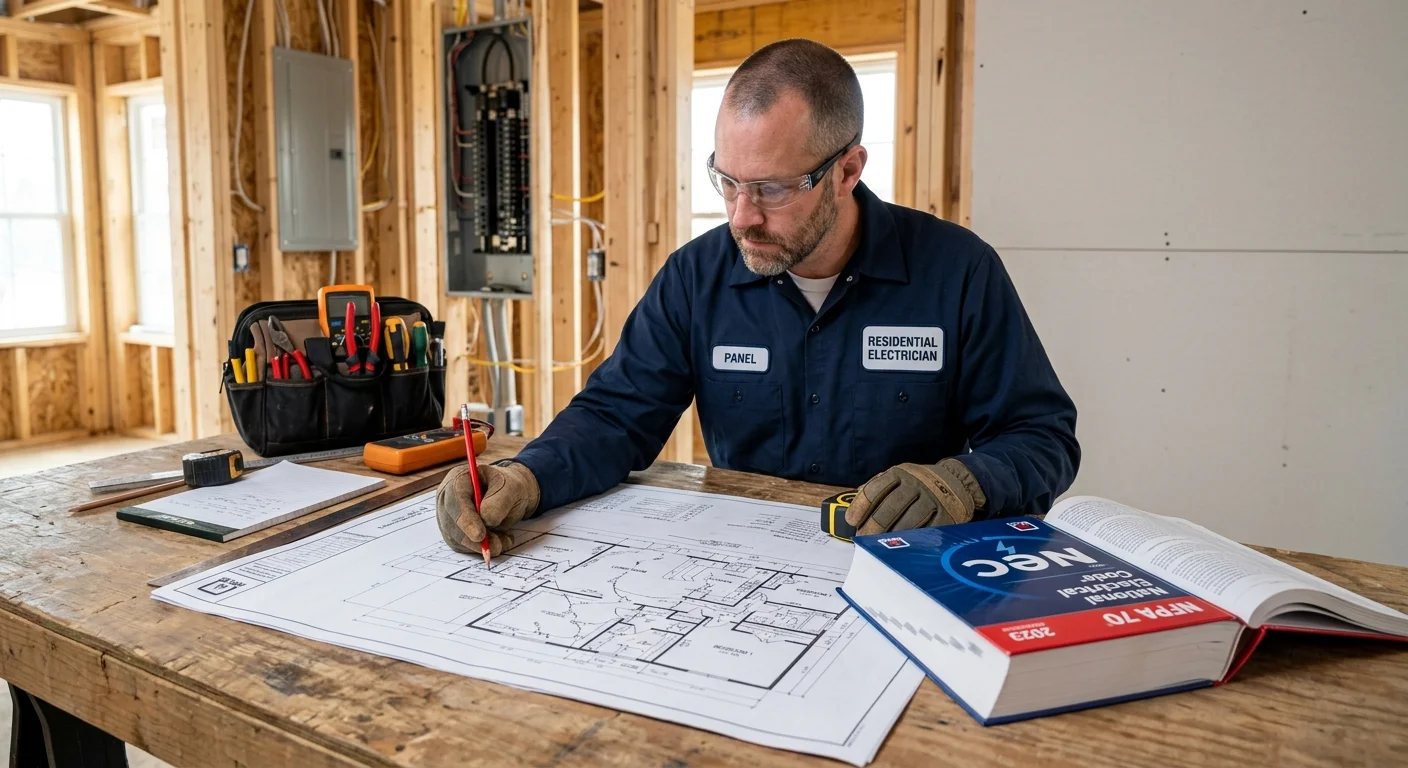
Many San Diego homeowners don’t often think about the National Electrical Code, or NEC, until a home improvement project or an electrical issue brings it to their attention. This comprehensive set of standards isn’t just about red tape; it’s the bedrock of electrical safety for homes across the country, including yours in San Diego County. Understanding the NEC helps ensure your electrical system is safe, functional, and up to par.
TL;DR
- The NEC (NFPA 70) is the national minimum standard for electrical safety, California and San Diego adopt it with local amendments.
- GFCI and AFCI rules depend on the NEC edition your city or county has adopted, and on occupancy and room type. Ask the reviewing authority for your address.
- Working space in front of a panel is an NEC rule, but the exact dimensions and exceptions follow the adopted edition. Do not treat a 3-foot rule as a universal field measurement from this page.
- Significant electrical work often needs a permit. Unpermitted work can complicate a sale or an inspection. It does not automatically void every insurance policy. Read your policy.
- Bright Pro Electric matches you with an independent licensed electrician. Verify the license at cslb.ca.gov. We do not inspect or perform the work.
What is the NEC (and what it’s not)
The National Electrical Code (NEC), also formally known as NFPA 70, is a comprehensive publication of electrical safety standards. Developed and continually updated every three years by the National Fire Protection Association (NFPA), it incorporates new technologies and best practices to enhance safety. Essentially, the NEC provides minimum requirements for safe electrical installation and inspection, specifically designed to protect people and property from electrical hazards like shocks, fires, and electrocution. It covers everything from the proper sizing of wiring and the type of overcurrent protection needed to grounding methods and requirements for specialized equipment.
It’s crucial for San Diego residents to understand what the NEC is not. It’s not a federal law directly, nor is it a simple how-to guide for DIY electrical work. Instead, it’s a model code. Local jurisdictions, such as the City of San Diego and various municipalities throughout San Diego County, then adopt and enforce these codes, often with minor local amendments to suit specific regional needs or conditions. While San Diego largely adheres to the national NEC, these local nuances underscore why working with a local, licensed professional is so important. The code establishes a universal baseline, guaranteeing that any correctly installed electrical system minimizes risks and stands the test of time, ensuring your home’s safety for years to come. Think of it as the ultimate guidebook for electricians, inspectors, and engineers, all working collectively to keep your home safe.
Why following the code is about safety, not just rules
At its core, the National Electrical Code exists for safety. Wire size, breaker type, and listing rules are written to limit electrical failures. Skipping the adopted edition for your address is a permit and inspection problem. This page does not rank electrical issues among causes of residential fires.
For homeowners in San Diego, following the adopted electrical code reduces shock and fire risk on permitted work. It also keeps an inspector from flagging obvious defects at sale. Non-compliant work can cause flickering lights or tripping breakers, but those symptoms have more than one cause. Compliance is not a promise that every insurance claim will be paid. Ask your carrier what your policy actually says.
Key NEC rules that affect San Diego homes (GFCI, AFCI, panel clearance)
While the NEC is vast, several key rules directly impact San Diego homeowners during common electrical projects or home inspections. Understanding these can help you spot potential issues or discuss upgrades with your electrician.
Ground-fault circuit interrupters (GFCIs)
GFCI devices open the circuit when they detect a ground-fault current. The rooms that require them depend on the NEC edition your city or county has adopted, plus California and local amendments. Bathrooms, kitchens, garages, and outdoor locations are common GFCI locations on current dwelling rules, but occupancy type and remodel versus new construction change the list. Confirm the adopted edition for your address. Bathroom GFCI requirements is a related room-level guide, not a substitute for the local code.
Arc-fault circuit interrupters (AFCIs)
AFCI devices look for arcing signatures that a standard breaker may miss. Dwelling-unit AFCI coverage has expanded across NEC editions. Bedrooms were an early requirement. Later editions added more living areas when circuits are new, extended, or modified. Existing branch circuits are not always required to be retrofitted just because a later edition exists. The reviewing authority for your permit tells you which edition applies.
Electrical panel clearance
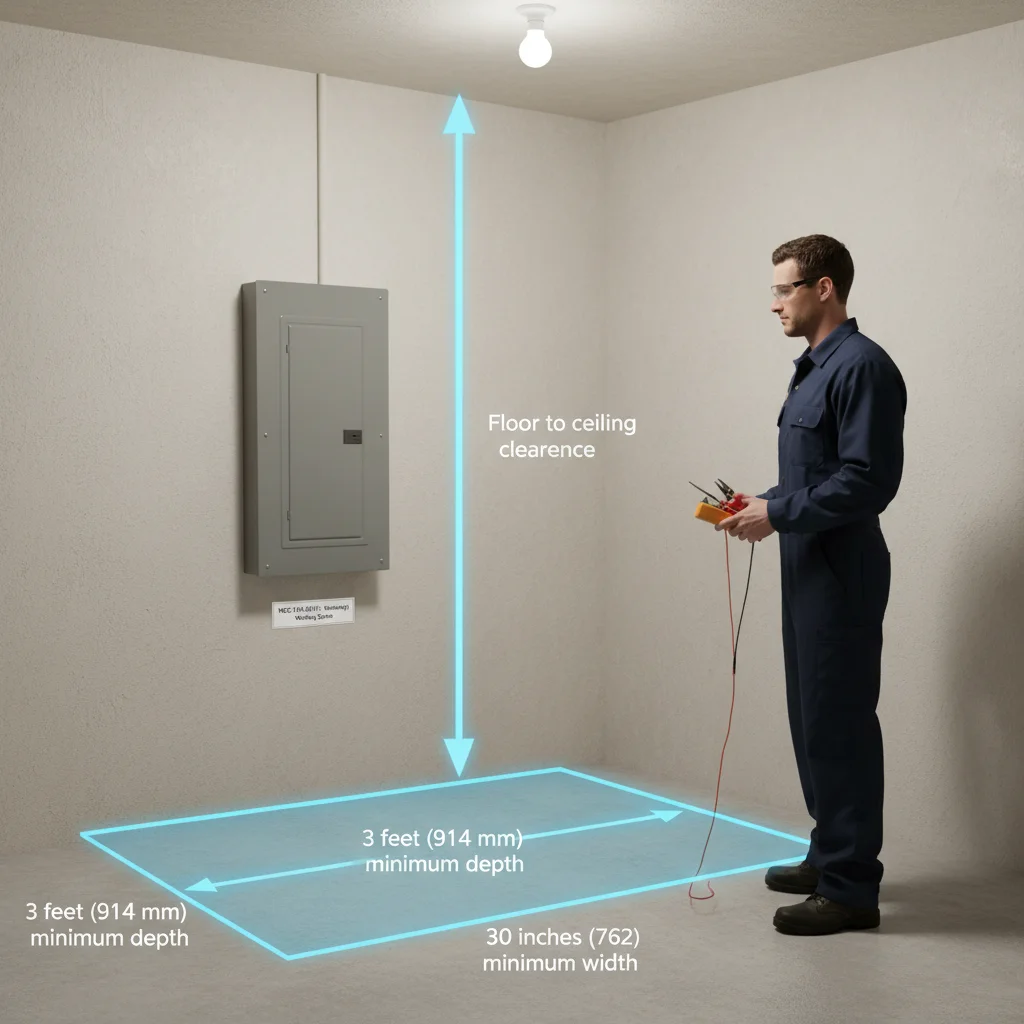
NEC working-space rules keep a clear volume in front of equipment so a person can work it. Many dwelling panels are planned around a 3-foot depth, a 30-inch width, and headroom, with exceptions in the adopted edition. Storage in front of a panel is a common inspection note. Measure against the edition your jurisdiction adopted, not a diagram on this page.
How the code impacts permits for remodels and additions
Any significant electrical work in your San Diego home, whether it’s a major remodel, a new room addition, the installation of a new EV charger, or even just replacing your electrical panel, will almost certainly require a permit. The local authorities, specifically the City of San Diego Development Services Department and county agencies, use the National Electrical Code as the foundational standard for reviewing and approving these permits. Without proper permits and subsequent inspections, your electrical work might not meet crucial safety standards, creating significant problems and potential hazards down the line.
The permitting process is designed to ensure that all electrical installations comply with the latest NEC standards, as well as any local amendments adopted by San Diego County. Once the work is complete, a city or county inspector will visit to verify that the installation meets these stringent requirements, thereby protecting you and your family from faulty wiring, potential fire hazards, and other serious dangers. Skipping a required permit can lead to fines, a failed sale inspection, or a demand to open finished work. Some policies limit coverage for unpermitted work. That is a policy question, not a universal invalidation. Confirm permit needs with the City of San Diego Development Services Department, County PDS, or the city that issues permits for your address. When an electrical permit is required is the local companion.
Why hiring a licensed electrician ensures NEC compliance
Navigating the complexities of the National Electrical Code and local amendments is a job for trained professionals. This is precisely why hiring a licensed electrician is not just recommended, but essential for any electrical work in your San Diego home. A licensed electrician has undergone rigorous training, passed examinations, and possesses a deep understanding of the NEC. They stay current with the latest code updates and local regulations.
When you call Bright Pro Electric, you are asking for a match with an independent licensed C-10 electrician, not a Bright Pro crew. That electrician is responsible for the adopted code, the permit, and the inspection. Verify the license at cslb.ca.gov.
Common issues licensed electricians flag in older homes
San Diego is home to many beautiful older properties, and while their charm is undeniable, their electrical systems often predate modern NEC standards. This means it’s common to find various code violations that, while perhaps compliant at the time of installation, now pose significant safety risks. Recognizing these can prompt you to seek professional inspection and upgrades.
One of the most frequent issues is the lack of GFCI and AFCI protection in required areas, as discussed earlier. Many older homes simply don’t have these vital safety devices in kitchens, bathrooms, or bedrooms. Another common problem is outdated wiring, such as knob and tube or aluminum wiring, which can be fire hazards and may not be rated for today’s electrical demands. Overloaded circuits, often indicated by frequently tripping breakers, also point to an outdated system struggling to keep up.
Licensed electricians also report improper grounding, two-prong receptacles, and panels that cannot accept the extra circuits a remodel needs. Exposed splices, damaged devices, and unpermitted DIY work are inspection flags. Symptoms like flickering lights or warm outlets have more than one cause. Electrical troubleshooting is how a matched electrician assesses the system. Bringing work up to the adopted code is a safety step, not a Bright Pro inspection product.
For a plain-English breakdown of exactly which projects require permits in San Diego, see when electrical work needs a permit in San Diego. If you want to know how aging wiring translates to real fire risk, the home electrical fire data analysis puts the NEC’s arc-fault requirements in context with NFPA numbers. To find a licensed electrician in San Diego who can verify your home’s compliance, our location page lists the cities we serve across San Diego County.
Frequently asked questions
What electrical code does San Diego follow?
San Diego adopts the National Electrical Code (NFPA 70) with California amendments. The state and individual municipalities within San Diego County periodically adopt new NEC editions and add local requirements. Your licensed electrician tracks these updates and ensures any work meets the current adopted version in your specific jurisdiction.
What work in my San Diego home requires an electrical permit?
Any work that goes beyond a direct like-for-like replacement typically requires a permit. This includes adding new circuits, upgrading or replacing your electrical panel, installing EV chargers, adding GFCI or AFCI protection to new locations, and significant remodel work. Simple replacements, swapping a light fixture on an existing circuit, replacing an outlet in kind, generally don’t. When in doubt, ask your electrician or call the San Diego Development Services Department before starting.
How do I know if my home has code violations?
Common signs include outlets in kitchens, bathrooms, and garages that aren’t GFCI-protected; frequently tripping breakers; flickering lights when appliances kick on; a fuse box rather than circuit breakers; and aluminum wiring in post-1960s additions. La Mesa, North Park, Lemon Grove, and City Heights have older housing. Age of the house is not a measured pre-code rate on this page. A licensed electrician inspects the adopted edition for that address.
What happens if I sell my San Diego home with unpermitted electrical work?
Some policies limit claims tied to unpermitted work. That is not a universal exclusion. Ask your insurer. Retroactive permits are often more expensive than pulling the right permit first.
When to call us
If you are planning a remodel, adding circuits, or you suspect code issues, a licensed electrician reviews the adopted edition for your address. Bright Pro Electric does not inspect or perform that work. Use contact and we will connect you with an independent licensed electrician. Leave a message any time.