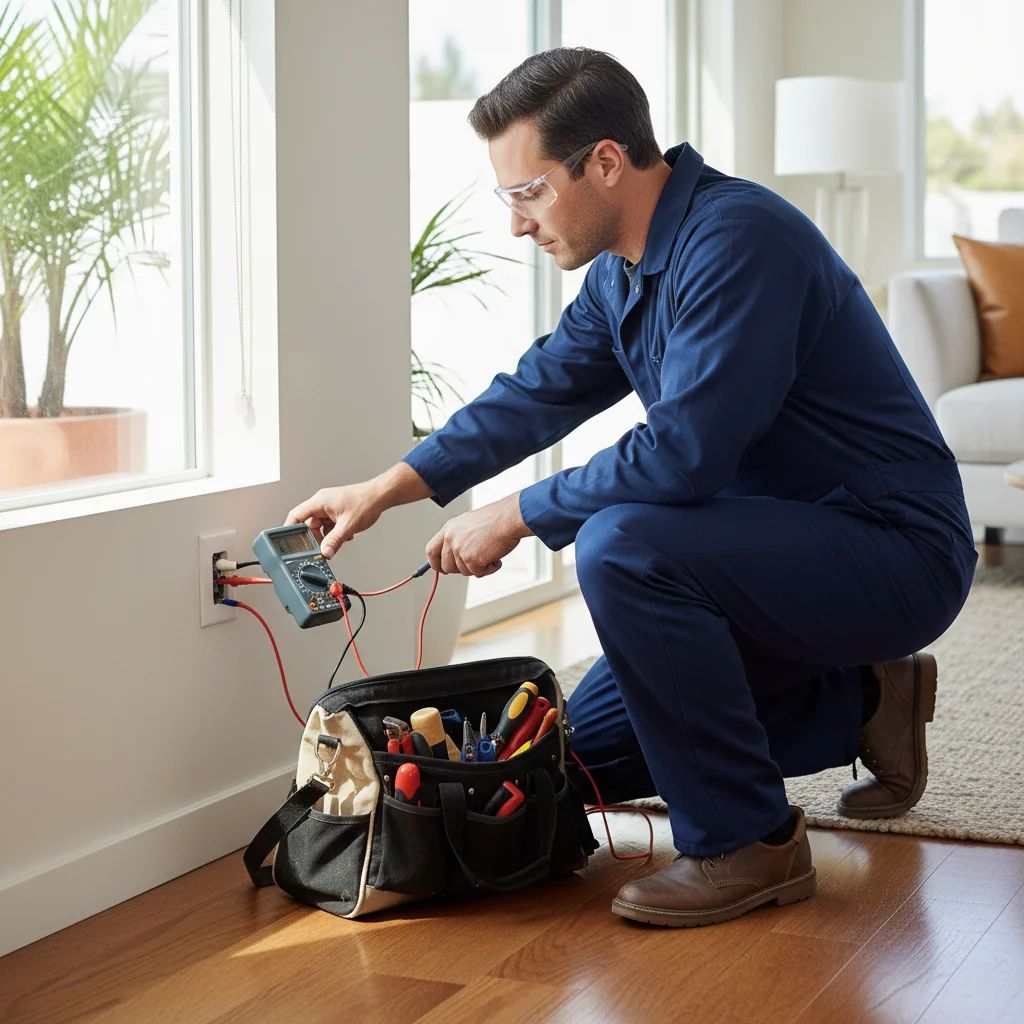
Most electrical repairs in San Diego that show up on this page fall in published ranges: diagnostic visit $99–$189, outlet and switch replacements $125–$300, breaker replacements $150–$350. Wiring repairs start around $200 for a contained fix at one box and climb when new wire needs to run from the panel. Treat those as published ranges, not Bright Pro’s price list. Here’s what drives each number, so you can read a quote.
TL;DR
- Diagnostic fees in San Diego run $99–$189 and cover the electrician’s time to find the root cause; ask whether the diagnostic fee applies toward the repair.
- Outlet or switch replacement: $125–$300. GFCI outlet: $175–$300. Circuit breaker replacement: $150–$350 for a standard breaker.
- Wiring repairs range from $200–$500 for a contained fix; full circuit replacement can run $800–$2,500+ depending on run length and wall access.
- After-hours rates, when an independent electrician offers them, are often 1.5–2x. That is not a countywide rule. Bright Pro hours are Monday through Saturday, 7am to 7pm. Leave a message any time. Same-night response is not guaranteed.
- A simple outlet repair can sometimes reveal a larger underlying issue like a failing panel or outdated wiring; a professional diagnosis prevents guesswork.
Diagnostic fees: what an electrician charges to find the problem
Before any repair can happen, the electrician has to find the exact cause of the problem. This initial step is a professional service in itself, often called a diagnostic fee, trip charge, or service call fee. It’s important to be clear: this is a separate charge from the repair itself.
In 2026, a diagnostic fee on this site’s published ranges is $99 to $189 for a standard appointment. Some electricians credit it toward the repair. Some do not. Ask before they roll. Bright Pro does not charge a diagnostic and does not set that policy.
Common repairs and price ranges: outlets, switches, breakers
Once the problem is diagnosed, the repair cost depends on parts and labor. These are published ranges on this page for common jobs independent licensed electricians quote in San Diego County. They are not Bright Pro’s prices.
Replacing a standard outlet or switch
This is one of the most frequent requests. An outlet might stop working, or a light switch might feel loose or fail. A simple, one-for-one replacement is usually a quick job.
- Typical Cost: $125–$300
- Factors to Consider: The cost is at the lower end if it’s a straightforward swap. If the electrical box behind the outlet is damaged, or if the wiring is old and brittle and requires extra work to make a safe connection, the price can increase.
Replacing a GFCI outlet
Ground Fault Circuit Interrupter (GFCI) outlets are the ones with the “Test” and “Reset” buttons. They are required by code in areas with water, like kitchens, bathrooms, garages, and outdoors, to protect against shock.
- Typical Cost: $175 - $300
- Factors to Consider: GFCI devices are more complex and expensive than standard outlets. The cost reflects the price of the device and the time to test it properly to ensure it’s protecting the circuit as intended.
Replacing a circuit breaker
Your circuit breaker is a critical safety device. If it’s old, faulty, or just worn out, it may trip needlessly or fail to trip when it should. If you’re constantly wondering why your breaker keeps tripping, it might be time for a replacement.
- Typical Cost: $150 - $350 for a standard, single-pole breaker.
- Factors to Consider: The price varies significantly based on the type of breaker. Standard 15- or 20-amp breakers are common. However, more advanced breakers like Arc Fault (AFCI) or GFCI breakers, or larger two-pole breakers for appliances, cost more and can push the total into the $300-$500 range.
Wiring repair vs. full circuit replacement
Sometimes, the problem isn’t the outlet or the breaker, but the wire that connects them. The scope of the wiring issue is the biggest factor in determining the final electrical repair cost.
A simple wiring repair often involves fixing a connection within an existing electrical box. This could be a loose wire nut or a damaged section of wire right at the device. If the problem is contained and easily accessible, this is a relatively minor repair, often falling in the $200 to $500 range. For example, if a squirrel chewed a wire in an accessible part of your attic, repairing that specific section is a targeted fix.
A full circuit replacement, on the other hand, is a much larger job. This is necessary when the entire length of a wire is compromised, ungrounded, or undersized for its load. It involves running a brand-new, dedicated line of wire all the way from your electrical panel to the outlet, switch, or appliance. Because this often requires fishing wires through walls, ceilings, and crawlspaces, it is significantly more labor-intensive. The cost for a full circuit replacement can range from $800 to over $2,500, depending on the length of the run and the difficulty of accessing the space. A 60-foot run through a finished two-story home will cost far more than a 20-foot run through an open garage.

Service-call minimums and after-hours rates
A service-call or diagnostic on this page is $99–$189. Whether that includes the first 30-60 minutes is the electrician’s policy. Bright Pro does not charge it.
Standard hours for Bright Pro matching are Monday through Saturday, 7am to 7pm. Independent electricians set their own after-hours rates. Many charge a premium for nights and weekends. That 1.5 to 2 times figure is a common pattern, not a guarantee that someone is on call. Leave a message any time. Same-night availability is not guaranteed.
When a repair turns into a panel or rewire conversation
Occasionally, an electrician arrives for what seems like a simple fix and uncovers a much larger, systemic issue. This isn’t an upsell; it’s a matter of professional responsibility and your family’s safety. A flickering light might not just be a bad switch. It could be a symptom of a failing electrical panel or outdated, dangerous wiring.
For example, if a breaker for your kitchen constantly trips, the immediate fix might be to replace the breaker. But if the technician determines the circuit is dangerously overloaded with modern appliances, the right conversation is about adding a new, dedicated circuit. Similarly, flickering lights that seem minor can surface a loose main connection at the panel that needs immediate attention. If multiple circuits show issues, or if the cover label says Federal Pacific or Zinsco, the next step is inspection by a licensed electrician. The brand name is not a replacement diagnosis from this page.
Similarly, while replacing an old two-prong outlet, an electrician might find brittle, cloth-insulated wiring from the 1950s. This ungrounded, deteriorating wiring is a significant fire hazard. In this situation, the responsible course of action is to inform you about the risks and discuss the options for partial or a full whole-home rewiring. While these are larger projects, they are often essential for the long-term safety of your home. For a breakdown of these bigger investments, our general guide to how much an electrician costs in San Diego is a great resource, including hourly rates, flat-rate ranges, and when you’re looking at a panel vs. a smaller repair. If you’re specifically wondering who should do the work, our comparison of what electrical work a handyman can legally do in California covers the licensing line in plain terms.
How to read an itemized electrical repair quote
A clear, professional quote is a sign you’re working with a reputable company. It should leave no room for confusion. Whether it’s from a matched electrician or another contractor, look for:
- Company Information: The company’s name, address, phone number, and California State License Board (CSLB) number should be prominently displayed. You can and should verify any contractor’s license on the CSLB website.
- Detailed Scope of Work: The quote should describe exactly what work will be performed. Instead of “Fix outlet,” it should say something like, “Diagnose and replace one non-functional 15A residential outlet in the master bedroom.”
- Materials Breakdown: It should list the specific parts needed for the job, such as “1x Leviton Decora Tamper-Resistant Outlet, White” or “1x Siemens 20A AFCI Circuit Breaker.”
- Labor Costs: Labor can be hourly or a quoted flat rate. Flat rate is not a countywide standard. Ask which one you are getting.
- Diagnostic Fee: If a diagnostic fee was charged, the quote should clearly state whether that amount will be credited toward the approved repair.
- Permit Fees: For larger jobs that require it, the cost of pulling a permit with the city or county of San Diego should be listed as a separate line item.
- Total Cost and Terms: The final price, including all taxes, should be clear. The quote should also outline payment terms and any warranties on parts or labor.
Frequently asked questions
How much does an electrician charge for a service call in San Diego?
Most licensed electricians in San Diego charge a diagnostic or service call fee of $99–$189, which covers the technician’s time to diagnose the problem at your home. Ask whether the diagnostic fee applies toward the work if you move forward. This fee is separate from the repair cost and is charged whether or not you approve the work.
How much does it cost to replace a circuit breaker in San Diego?
A standard single-pole 15- or 20-amp breaker replacement runs $150–$350 total, including labor and the part. The cost goes higher if you need an AFCI (arc fault) or GFCI breaker, which can push the total to $300–$500 per breaker. If multiple breakers need replacement or the panel itself is the problem, the scope and cost expand significantly.
When does a repair turn into a full circuit replacement?
When the wiring itself is damaged, undersized, or compromised along its entire run from the panel to the outlet. A contained repair at one box runs $200–$500. A full circuit replacement, where new wire is run end-to-end, costs $800–$2,500+ depending on the distance and how accessible the walls are. Your electrician determines which approach is needed after the diagnostic.
Is there an extra charge for emergency electrical repairs in San Diego?
After-hours, evening, weekend, and emergency calls often cost 1.5–2x the electrician’s standard rate. Bright Pro does not staff a night desk. For burning smells, smoke, or fire, leave and call 911 first.
When to call us
Flickering lights, dead outlets, buzzing sounds from your panel, or breakers that won’t stay reset are all signs you need professional help. Attempting a DIY electrical repair is risky and can lead to shock, fire, or damage to your home’s systems. This work is best left to a trained and licensed electrician.
Bright Pro Electric matches you with an independent licensed electrician. We do not quote, diagnose, or repair. Use contact and leave a message any time.