The best time to plan smart home security devices is before drywall closes. Decide where cameras, sensors, controls, and network equipment may go while every room is still accessible. That planning preserves both wired and wireless options without locking you into a specific brand.
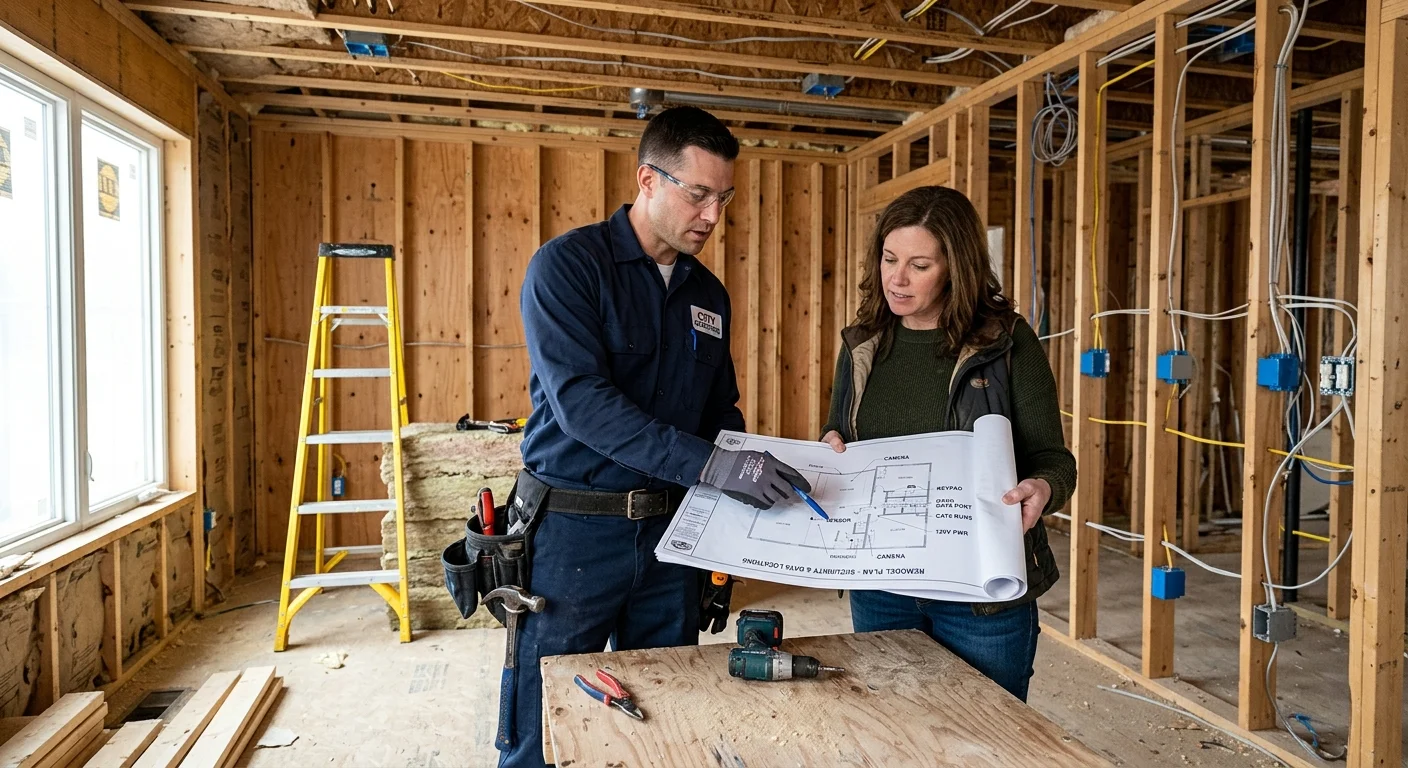
Start with the rooms and entry points being planned
Begin with the home, not a shopping list. Mark every exterior door, accessible window, garage opening, side gate, and main walkway. Then add the rooms where you want a keypad, display, alarm component, or indoor camera.
Walk through normal daily routines. Note which entrance your family uses after dark. Mark where packages arrive and where a visitor first becomes visible. Include the path between an attached garage and the living area. These details shape useful device locations better than a generic equipment bundle.
San Diego homes need different plans across the county. A compact National City remodel may have a short path between the sidewalk and front door. A larger Poway property may include a driveway, detached gate, and several exterior approaches. A Carlsbad townhouse may have shared walls and association restrictions. Those layouts shouldn’t receive the same security plan.
Existing construction matters too. Older housing in La Mesa versus newer tracts in San Marcos is a reason to review the existing electrical system early. Housing age does not decide wired versus wireless security.
Create a room-by-room device map before requesting proposals. Label each location by purpose, viewing area, and preferred control point. Leave the product model blank unless you’ve already selected it. A location-first plan gives each professional the same scope to review.
Where wired and wireless devices solve different problems
The wired-versus-wireless decision doesn’t need one winner. Many remodels can use a mixed plan based on access, appearance, equipment choices, and future flexibility.
For each device, ask three separate questions:
- How will it communicate?
- How will it receive power?
- What happens if its usual connection becomes unavailable?
Don’t assume the word “wireless” answers all three. Ask the product manufacturer and wiring professional what that specific device needs. A wireless communication feature doesn’t, by itself, confirm the power plan.
Wired locations may make sense where walls and ceilings are already open. That’s especially relevant around exterior doors, high camera positions, and a central equipment area. The proposal should explain what’s being prepared at each location and what equipment it supports.
Wireless choices can help where opening finished surfaces would create unnecessary repair work. They may also preserve flexibility when device placement isn’t settled. Ask how the selected equipment is powered, monitored, updated, and replaced. Those answers vary by product, so they shouldn’t be guessed from a category name.
A mixed system can separate permanent infrastructure from replaceable devices. You might prepare selected locations during construction while leaving other rooms flexible. Our smart home wiring service connects homeowners with independent local pros who can review that plan before surfaces close.
Keep the proposal product-neutral when possible. If it depends on one manufacturer, ask why. You should understand which parts remain useful if you change devices later.
How power and data locations affect the remodel plan
Every proposed location needs a clear power and communication decision. Put those decisions on the same plan used by the electrician, low-voltage provider, cabinet installer, and drywall team.
Don’t provide installation directions to different trades yourself. Instead, ask the professionals to mark responsibility for each pathway, box, outlet, connection point, and equipment location. That reduces the chance of one trade assuming another included the work.
Plan around finished conditions. A camera location can look clear during framing, then become blocked by a cabinet, light fixture, gutter, or opened door. A wall control may conflict with trim or built-ins. A central equipment space may become difficult to reach after shelving is installed.
Ask these questions for every proposed smart home security device:
- Does this exact model require nearby electrical power?
- Does it need a data connection or another communication path?
- Where will related equipment be stored?
- Will that location remain accessible after the remodel?
- Who confirms the product’s installation instructions?
- Who coordinates the work before insulation and drywall?
Cable type, routing, separation, support, and location ratings require professional confirmation. The approved claims ledger doesn’t establish security-system specifications for this page. Your electrician should verify the selected products against the currently adopted California Electrical Code and any local requirements for that address.
If the remodel also replaces old circuits, coordinate the security plan with the broader whole-home rewiring scope. That doesn’t mean every project needs rewiring. It means both plans should agree before walls close.
What should be decided before drywall closes
Set a pre-drywall review date in the remodel schedule. The homeowner and relevant professionals should walk the rooms with the current plans available. Photos can document approved locations before they disappear behind finished surfaces.
Several decisions should be settled during that review:
- The device purpose at each marked location
- The preferred wired, wireless, or mixed approach
- Power and communication responsibilities
- The location of central equipment
- Access for future inspection, service, or replacement
- Exterior viewing areas and likely physical obstructions
- Any locations intentionally left for later decisions
- How changes will be recorded and priced
Also decide what isn’t included. A proposal for pathways may not include devices. A device package may not include electrical work, wall repair, painting, network setup, or ongoing service. Written exclusions make competing proposals easier to compare.
Avoid approving vague notes such as “security prewire throughout.” Each location should connect to a room, opening, or defined purpose. The plan should also distinguish confirmed device locations from optional ones.
San Diego County has several permitting authorities. The City of San Diego Development Services Department handles addresses inside the city. Unincorporated communities such as Ramona, Lakeside, Fallbrook, Alpine, and Bonsall use San Diego County Planning & Development Services. Poway and other incorporated cities run their own building departments.
The permit status of a security-related remodel couldn’t be confirmed as one countywide rule. Ask the authority serving the exact address and have the appropriate professional confirm the project scope.
Which ratings and wiring details need professional confirmation
Product labels matter because locations differ. An indoor wall, covered exterior area, exposed eave, garage, and equipment cabinet don’t present the same conditions. Don’t let a proposal substitute a broad device category for the exact model and intended location.
Ask the professional to confirm, in writing:
- The manufacturer’s location and power requirements
- Any environmental rating needed at the proposed location
- The approved cable or pathway for that product
- How different wiring systems will be coordinated
- Whether the equipment location needs ventilation or access
- Which trade completes and tests each connection
- Whether the work changes the permitted electrical scope
This page can’t confirm a universal separation distance, cable rating, or power method for smart security equipment. Those details weren’t verified in the approved claims ledger. They depend on the selected equipment, the installation location, and the authority reviewing the project.
Confirm the currently adopted California Electrical Code for that address. Local jurisdictions may add requirements.
Electrical installation, alteration, or extension generally requires a properly licensed contractor, regardless of a small project’s price. The minor-work exemption doesn’t rescue electrical work that falls within the statute’s electrical exclusion. You can check a contractor’s classification and current status through the CSLB license lookup.
Ask who will perform line-voltage work and who will handle other system components. Bright Pro Electric doesn’t perform either task. We match homeowners with licensed, independent local electricians.
What to compare in wiring proposals
Give every bidder the same marked plan. Otherwise, a lower proposal may simply cover fewer locations or exclude more finish work.
Compare the scope line by line. Count defined device locations, not phrases such as “complete security wiring.” Confirm whether the proposal covers pathways, electrical connections, data points, central equipment space, testing, labels, documentation, and coordination with other trades.
Look closely at assumptions. One proposal may depend on equipment you haven’t selected. Another may prepare flexible locations without supplying devices. Neither approach is automatically better, but the distinction should be clear before signing.
Request written answers to these points:
- Which locations are included?
- Which exact products or product requirements were reviewed?
- What work belongs to another contractor?
- What wall, ceiling, or exterior restoration is excluded?
- Who confirms permit needs with the correct jurisdiction?
- What documentation will remain with the homeowner?
- How are location changes approved during construction?
Don’t compare warranties unless the terms come from the actual provider or manufacturer. Bright Pro Electric doesn’t issue a warranty. Ask each matched professional for their written terms and ask how manufacturer coverage applies to selected devices.
Prices for security-system wiring couldn’t be verified from the approved ledger. Don’t rely on an unsourced countywide average. Compare written proposals built from the same room plan, device assumptions, and remodel stage.
The strongest proposal is the one you can understand. It should state what will be prepared, who handles each part, and what must be chosen before drywall.
When to call us
Call before drywall closes when security locations involve new electrical power, changed circuits, or coordination with a larger remodel. Bright Pro Electric can match you with an independent pro who’ll review the electrical scope and confirm requirements for your address. Use contact and we’ll connect you with a licensed local electrician.