A Poway generator project should begin before equipment gets ordered. The first decision isn’t the brand or model. It’s what your household needs during an outage and what the property can support.
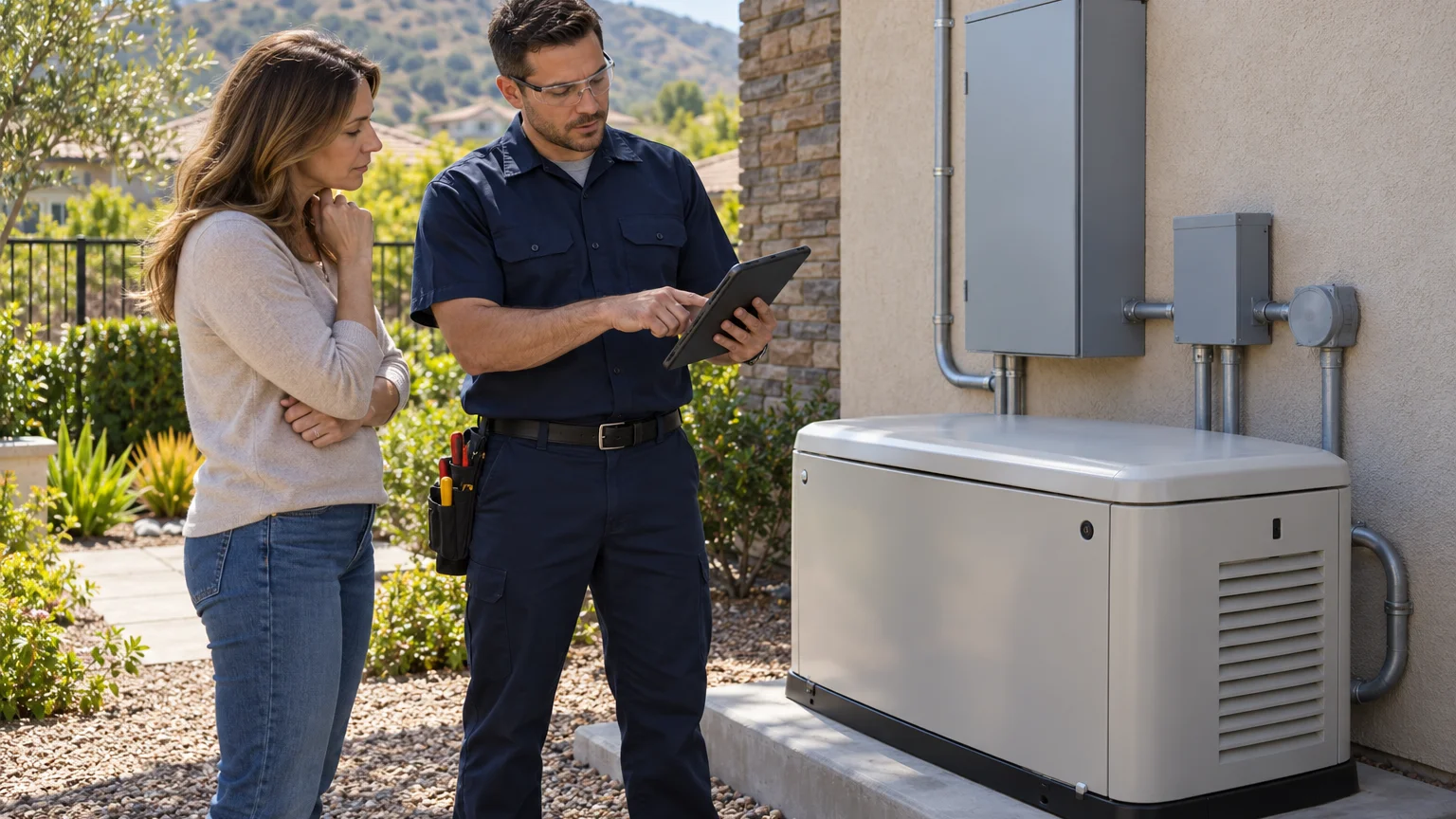
Start with the loads the household wants to protect
Begin with a written list of what matters during an outage. Separate essential loads from comfort items. That keeps the conversation focused on your household instead of a generic equipment package.
Your list might include refrigeration, lighting, communications, medical equipment, or a well pump. Don’t guess at electrical demand or generator capacity. Record the equipment names and let a qualified electrician review the actual ratings.
Also note which loads may operate together. A proposal should explain what the planned system is intended to support. It should also identify anything excluded from backup power. Clear exclusions prevent a vague phrase like “whole-home ready” from doing too much work.
Poway has both older and newer housing. U.S. Census ACS 2023 data shows that 49.2 percent of Poway housing units predate 1978. That doesn’t prove anything about a specific house. It does show why a panel review must be address-specific.
A newer remodel may still have an older service panel. An older home may have received extensive electrical updates. The electrician should assess what’s present, not infer it from the neighborhood.
Household priorities matter too. Some owners want a limited emergency plan. Others want broader coverage for a large house, detached workspace, or property equipment. Those are different projects.
Our Poway electrician guide explains how local electrical planning changes from one property to another. Bring your protected-load list to the first site visit. It gives the electrician a useful starting point without pretending that a homeowner estimate replaces a professional review.
How portable and standby backup plans differ
Portable and permanently installed standby systems create different project scopes. Compare them as complete backup plans, not simply as pieces of equipment.
A portable plan should identify the selected equipment and the approved way it will serve the protected loads. It should also explain which parts are permanent electrical work. This article doesn’t provide connection, transfer-equipment, fuel-storage, or wiring instructions. Those details belong in the electrician’s design and manufacturer documentation.
A standby proposal usually involves permanent equipment and coordination across several parts of the property. Ask who is responsible for the electrical scope, equipment placement, fuel work, permits, inspections, and startup documentation. Don’t assume one contractor handles every trade.
The right format depends on your priorities. Consider how much setup you’re willing to manage during an outage. Think about storage, access, maintenance, and which loads must remain available. Ask how the proposed system changes that experience.
Large Poway lots may offer more possible locations, but more space doesn’t confirm that every location works. Properties near open land may also need a closer review of site conditions. Requirements can vary by address, equipment, and project scope.
If outage planning is tied to high-fire-risk conditions, read our PSPS and generator planning guide. A utility event is address-specific. Don’t assume every Poway property faces the same shutoff exposure.
A generator also isn’t the only backup option. Our home battery and standby generator comparison covers the planning differences. Use that comparison to narrow your direction before requesting equipment-specific proposals.
What an electrician reviews at the panel
The panel review connects your protected-load list to the home’s electrical system. It’s where a general backup idea becomes a property-specific project.
A California C-10 electrical contractor’s classification covers installing and connecting electrical wiring, fixtures, appliances, raceways, and related equipment. You can confirm a contractor’s business identity, status, and classifications through the CSLB license lookup.
The electrician should identify the service equipment and circuits involved in the proposed backup plan. Ask for the protected loads to appear in the written scope. If the proposal depends on another panel change, that dependency should be clear.
Older equipment doesn’t automatically require replacement. Newer equipment doesn’t automatically accept every proposed design. The site review should determine what applies at your address.
Keep the review non-technical from the homeowner’s side. Don’t remove panel covers or test wiring yourself. Give the electrician access to the equipment and share any existing documents you have. That may include panel records, remodeling plans, or manuals for major loads.
If an electrical label is unclear, say so. Don’t fill the gap with a guess. The electrician can determine what needs verification before finalizing the scope.
Ask these practical questions:
- Which loads does this proposal protect?
- Which loads remain outside the backup plan?
- Does the existing panel affect the design?
- Is additional electrical work included or excluded?
- Who handles permit and inspection coordination?
- What information could still change the proposal?
A good generator installation plan should connect equipment choices to the actual house. It shouldn’t rely on a generic house size or a sales label alone.
Confirm placement, fuel, permits, and utility details
Equipment selection is only one part of generator installation in Poway. The proposal should also address the site, fuel scope, local approvals, and any utility coordination.
Poway is an incorporated city with its own Building Services division under Development Services. It uses its own fee schedule, separate from the City of San Diego and San Diego County.
The exact Poway generator permit trigger and fee couldn’t be confirmed from the approved claims ledger. Check the current project requirements and fee directly with Poway Building Services before work begins. Don’t apply City of San Diego or unincorporated county fees to a Poway address.
Ask the electrician to state who will confirm the permit path. The proposal should distinguish permit responsibility from installation responsibility. It should also explain who schedules any required inspection.
Placement needs an address-specific review. Don’t select a location from an online diagram and assume it fits. Ask the project team to document the proposed location and the approvals still needed. The review may involve access, existing equipment, property features, and manufacturer instructions.
Fuel coordination needs the same clarity. Ask which fuel-related work is included, which contractor handles it, and what qualifications apply. Don’t assume the electrical proposal covers every fuel-side task.
Utility coordination also depends on the project. If it’s needed, ask who submits the information and what remains outside the quote. SDG&E publishes current customer and service information on its official website, but an electrician should explain whether your installation involves a utility step.
This planning matters on large or irregular Poway properties. A longer distance between the panel and proposed equipment can change the scope, but it doesn’t support a price or timeline guess. Let each bidder inspect the same intended location before comparing proposals.
What to compare in generator installation proposals
Compare written scopes, not just final totals. Two proposals may describe different protected loads, equipment, permit responsibilities, or site work.
Ask each bidder to quote the same planning brief. Include the protected-load list, preferred project type, panel location, proposed equipment area, and known property constraints. That gives you a cleaner comparison.
Each proposal should identify:
- The equipment manufacturer and model
- The loads the planned system is intended to support
- Electrical work included in the scope
- Work assigned to another trade
- Permit and inspection responsibility
- Utility coordination, if applicable
- Site preparation included or excluded
- Warranty terms and service routing
- Maintenance responsibilities
- Assumptions that could change the scope
Don’t accept an undefined allowance where a key project responsibility should be named. Ask what information is missing and who must provide it.
Generator pricing couldn’t be confirmed from the approved ledger, so this page doesn’t publish a Poway cost range. Equipment, electrical scope, property conditions, fuel coordination, and permitting can differ. Current written proposals are the proper way to compare your address.
Warranty language also deserves attention. Terms can vary by manufacturer, model, and purchase date. For Generac home standby equipment, the approved ledger shows that warranty terms vary by unit. Warranty claims route through an authorized Generac service dealer, and maintenance records may be required. Check the paperwork for the exact proposed model rather than relying on a general sales statement.
Verify the electrical contractor independently. A license lookup can confirm business identity, classification, and displayed status. It doesn’t guarantee workmanship, insurance coverage, permit approval, or experience with your exact project.
Ask for insurance documentation and verify it separately. Request a written scope showing who performs each part of the installation. If proposals differ, ask each bidder to explain the difference before choosing.
Bright Pro Electric is a referral service. We connect Poway homeowners with licensed, independent local electricians. The matched electrician provides the proposal, completes the electrical work, and explains any warranty attached to that work.
When to call us
Call when your protected-load list is ready and you need a licensed electrician to review the panel, property, and generator installation scope. Bright Pro Electric can match you with an independent local pro, but emergency and utility concerns should be addressed first.
Call us at (858) 988-5580 and we’ll connect you with a licensed local electrician.