Installing a home charger starts with the parking space, not the equipment catalog. Encinitas homeowners should settle the daily charging plan, panel capacity, cable route, and local approvals before choosing an installer.
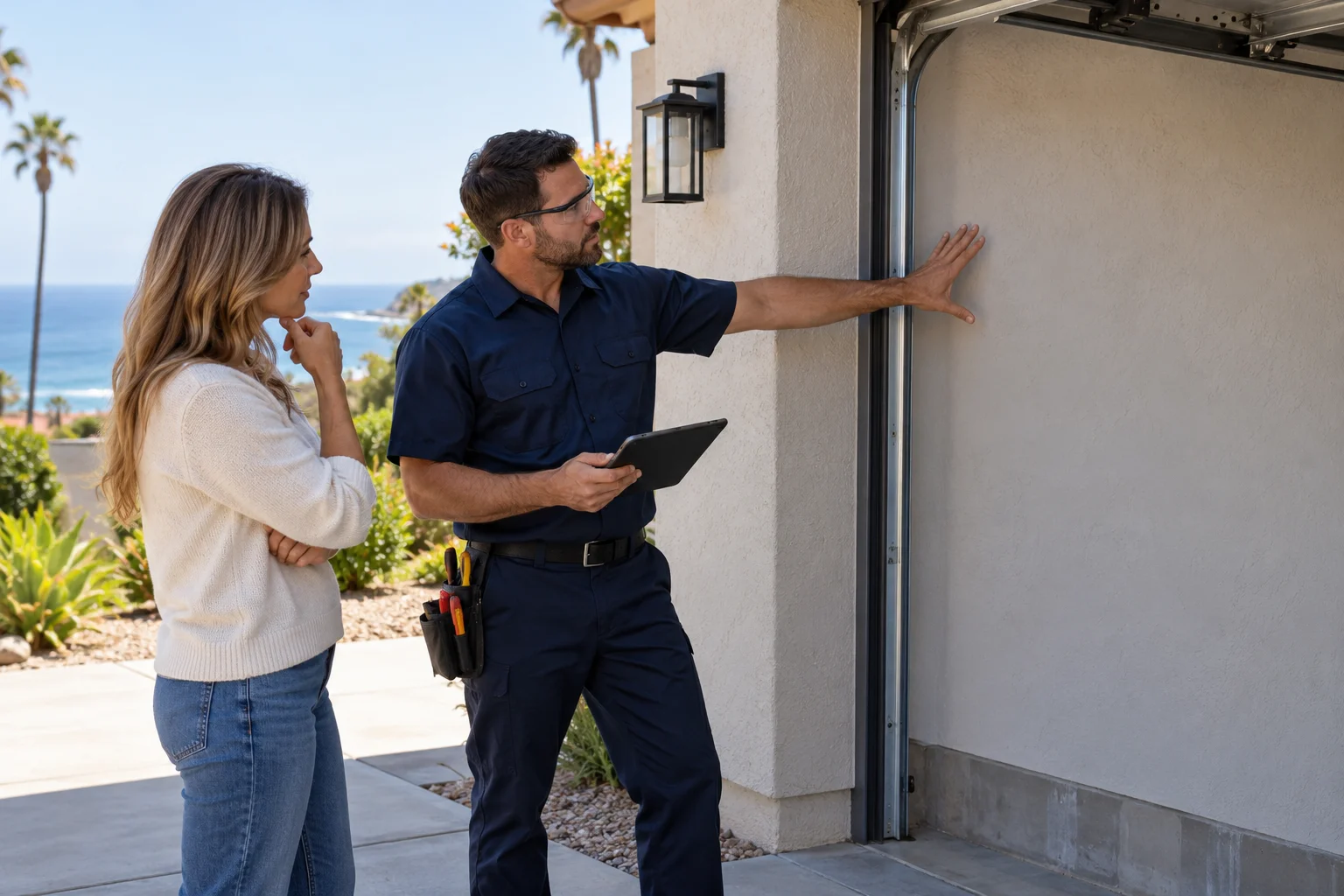
Start with parking location and daily charging use
Begin with the space where the car actually rests overnight. A charger placed near the wrong side of the vehicle can create an awkward cable path. It may also make a second parking space harder to use.
Walk through a normal weekday before requesting proposals. Note which car parks inside, which stays outside, and whether vehicles switch positions. Tell the electrician about a planned second EV as well. That future need may affect the equipment and electrical plan.
An attached garage often allows a shorter route from the panel. A detached garage, exterior parking area, or shared structure needs a different assessment. Don’t assume an existing wall outlet settles the issue. The electrician must identify what serves it and whether it fits the proposed charger.
Leucadia homes may have narrow driveways or garages used for storage. Cardiff-by-the-Sea properties can present tight parking arrangements or shared access. The important detail is the exact stall, wall, and charge-port position. Neighborhood names alone don’t define the installation.
Bring these details to the first conversation:
- Vehicle make, model, and model year
- Charger model or manufacturer requirements
- Typical daily driving
- Exact overnight parking position
- Indoor or outdoor mounting location
- Distance and obstacles between the panel and parking space
- HOA, gate, or shared-garage access
- Plans for another EV, solar, a battery, or other electrical loads
Our EV charger installation service connects homeowners with independent local electricians. The matched electrician evaluates the property and confirms the installation scope.
How coastal Encinitas garages and older 100-amp homes change the plan
Encinitas has a meaningful mix of older and newer housing. U.S. Census ACS data shows that 45% of the city’s housing units predate 1978. That figure doesn’t reveal any individual home’s wiring, panel condition, or service capacity. It does explain why address-specific inspection matters here.
An older beach cottage may have been remodeled several times. A garage could have been converted, expanded, or supplied from a subpanel. Labels may not reflect later changes. An electrician needs to inspect what’s present instead of treating the home’s age as a diagnosis.
If the service records or panel label show 100 amps, don’t assume an upgrade is automatic. Don’t assume the charger will fit either. Available capacity depends on the home’s existing electrical demand and proposed equipment. Breaker space and service size are separate questions.
Coastal placement adds practical choices. The proposal should identify whether the charger sits inside a closed garage, beneath cover, or on an exposed exterior wall. Ask the electrician to confirm that the selected equipment and mounting plan fit that location. Avoid choosing hardware from appearance alone.
Cable routing also shapes the work. A route may cross finished walls, a ceiling, an exterior surface, or the space between buildings. Ask how each proposal handles those surfaces. The shortest visible distance isn’t always the complete electrical route.
For broader local context, see our guide to hiring an electrician in Encinitas. It explains how Bright Pro Electric’s referral role differs from the independent electrician’s work.
What panel capacity can change before a charger is added
A charger adds a substantial recurring load. The electrician should evaluate the existing panel and household demand before recommending the circuit or equipment setting. NEC 220.87 is one standard practice reference used for load calculations on existing installations.
The review should separate four issues:
- Available electrical capacity
- Physical breaker space
- Panel and service condition
- The charger’s stated electrical requirements
Those issues can lead to different proposals. One home may have breaker space but limited available capacity. Another may have sufficient capacity but no suitable space for the planned equipment. A third may need a broader panel or service discussion.
A panel upgrade isn’t the only possible proposal, and it shouldn’t appear without an explanation. Ask the electrician to show what the load review found. If another option is proposed, ask what equipment it uses and what limitations apply.
Encinitas homeowners should also disclose other planned loads. A heat pump, electric water heater, battery, solar project, spa, or second charger can change the long-term plan. Coordinating projects now may prevent conflicting scopes later.
Our Encinitas electrical panel upgrade guide covers the local planning questions in more detail. It can help you understand a proposal without assuming your charger requires an upgrade.
Don’t open a panel, remove its cover, or probe circuits yourself. A closed-door inspection and photographs may help begin a conversation, but the licensed electrician must determine what further examination is appropriate.
Confirm Encinitas permits and utility steps for the address
Encinitas is an incorporated city with its own building department. Confirm the permit route with the City of Encinitas for the exact address and installation scope. Don’t apply City of San Diego procedures or fees to an Encinitas property.
A current Encinitas EV charger permit fee couldn’t be confirmed from the approved sources for this article. Ask the city for the current amount and submission requirements before accepting a final project total. The San Diego EV charger permit guide explains why jurisdiction matters, but the Encinitas authority controls an Encinitas address.
Ask each bidder to state:
- Whether the proposed scope requires a permit
- Who will submit the permit application
- Whether drawings or other documents are expected
- Who will coordinate required inspections
- Whether permit costs are included or separate
A service change may also involve SDG&E. SDG&E’s planners evaluate load requirements, meter location, and system capacity for applicable service work. The exact process depends on the property and proposed scope. No published completion time should be assumed.
HOA parking needs another layer of planning. California Civil Code section 4745 requires a homeowner to use a licensed contractor for an HOA charging-station installation. An application not denied in writing within 60 days of receipt is deemed approved. The association may still deny an application in writing or impose reasonable conditions.
The homeowner pays installation and electricity costs under that law. Liability coverage and certificate requirements also remain. Since January 1, 2026, an HOA can’t require the association to be named as an additional insured, but the other insurance requirements weren’t eliminated. Confirm the current application package with the HOA before work begins.
What to compare in charger installation proposals
Compare written proposals against the same requested scope. A low total may reflect a shorter route, different equipment, excluded permit work, or an assumption that hasn’t been verified. Price alone doesn’t show whether two bids cover the same project.
A useful proposal should identify the charger or owner-supplied equipment, mounting location, electrical route, panel work, surface repairs, permit responsibility, and inspection coordination. It should also distinguish current work from optional future preparation.
Ask how the installer reached the panel conclusion. “Upgrade required” needs supporting scope. “No upgrade required” should also follow an actual load review. Neither answer should come from the home’s age or service label alone.
Clarify these items before signing:
- Hardwired or plug-in configuration
- Charger model and electrical setting
- New circuit or reuse of existing equipment
- Panel, subpanel, or service work
- Indoor or outdoor placement
- Cable route and visible finishes
- Permit and inspection responsibility
- HOA access or documentation
- Labor and equipment warranty terms
- Exclusions and change-order process
Check the contracting business through the CSLB license lookup. Confirm its identity, active status, and classification. The C-10 classification covers installing and connecting electrical wiring and associated equipment. A license record doesn’t guarantee workmanship, insurance coverage, or experience with your charger.
Request comparable written bids based on the same scope. CSLB recommends at least three. Ask for insurance documentation separately, and verify it with the listed provider.
Installation prices vary with the route, panel work, permit handling, and equipment. Our San Diego EV charger cost guide can help organize those variables. Confirm the actual Encinitas price with the electrician before approving work.
Rebates, tax programs, and utility rates can change. Verify current eligibility directly with the program administrator before counting a credit in your budget. An advertisement or search result isn’t proof that your address, vehicle, charger, or installation qualifies.
When to call us
Call when you need an Encinitas EV charger electrician to assess the parking space, panel, route, and proposed equipment. Bright Pro Electric will match you with an independent licensed local pro who confirms the scope, price, permit responsibility, and availability directly.
Call us at (858) 988-5580 and we’ll connect you with a licensed local electrician.