A commercial lease can look workable until the equipment plan reaches the electrician. Before approving a Chula Vista build-out, match the proposed layout to the power already available. That early review can expose conflicts while walls, counters, and equipment locations can still change.
Start with the equipment the space must support
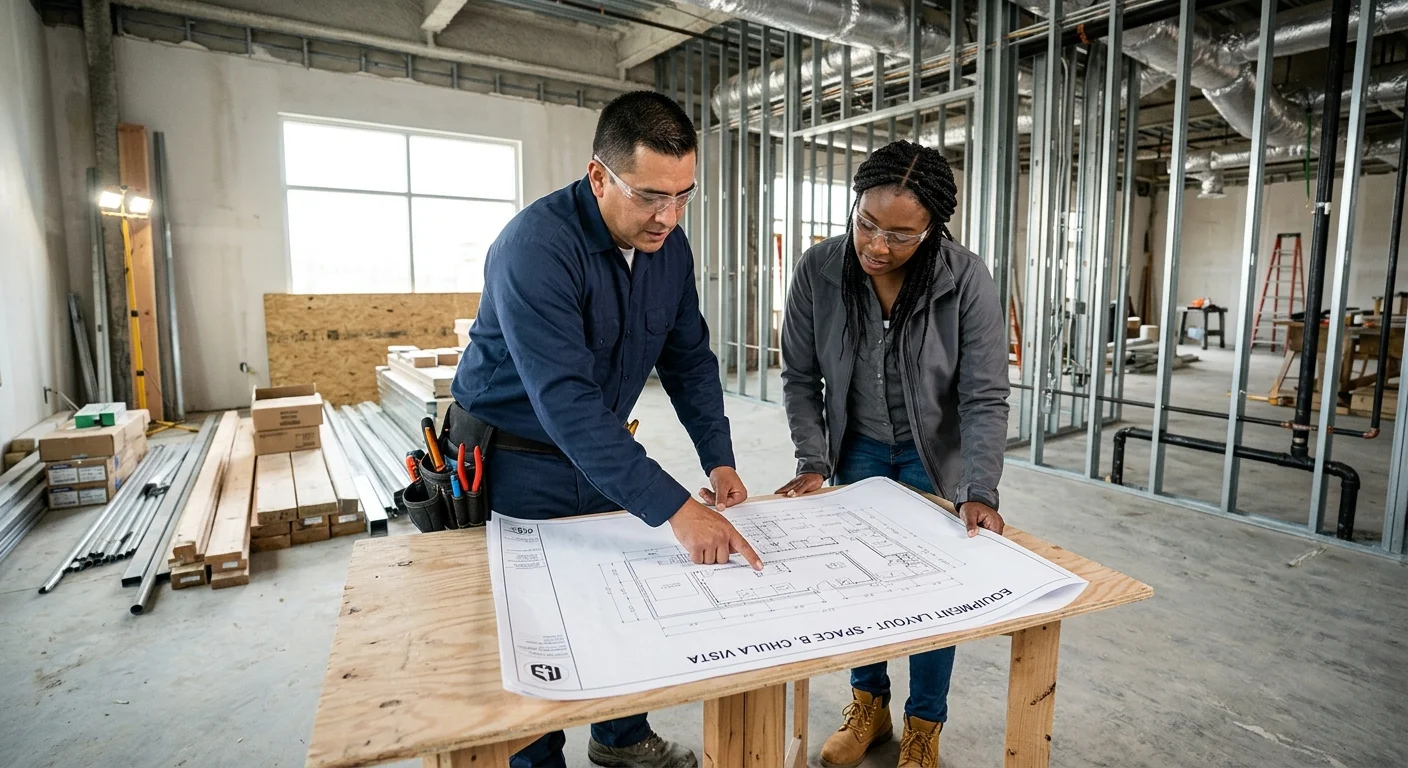
Begin with what the business will actually plug in, hardwire, illuminate, and control. A general floor plan won’t give a commercial electrician enough information. The useful starting point is an equipment schedule tied to specific locations.
List every known appliance, machine, sign, light, workstation, charger, and mechanical connection. Include manufacturer documents when they’re available. Mark whether an item is supplied by the tenant, landlord, or another trade. If a model hasn’t been selected, label it as unresolved instead of inserting a guessed electrical requirement.
This matters across Chula Vista’s varied commercial areas. A narrow storefront near Third Avenue may present different layout limits than an unfinished suite near Eastlake Parkway. A space along Broadway may also have equipment left by an earlier tenant. Existing outlets or disconnects don’t prove they suit the new operation.
Keep uncertain items visible on the plan. Common examples include exterior signs, security equipment, refrigeration, specialty lighting, data cabinets, and future expansion. The electrician can then review the real operating plan instead of a rough square-foot assumption.
For broader planning help, start with the commercial electrical service overview. If the project involves a leased space, the San Diego tenant-improvement electrical guide provides added context.
This first step also helps define the electrician’s scope. It separates known work from allowances and unresolved selections. That makes later proposals easier to compare without hiding uncertainty inside one large total.
Review available service before approving the layout
An equipment list describes demand. The next task is comparing that demand with the existing electrical system. This review should happen before the tenant commits to walls, counters, ceiling plans, or final equipment locations.
Ask the commercial electrician to document what can be confirmed at the site. That may include the service equipment, panels, visible circuit labeling, tenant distribution, and accessible electrical rooms. The review should also identify what can’t be confirmed without records, testing, utility coordination, or further access.
Don’t treat a label as the complete answer. A panel rating, old drawing, or landlord summary may describe only one part of the system. The electrician should explain which conclusions come from current observations and which remain conditional.
This is especially useful when comparing Chula Vista spaces on opposite sides of the city. A former retail suite near Broadway and a newer shell near Otay Ranch may support different plans. The business type alone won’t settle that question. The exact address, existing equipment, and proposed loads matter.
If a service change may be needed, ask the electrician to identify the assumptions behind that recommendation. SDG&E reviews service-upgrade requests based on the project and existing system conditions. Its primary pages don’t publish a fixed completion timeline, so a proposal shouldn’t promise one.
Keep the layout flexible until this review is complete. Moving equipment on paper is usually simpler than redesigning a nearly finished space. The goal isn’t to predict every field condition. It’s to find the decisions that depend on electrical information before they become expensive coordination problems.
Separate landlord work from tenant improvements
A build-out proposal becomes difficult to manage when landlord work and tenant work overlap. Put that division in writing before comparing electricians.
Start with the lease, work letter, and any landlord construction rules. Highlight each electrical item assigned to either party. Then compare those documents with the electrician’s site notes and the tenant’s equipment plan. Don’t assume that “existing electrical” means the landlord must change it.
A clean scope should identify who handles base-building access, tenant panels, feeders, metering questions, lighting, signs, controls, and connections for other trades. It should also flag shared areas or locked electrical rooms that require landlord coordination. These are planning categories, not universal lease rules. The signed documents control the actual split.
Ask who will provide drawings, submit project information, arrange access, and respond to correction requests. If the answer depends on landlord approval, mark that dependency clearly. A vague allowance shouldn’t be presented as a finished scope.
The same approach helps when construction involves several trades. Electrical work often depends on final cabinet dimensions, reflected ceiling plans, equipment submittals, and mechanical locations. The electrician’s proposal should state what information was used and what changes could require revision.
California’s C-10 classification covers electrical wires, fixtures, appliances, raceways, conduits, and related electrical systems. Before hiring, confirm the contractor’s classification and status through the CSLB license lookup.
Bright Pro Electric is a referral service. We connect businesses and property teams with licensed, independent local electricians. The matched contractor, not Bright Pro Electric, performs the site work and handles its contractual responsibilities.
Plan shutdowns without promising a fixed timeline
Some build-outs affect occupied areas, shared panels, or equipment serving another tenant. Those conditions make shutdown planning part of the scope, not a last-minute scheduling note.
Ask the electrician to identify any work that may require power interruption. The plan should name the affected area, the party controlling access, and the decisions needed before scheduling. It should also distinguish a planned shutdown from work that can happen while other areas remain operational.
For an occupied property, create a contact list for the tenant, landlord, property manager, electrician, and affected vendors. Decide who can authorize an interruption and who must receive notice. If refrigeration, security, communications, or payment systems are involved, their owners should confirm how those systems will be handled.
Don’t accept a guaranteed shutdown duration before the electrician has enough information. Existing conditions, access, inspections, utility involvement, and coordination with other trades can change the plan. SDG&E doesn’t publish one universal service-upgrade timeline for every project.
A proposal can still be useful without making a promise. It can describe the intended work sequence, known dependencies, and conditions that would require rescheduling. It can also state whether temporary arrangements are included, excluded, or still being evaluated.
Keep troubleshooting separate from build-out planning. Repeated trips at an operating food business need a different investigation than a new tenant layout. The Chula Vista restaurant breaker guide addresses that operating problem. This page focuses on planning before construction commitments harden.
Confirm Chula Vista permits for the exact address
A commercial project inside Chula Vista falls under the city’s building authority. It isn’t handled by the City of San Diego or San Diego County Planning & Development Services. The incorporated city runs its own building department.
The approved claims ledger doesn’t confirm a current Chula Vista fee, application type, or permit trigger for this exact build-out. Don’t rely on a fee or rule copied from another San Diego County jurisdiction. Contact Chula Vista’s building department and request an address-specific answer before budgeting or scheduling around a permit assumption.
Provide the exact property address, suite, proposed equipment, and written scope. Ask which documents apply, whether plan review is required, and how inspections should be requested. Confirm the current fee directly with the city before paying or signing a proposal based on it.
The 2025 California Electrical Code took effect on January 1, 2026. It uses the 2023 National Electrical Code with California amendments. Local jurisdictions may also have added requirements, so statewide code information doesn’t replace the city’s project review.
The proposal should say who is responsible for permit-related tasks. It should also explain whether city fees, drawings, revisions, and inspection coordination are included or excluded. That clarity doesn’t guarantee approval or timing. It tells the tenant and landlord who owns each administrative step.
Avoid treating an existing use or earlier permit as approval for new work. Ask the city about the current scope at the current address. A written answer or accepted application is more useful than a verbal assumption passed between project participants.
What to compare in commercial electrical proposals
Compare proposals by scope, assumptions, and exclusions before comparing totals. Two prices aren’t comparable when one includes finished connections and the other stops at rough wiring.
Each proposal should reference the same equipment schedule and drawing set. Look for clear descriptions of panels, circuits, lighting, controls, equipment connections, testing, labeling, access, and cleanup. The document should identify owner-furnished or tenant-furnished equipment without implying that the electrician supplies it.
Check the permit section carefully. It should state what the electrician expects to handle and what remains with the tenant, landlord, designer, or city. Any permit fee should be identified as confirmed, excluded, or subject to the current city schedule. Don’t accept a borrowed City of San Diego or county fee as a Chula Vista figure.
Review change-order language as well. A practical proposal explains which assumptions could change the scope. Examples include inaccessible pathways, incomplete equipment data, landlord restrictions, and revisions from another trade. These aren’t predictions about the site. They’re boundaries around the submitted price.
Confirm the contractor’s active license through CSLB. Ask for insurance information and contract terms directly from the independent electrician. Bright Pro Electric doesn’t hold the trade license, set contractor pricing, or provide the contractor’s warranty.
Finally, compare communication. The electrician should be able to explain unresolved items without inventing an answer. “Pending city confirmation” or “subject to landlord access” is useful when it’s accurate. False certainty isn’t.
A good proposal gives the project team a shared map. It shows what’s included, what remains unknown, and who makes the next decision. That structure is often more valuable than the shortest document or lowest unexplained total.
When to call us
Call when a Chula Vista lease, equipment plan, or build-out layout needs review by a licensed commercial electrician. Bright Pro Electric can match you with an independent local pro who can evaluate the site and prepare a project-specific scope. Call us at (858) 988-5580 and we’ll connect you with a licensed local electrician.