Repeat breaker trips can interrupt a Chula Vista restaurant without revealing the cause. Useful electrical repair starts with documenting what stopped, when it happened, and what else was operating. Those details help a licensed electrician investigate without relying on guesses.
Start with which equipment and area lost power
Begin with the exact equipment and spaces affected. Avoid writing “the kitchen lost power” if only one prep station stopped. Name each appliance, receptacle group, light, or service area that went out.
Record the time and the restaurant’s operating conditions. Note whether the trip happened during opening prep, a lunch rush, closing, or overnight cleaning. Include which equipment was running, starting, heating, or being cleaned at that moment. Don’t recreate the event to test a theory.
Describe the physical area precisely. “North wall of the cook line” gives an electrician more context than “back of house.” Dining-room details should be equally clear. Identify the bar, host station, patio, restroom, or point-of-sale area involved.
Chula Vista location details matter too. A Third Avenue storefront may have different landlord records than an Eastlake restaurant suite. Broadway shopping centers and Otay Ranch developments can also have separate property-management contacts. Include the address, suite number, landlord, and site contact.
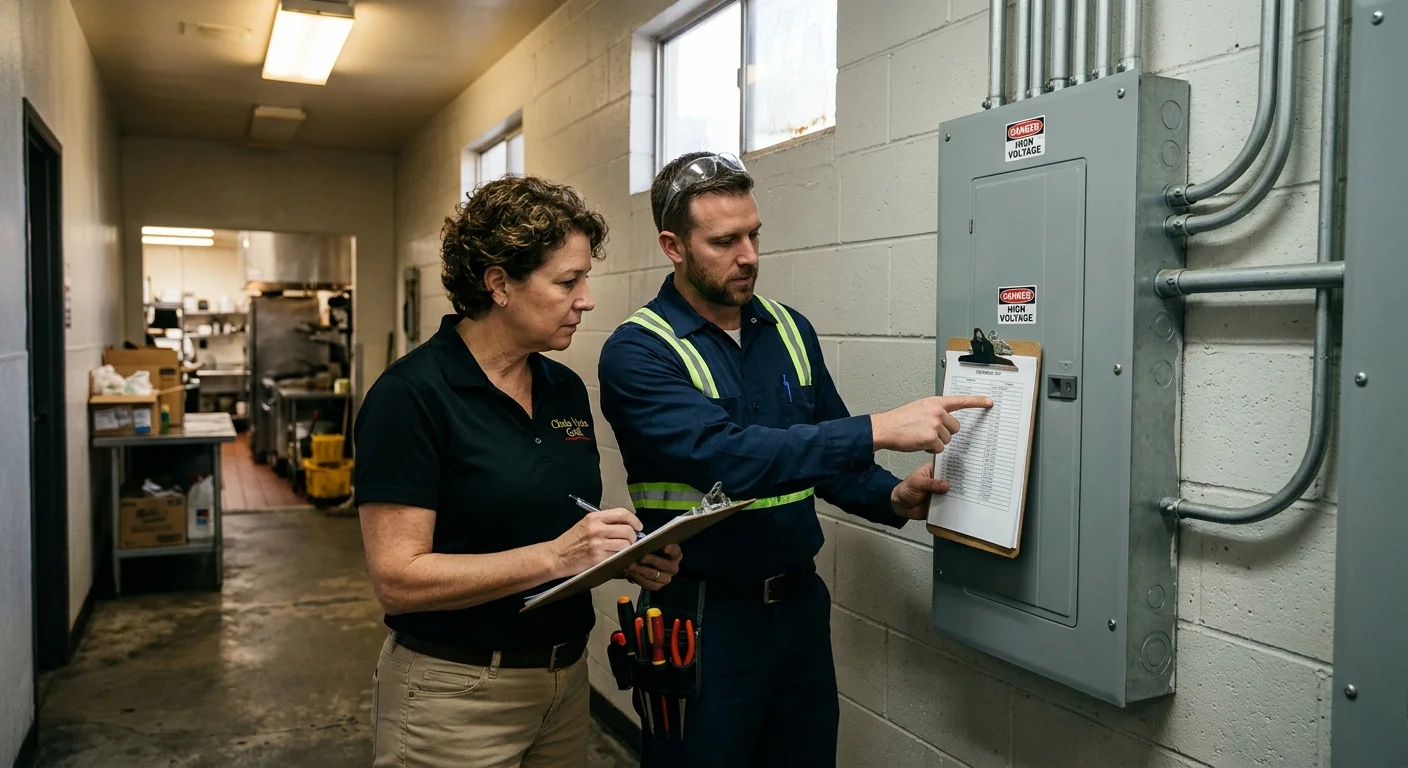
Photograph only what’s visible without opening a panel or equipment enclosure. Useful images may include the equipment label, plug, nearby receptacle, and closed panel directory. Copy the breaker description exactly as written, even when it seems unclear.
Create one incident entry for each trip. A simple log should include:
- Date and time
- Equipment and areas affected
- Equipment operating nearby
- Visible breaker label
- Odor, sound, or visible damage noticed
- Who observed the event
- What remained powered
Leave panel access, testing, and reset decisions to the electrician. If there’s smoke or an active fire, alert others, leave the building, and call 911.
Separate an appliance fault from a circuit problem
A tripped breaker doesn’t identify the failed component by itself. The electrician still needs to determine whether the issue is associated with equipment, wiring, connections, protection devices, or the larger electrical system.
Your incident log can reveal useful boundaries. Note whether the same appliance appears in every event. Also record whether several pieces of equipment stop together. If an appliance displays an error message, copy it exactly. Don’t translate it into an electrical diagnosis.
Avoid moving equipment between receptacles to see what happens. Don’t substitute an extension cord, open the appliance, remove a panel cover, or bypass a protective device. Those actions can change the conditions the electrician needs to assess.
Keep appliance service records available. A restaurant equipment technician may have recently replaced a component or documented a recurring equipment fault. The commercial electrician needs that history before deciding whether the electrical system or appliance requires further attention.
The final scope may involve an electrician, an equipment technician, or both. Ask each provider to identify where their work begins and ends. That distinction prevents two vague proposals that leave the same unresolved gap.
For a broader investigation, review our electrical troubleshooting service. Bright Pro Electric can match you with an independent local pro who evaluates the electrical side of the problem.
The key is observation without experimentation. Record normal operating conditions and let the electrician plan the diagnostic work.
What a commercial electrician needs before the visit
Good preparation protects operating time and keeps the first conversation focused. Send a short incident summary before the electrician arrives. Include photos and records, but don’t open electrical equipment to obtain them.
Provide the restaurant’s full address and suite number. Identify the tenant, property owner, and property manager. Explain who can authorize work and who controls access to shared electrical rooms.
List every affected appliance by the name your staff uses. Add the manufacturer and model when a label is safely visible. Describe whether each unit is fixed in place, plugged into a receptacle, or controlled elsewhere. Don’t disconnect equipment to inspect it.
The electrician should also receive:
- Your breaker-trip log
- Photos of visible equipment labels
- A photo of the closed panel directory
- Previous electrical invoices or reports
- Appliance service records
- Tenant-improvement drawings you already possess
- Dates of recent equipment or layout changes
- Building access rules
- Available work windows
- Landlord approval requirements
State the business impact without exaggerating it. Explain whether the event affects food preparation, refrigeration, lighting, payment equipment, or one isolated station. Identify any temporary closure ordered by management, the landlord, or another authority.
Don’t promise the electrician unrestricted access. Restaurant kitchens can have cleaning, delivery, and food-handling constraints. Shared commercial properties may also require coordination with building management.
Our commercial electrical service connects Chula Vista operators and property managers with licensed, independent local electricians. The matched electrician performs the inspection, diagnosis, and physical work.
Before hiring, verify the contractor’s status through the California Contractors State License Board. Save the license information with the proposal and property records.
How tenant changes can broaden the electrical review
Repeat trips sometimes appear after a restaurant changes equipment or rearranges operations. That timing is useful, but it doesn’t prove the new equipment caused the problem.
Give the electrician a dated list of tenant changes. Include replaced cooking appliances, added refrigeration, relocated counters, new signs, lighting changes, and receptacle work. Note work completed by the current tenant, previous tenant, landlord, or equipment vendor.
The review may expand when records don’t match the current space. A panel directory, tenant drawing, invoice, and actual equipment list may describe different conditions. Don’t correct those conflicts yourself. Flag them for the electrician.
California’s C-10 classification covers electrical wires, fixtures, appliances, apparatus, raceways, and conduits that generate, transmit, transform, or use electrical energy. Most electrical installation, alteration, or extension work requires a licensed contractor regardless of price. Work requiring a building permit also requires a license at any dollar amount.
A general contractor’s involvement doesn’t settle the electrical-license question. If electrical is the only trade involved, the contractor needs the electrical classification or must bring in an appropriately licensed electrical contractor.
Ask the electrician whether the proposed scope is limited to diagnosis and repair. If new circuits, relocated equipment, panel changes, or other alterations are being considered, request a separate description. This keeps an immediate repair from becoming an undefined tenant-improvement project.
The restaurant’s lease may assign approvals or costs between tenant and owner. That allocation couldn’t be confirmed for your property. Check the signed lease and obtain written direction from the landlord or property manager.
Which Chula Vista permit details need confirmation
Chula Vista is an incorporated city with its own building department. Don’t use City of San Diego or unincorporated San Diego County fees for a Chula Vista restaurant.
The current Chula Vista fee and the permit trigger for this exact repair couldn’t be confirmed from the approved sources for this page. The City of Chula Vista sets those requirements. The electrician or property manager should confirm them with the city before permit-dependent work begins.
Ask for clear answers to these questions:
- Does the proposed scope require a city electrical permit?
- Who will submit the application?
- Is plan review needed for this scope?
- Will the city require an inspection?
- Are permit charges included or excluded?
- Who coordinates access with the inspector?
- What documents will the tenant and owner receive?
A diagnostic visit and a later alteration shouldn’t be treated as one undefined item. Ask the electrician to separate what’s being investigated from what may be changed. If the diagnosis changes the recommended scope, request an updated written proposal.
Don’t accept a City of San Diego permit figure as a Chula Vista estimate. Don’t use the unincorporated county electrical-only fee either. Those published figures belong to different jurisdictions.
Property-management approval is separate from city confirmation. A landlord may request plans, insurance records, contractor information, or scheduling details. Those terms depend on the property and lease, so they should be checked directly.
Keep the final permit, approved plans, inspection record, and invoice together when applicable. Future tenants and service providers can then see what the city reviewed and what the electrician completed.
What to compare in repair proposals
A useful proposal identifies the problem being addressed without promising an unproven diagnosis. It should distinguish investigation, immediate repair, optional corrections, and any larger electrical changes.
Compare scope before comparing totals. One proposal may cover only a breaker replacement. Another may include diagnostic work, equipment coordination, circuit changes, and permit handling. Those aren’t equivalent offers.
Look for these written details:
- Equipment and area covered
- Reported symptoms
- Diagnostic work included
- Repair or replacement work proposed
- Parts or equipment specified
- Work excluded
- Permit and inspection responsibility
- Property restoration responsibility
- Coordination with an appliance technician
- Restaurant access and shutdown assumptions
- Payment terms
- Warranty terms from the contractor
No verified market price for this restaurant repair was available in the approved claims ledger. The total depends on the diagnosed condition and written scope. Ask each electrician to explain allowances, optional work, and conditions that could change the price.
Confirm that the proposal belongs to the contractor performing the work. Bright Pro Electric is a referral service. It doesn’t perform repairs, issue contractor warranties, or set the independent electrician’s pricing.
Verify the contractor through the CSLB before signing. Check that the business name and license details match the proposal. If a property manager requires insurance documentation, request it from the contractor.
Finally, compare the proposed stopping point. Will you receive a completed repair, a diagnostic report, or a recommendation for additional work? That answer often matters more than a short line labeled “electrical repair.”
When to call us
Repeat breaker trips, unexplained power loss, and electrical changes need review by a licensed electrician. Bright Pro Electric can match Chula Vista restaurant operators and property managers with independent local pros.
Call us at (858) 988-5580 and we’ll connect you with a licensed local electrician.