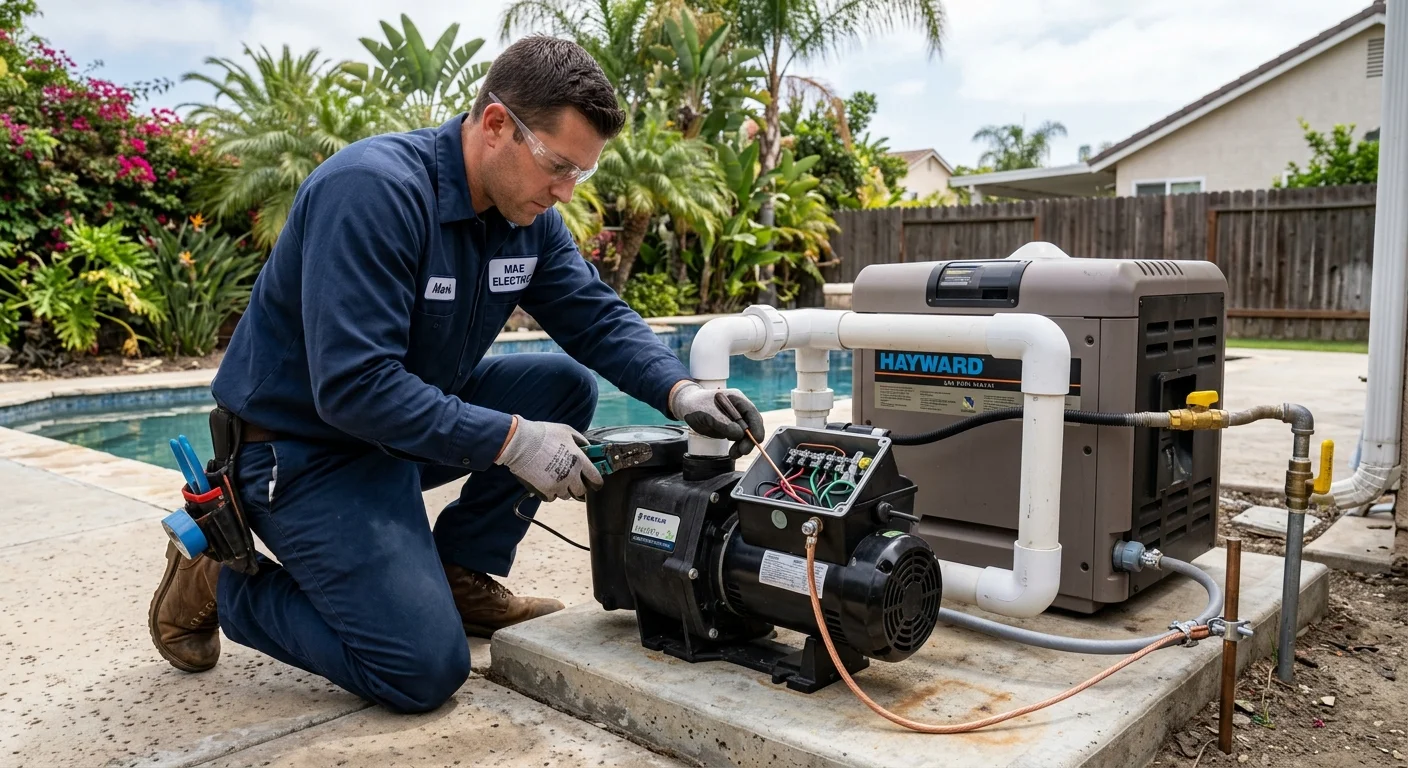
Pool equipment in San Diego needs listed circuits, GFCI where the adopted pool articles require it, and equipotential bonding laid out in the field. That is a code and listing job, not a lifestyle accessory. Incorrect wiring can shock, damage equipment, or start a fire. A licensed electrician does that work. Bright Pro Electric matches you with that electrician. It does not install pool equipment.
TL;DR
- Copy circuit, GFCI, and bonding requirements from each product’s nameplate and listing, then the adopted California pool code. Do not share circuits unless those documents allow it.
- GFCI distances and which loads need protection are in the adopted pool articles, not a 20-foot mnemonic copied from an old NEC summary.
- Equipotential bonding is a field layout against the listing and the code, not a Bright Pro guarantee.
- Bright Pro Electric matches homeowners with licensed electricians. It does not install pool equipment or promise a first-person “we wire pools” result. Costs stay parked.
- Equipotential bonding connects all metal pool components (rebar, ladders, pump housings, fencing) to the same electrical potential, preventing dangerous voltage differentials that can electrocute swimmers.
- Any tingling sensation or mild shock at metal pool parts or water is an emergency: exit the area. Smoke, sparks, or fire: leave, call 911, then the phone from outside. Do not operate the main.
- Permits are required for new pool construction, major equipment upgrades, and any new electrical points near the pool; a city inspector must verify the work before it’s covered.
Whether you are installing a new pool, upgrading existing equipment, or troubleshooting an issue, understanding the electrical requirements for your pool’s pumps, heaters, and other components is essential. Incorrect wiring can lead to dangerous situations, including electrical shocks, equipment damage, and even fires. That is why professional installation by a licensed San Diego electrician is always the smartest choice.
What pool equipment needs electrically (pump, heater, lights, automation)
Modern pools rely on a variety of electrical equipment to keep them clean, warm, and enjoyable. At the heart of most pool systems is the pool pump. This motor circulates water through the filter, keeping it clear of debris. Variable-speed pumps are increasingly popular in San Diego due to their energy efficiency, but they still require a dedicated, correctly sized electrical supply. Without proper power, your pump cannot run effectively, leading to stagnant water and costly repairs.
Next, consider pool heaters. Many San Diego homeowners opt for electric heat pumps or gas heaters, both of which have significant electrical demands. Electric heat pumps, in particular, draw a lot of power and need specialized wiring to operate safely and efficiently. Underwater pool lights also require precise electrical connections, often low-voltage, to ensure they illuminate your pool without posing a shock hazard. These lights typically run on dedicated circuits with GFCI protection.
Finally, advanced pool automation systems and salt chlorinators bring convenience to pool ownership. These systems manage everything from pump schedules to chemical levels, often controlled via a smartphone app. While their power draw might be less than a heater, they still require reliable, protected electrical connections to integrate smoothly with your main electrical panel. Any new installation or significant upgrade of this equipment requires careful planning to ensure your home’s electrical system can handle the load.
The licensed electrician who takes the job handles the electrical side: the circuit, the bonding, and the panel capacity. The equipment itself, swapping a pump or servicing a heater or filter, is a pool company’s job, and Splash Pro Pools handles pool-equipment service and repair across San Diego County.
Dedicated circuits and GFCI protection for pool equipment
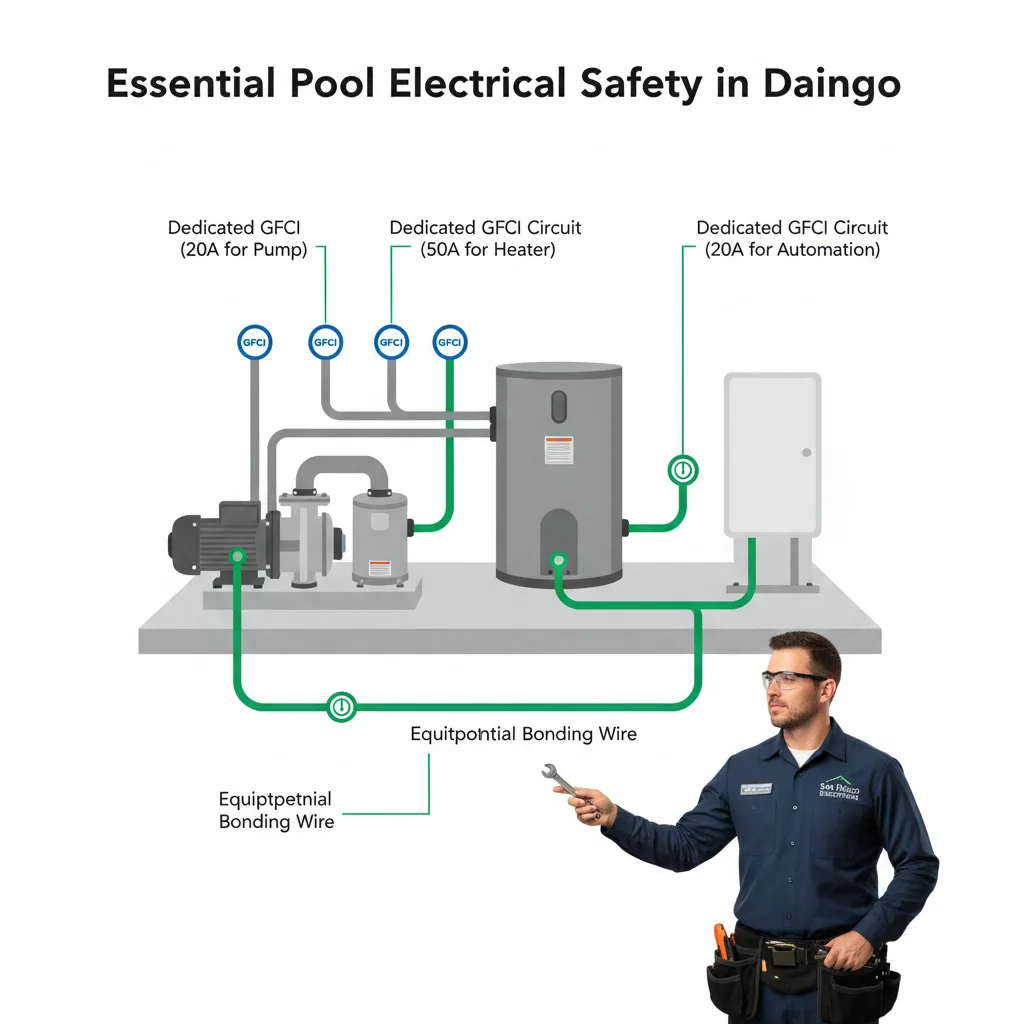
When it comes to pool electrical systems, two terms you will hear often are “dedicated circuits” and “GFCI protection.” Confirm both against the equipment nameplate and the articles the AHJ has adopted. They are not a blanket San Diego County mandate written from this page.
A dedicated circuit means that a specific appliance or piece of equipment has its own circuit breaker in your electrical panel and its own wiring running directly to it. This prevents overloading other circuits in your home. Pool pumps, heaters, and even high-powered automation systems draw a significant amount of electricity. If they share a circuit with other household appliances, it can lead to frequent breaker trips, flickering lights, and even dangerous overheating of wires. Installing dedicated circuits ensures your pool equipment receives the consistent, adequate power it needs without stressing the rest of your electrical system. This is especially important for new, powerful variable-speed pumps or electric heaters.
GFCI (Ground Fault Circuit Interrupter) protection is a listed safety device for many loads near water. A GFCI monitors current on the circuit. If it sees an imbalance that could mean current leaving the intended path, it opens. Copy which receptacles, pumps, lights, and other equipment need GFCI from the equipment nameplate and the currently adopted California pool articles. Do not treat a 20-foot mnemonic copied from an old NEC summary as the mandate. If your breaker keeps tripping on pool equipment, that is a category: overload, a ground fault the GFCI is catching, or another fault. Have it measured. Electrical troubleshooting is the matching page.
Equipotential bonding: what it is and why code requires it
Equipotential bonding is a cornerstone of electrical safety around swimming pools, and it’s something every San Diego pool owner should understand. Simply put, equipotential bonding is the process of intentionally connecting all metal components associated with your pool, including the pool shell’s rebar, metal ladders, diving board stands, pump motors, heater casings, and even surrounding metal fences or decking, with a continuous wire. This creates an electrically common plane, ensuring that all these metal parts are at the exact same electrical potential.
The reason code requires this, particularly in areas like San Diego with its many backyard pools, is critical for preventing dangerous voltage differentials. If different metal components around your pool somehow acquire different electrical charges, even a small voltage difference could create a path for current to flow through a person in or near the water. This phenomenon, known as touch voltage, can lead to severe or fatal electrical shocks. By bonding everything together, you eliminate these potential voltage differences, making it impossible for a person to complete a circuit between two components at different potentials.
Think of it this way: if a fault occurs and one metal component becomes energized, the bonding grid ensures that all connected metal components instantly become energized at the same level. Since there is no difference in potential, no current will flow through a person touching two different bonded components simultaneously. This system dramatically reduces the risk of electrical shock in and around your pool. The NEC has strict guidelines for what must be bonded and how, making it work best when installed by a licensed electrician familiar with these specific requirements.
Signs of bad pool wiring: tripping, corrosion, shocks
Ignoring potential electrical issues with your pool equipment can be dangerous. Knowing the signs of bad pool wiring can help you act quickly and prevent more serious problems. One of the most common indicators is frequent breaker tripping. While a GFCI tripping is often a sign it’s doing its job by detecting a fault, regular trips can also indicate an overloaded circuit, loose connections, or deteriorating wiring. If your pool pump or heater consistently causes the breaker to trip, do not simply reset it repeatedly; have a professional investigate the cause.
Another clear sign of trouble is visible corrosion on electrical components, wires, or connections near your pool equipment pad. San Diego’s coastal climate can contribute to rust and corrosion, but excessive build-up on electrical parts suggests moisture ingress, poor installation, or a lack of proper sealing. Corrosion increases resistance, can lead to overheating, and compromises the integrity of electrical connections, making them highly unsafe.
Beyond these, pay close attention to unusual noises like humming, buzzing, or sizzling coming from the equipment or electrical panel. These sounds often point to loose connections, arcing, or internal electrical faults. Dimming lights, especially when the pool equipment cycles on, might suggest an undersized circuit or a problem with your electrical panel.
Most critically, any tingling sensation or mild shock when touching metal pool components, the water, or the ground around the pool is an emergency. Exit the area. If there is smoke, sparks, or fire: leave, call 911, then the phone from outside. Do not operate the main. Do not diagnose it yourself. Electrical troubleshooting is the matching page after the scene is safe.
Permits and inspection for pool electrical work
For significant pool electrical work, confirm the permit path for that address. Regulations exist so the listing and the adopted pool code can be inspected. Skipping a required permit leaves the work uninspected. Ask the insurer. This page does not decide a claim.
Typically, permits are required for:
- New pool construction: The entire electrical system for a new pool, including wiring for pumps, heaters, lights, and bonding.
- Major equipment upgrades: Replacing an old single-speed pump with a new variable-speed pump, installing a new pool heater, or adding an automation system often necessitates a permit, especially if it requires changes to the existing wiring or electrical panel.
- Electrical panel work: If your existing electrical panel cannot handle the increased load of new pool equipment, a panel upgrade will certainly require permits and inspections.
- Relocation or addition of outlets/switches: Any new electrical points near the pool.
The permitting process involves submitting detailed plans to the local building department. After the work is completed by a licensed electrician, a city or county inspector will visit to verify that the installation meets all safety and code requirements. This crucial step ensures that your pool’s electrical system is safe, reliable, and up to current standards. Attempting to perform complex electrical work without a permit or by an unlicensed individual puts your family and property at significant risk. Always hire a licensed San Diego electrician who is familiar with local permitting processes for pool electrical projects.
What a typical San Diego pool electrical job costs
The cost of pool electrical work in San Diego can vary widely depending on the scope and complexity of the job. It’s challenging to provide exact figures without a detailed assessment, but we can outline the factors that influence pricing. For minor repairs, like fixing a faulty GFCI outlet or replacing a corroded wire connection, you might expect costs on the lower end, primarily covering labor and basic materials. These jobs are often straightforward.
More significant projects, such as installing a new variable-speed pump or an electric heat pump, involve dedicated circuit installation and possibly upgrades to the existing wiring at the equipment pad. The cost here will include specialized labor, higher-gauge wiring, new breakers, and the necessary permitting fees. If your home’s existing electrical panel is older or does not have sufficient capacity to handle the increased load of new, powerful pool equipment, a panel upgrade could be necessary, which would be a more substantial investment. Older homes in San Diego, in particular, may need panel upgrades to safely accommodate modern pool electrical demands.
Licensed electricians apply the nameplate, GFCI, and bonding rules in the adopted code. Bright Pro Electric matches you with that electrician. It does not install or guarantee the work. For an estimate, use the contact page. Hours are Monday through Saturday, 7am to 7pm. After hours, leave a message.
Not sure whether your pool project requires a permit? See when electrical work needs a permit in San Diego for a plain-English checklist. If your home was built before 1985 and has never had a whole-home electrical inspection, our electrical fire data analysis shows why that inspection is worth scheduling sooner rather than later.
Frequently asked questions
What is equipotential bonding and why does my pool need it?
Equipotential bonding connects all metal components around your pool, including rebar in the shell, ladders, pump motors, heater casings, and nearby metal fencing, with a continuous wire that keeps everything at the same electrical potential. If a fault energizes one metal part, without bonding that creates a voltage difference between components that can drive current through a person touching two of them simultaneously. Bonding eliminates that voltage differential so no current has a reason to flow. It’s required by NEC and is inspected on every new pool installation.
Does my pool pump need its own dedicated circuit?
Variable-speed pumps and electric heat pumps draw significant power for hours at a time. Sharing that load with other household circuits causes repeated breaker trips and puts undersized wiring at risk of overheating. A dedicated circuit means a direct run from the panel with a breaker sized specifically for that equipment’s amperage draw. Confirm dedicated-circuit and GFCI rules against the nameplate and the articles the AHJ has adopted. This page does not write a county-wide pump mandate.
My pool pump breaker keeps tripping. Is that a GFCI issue or a wiring problem?
It could be either. GFCI breakers protecting pool circuits trip when they detect ground faults, which can come from moisture in a pump motor, deteriorated wiring insulation, or a compromised connection at the equipment pad. Repeated tripping is the GFCI doing its job; the underlying cause still needs diagnosis. Don’t repeatedly reset a tripping breaker without investigating. An electrician can identify whether the fault is in the pump, the wiring, or the GFCI device itself.
What electrical work requires a permit for a San Diego pool?
New pool construction requires permits covering all electrical work: pumps, heaters, lights, and bonding. Replacing equipment with a different type (upgrading to a variable-speed pump or adding an electric heater) typically requires a permit if the wiring or circuit needs to change. Any new receptacles or switches near the pool require permits. A panel upgrade to handle increased pool load always requires a permit. If you’re unsure, ask before any work begins; unpermitted pool electrical work creates real liability.
When to call us
Pool electrical work involving water is licensed work, not DIY. If you are planning a new pool, upgrading equipment, or seeing electrical symptoms, Bright Pro Electric matches you with a licensed electrician. It does not install pool equipment or pull permits.
Use the contact page. Hours are Monday through Saturday, 7am to 7pm. After hours, leave a message.