An existing ceiling light location isn’t automatically ready for a fan. Before installing a ceiling fan there, a licensed electrician should inspect the hidden mounting point, identify the controls, and review the selected fan. The honest answer is sometimes, but appearance alone can’t confirm it.
Start with the existing fixture and intended fan
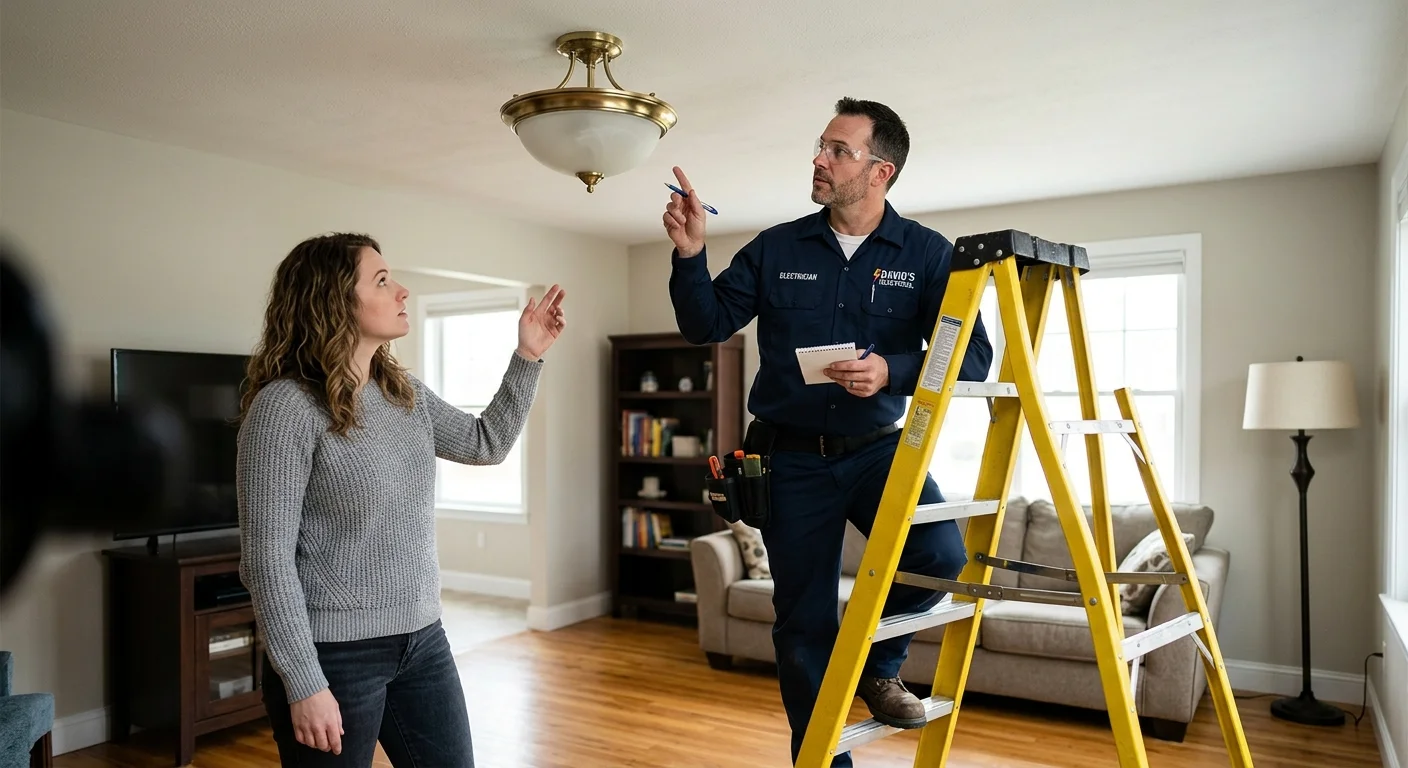
Keep the existing fixture intact until an electrician reviews the location. A photo can help with an initial conversation, but it won’t reveal every hidden part. Note whether the ceiling is flat, sloped, vaulted, or unusually high. Also record which wall controls operate the current light.
Bring the exact fan model into the discussion. Its manufacturer instructions give the electrician a defined product to evaluate. Include any light kit, wall control, remote, extension, or accessory you expect to use. That prevents a proposal based on a different setup.
The main question isn’t whether a fan physically covers the old opening. It’s whether the existing location and selected product can form an acceptable installation. The electrician should explain what can remain and what must change. If that answer depends on opening the location, the proposal should say so.
San Diego County’s housing stock varies sharply. The Census’s 2023 five-year ACS figures show that 68.7% of La Mesa housing units predate 1978. In San Marcos, that figure is 23.8%. Neither percentage diagnoses one ceiling location. They show why an electrician should inspect what’s actually present instead of guessing from the room’s appearance.
If your project involves broader fixture changes, review the available lighting installation options. That helps separate one fan conversion from a larger lighting plan.
Why the ceiling mounting point needs professional review
The visible light doesn’t establish what sits behind its canopy. An electrician needs to identify the concealed box, its support, and any markings that affect the proposed fan. Those findings should be compared with the fan manufacturer’s instructions.
A universal answer about reusing every existing ceiling box couldn’t be confirmed from the approved primary sources. The correct answer must come from the actual location, the selected product, and the authority governing that address. Be cautious when someone approves the conversion from a distant photo without stating what remains unverified.
California’s C-10 classification covers electrical wires, fixtures, appliances, raceways, and related components. Most electrical installation, alteration, or extension requires a licensed contractor regardless of price. The state’s minor-work exemption doesn’t rescue electrical work that falls within those categories.
Ask who holds the electrical contractor license connected to your proposal. You can verify its status through the California Contractors State License Board. Bright Pro Electric is a referral service, not the contractor performing the installation.
A useful proposal identifies the existing mounting condition after inspection. It also states whether that condition will remain, change, or require further evaluation. You shouldn’t have to interpret vague phrases such as “standard installation” when the mounting point is the central unknown.
When the existing switch plan may need changes
The current wall control is another part of the conversion decision. Record what it does now, but don’t assume the intended fan will work through the same control plan. The selected fan may include its own control components or manufacturer instructions.
Ask the electrician to describe the proposed result in plain language. You should know how the fan and light will be controlled before approving the work. If a remote is involved, confirm what the wall control will do afterward. If you want separate control of the fan and light, state that before proposals are prepared.
No universal switch arrangement could be confirmed for every fan model and existing San Diego home. Product instructions, the existing circuit, and the conditions found during inspection guide that decision. A proposal should distinguish confirmed work from options that depend on concealed conditions.
This is also the time to discuss nearby lighting. One change can affect how the room feels after dark, especially when the old fixture supplied its main light. Compare the fan’s planned light output with your expectations, using the manufacturer’s published information.
Don’t let control preferences remain buried in a general fan-installation line item. Ask whether the proposal covers the intended controls and any related wall work. If the control plan changes, the licensed electrician should define that scope before work begins.
How ceiling height and room use affect access
Access changes the planning conversation even when the electrical location stays fixed. Tell the electrician about ceiling height, stairs, loft edges, furniture, and other conditions beneath the fixture. Photos should include the floor and surrounding room, not only the ceiling canopy.
San Diego homes present different settings. A central-city condo may have limited staging space. An East County room may have a vaulted ceiling. Coastal homes can include covered outdoor areas, while inland properties may have tall great rooms. These examples don’t determine the installation method. They show why a room-level review matters.
Room use matters too. A proposed fan above a bed creates different planning concerns than one above a dining table or open walkway. Describe the furniture arrangement you expect to keep. The electrician can then compare that layout with the selected fan and its manufacturer instructions.
Outdoor or damp-area product ratings shouldn’t be assumed from appearance or marketing shorthand. A universal rating rule for every proposed location couldn’t be confirmed from the approved local sources. Ask the electrician to identify the exact product label and instructions being relied upon.
The proposal should also explain how unusual access affects its scope. If equipment, furniture movement, or another trade may be involved, get that clarified before comparing totals. Clear access language helps prevent two proposals from appearing equal when they cover different work.
Which ratings and permit details need confirmation
The fan, mounting components, and controls should be evaluated as one proposed installation. Ask the electrician which product instructions and visible markings support the plan. If a required detail can’t be confirmed before the location is opened, that uncertainty belongs in writing.
California’s current electrical code is the 2025 California Electrical Code. It took effect January 1, 2026, and uses the 2023 National Electrical Code with California amendments. Local jurisdictions may add requirements. That means a general online answer can’t settle every address.
Permit authority depends on location. Inside the City of San Diego, the Development Services Department handles electrical permits. Unincorporated communities such as Ramona, Lakeside, Fallbrook, Alpine, and Bonsall use San Diego County Planning & Development Services. Poway operates its own Building Services division and fee schedule.
The exact permit trigger for replacing a particular light with a particular fan couldn’t be confirmed for every local jurisdiction. Ask the authority serving the property or have the licensed electrical contractor confirm it. Don’t rely on a permit answer from another San Diego County city.
Permit fees also vary by jurisdiction and project scope. No verified countywide fee applies to every fan conversion. A proposal should identify the relevant authority, state whether permit handling is included, and separate any unconfirmed government charge from the contractor’s work.
What to compare in installation proposals
Compare scope before comparing totals. Each proposal should identify the fan model, existing location, mounting-point assumptions, control plan, access conditions, and permit responsibility. It should also explain which decisions remain dependent on inspection.
Look closely at exclusions. Ask whether the proposal addresses removal of the old fixture, any mounting changes, control changes, minor finish work, and cleanup. This isn’t a request for installation instructions. It’s a way to determine whether competing proposals describe the same finished result.
No verified countywide price range for this conversion appears in the approved claims. Contractor pricing varies, so publishing an unsupported average would mislead readers. Request written proposals based on your actual ceiling, fan, controls, and room access.
Warranty terms also require confirmation. Bright Pro Electric doesn’t provide the workmanship warranty because it doesn’t perform the installation. Ask each independent contractor to state their terms and any manufacturer-related conditions in writing.
For a focused conversion, compare proposals against the scope described on our ceiling fan installation service page. If the project includes several fixtures or a room-wide redesign, the lighting service may be the closer comparison.
The strongest proposal answers the unknowns without hiding them. It names what’s confirmed, what needs inspection, who handles permits, and what could change the scope. That makes the decision clearer than a single unexplained price.
When to call us
Call when an existing light location needs professional review before becoming a fan location. This electrical installation should be evaluated and completed by a licensed Electrician pro, especially when the mounting point, controls, access, or permit status remains unclear.
Call us at (858) 988-5580 and we’ll connect you with a licensed local electrician.