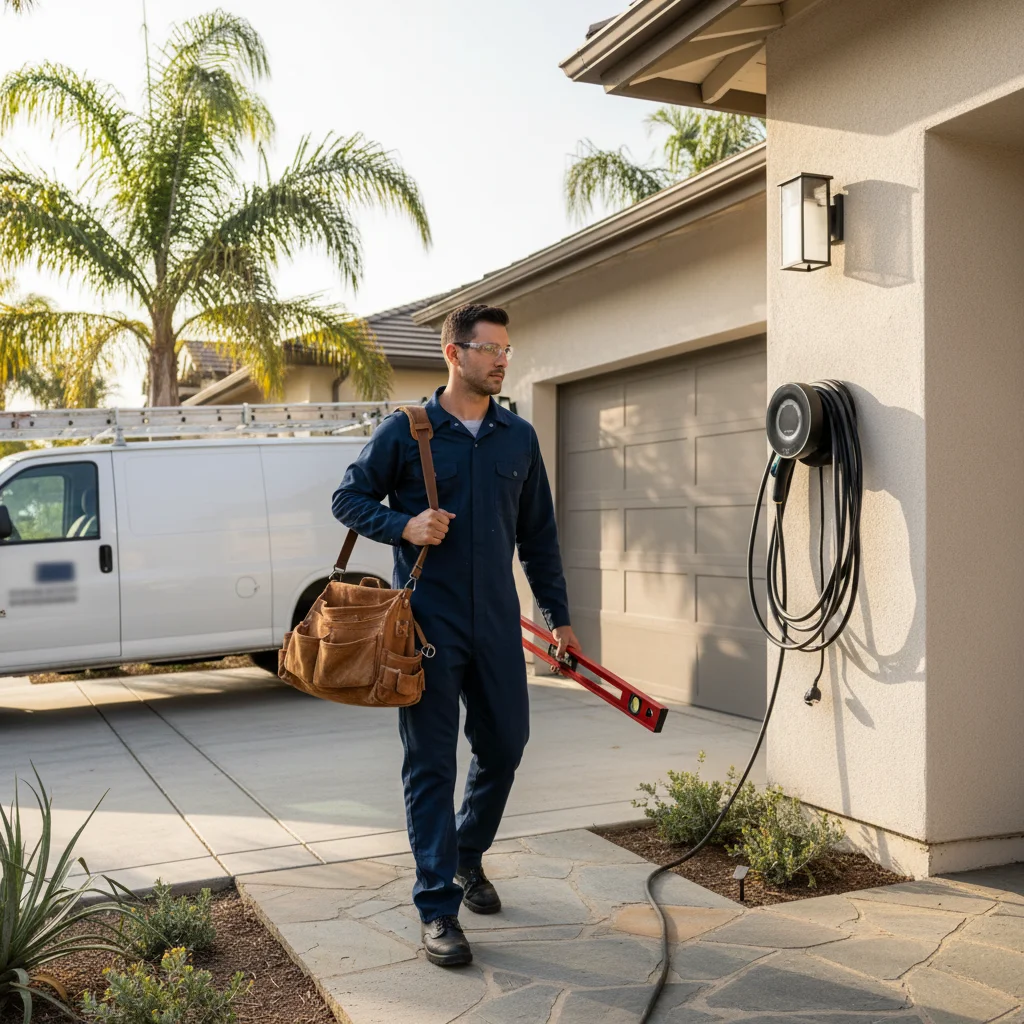
You did the research, took the test drive, and brought home your new electric vehicle. Now comes the final step: installing a fast, reliable Level 2 charger in your garage. You’ve searched, you have a few names, and they all look more or less the same. This guide is about how to sort them out before anyone pulls wire.
This is purely a contractor-vetting guide. If you still need the install overview, charger brand comparisons, or rebate info, start with our complete EV charger installation guide for San Diego. If you’re focused on comparing quotes by cost, see our EV charger installation cost breakdown.
TL;DR
- A Level 2 EV charger draws 40 to 50 amps continuously, making it the largest sustained electrical load in most San Diego homes; the installer must understand NEC requirements for continuous loads.
- Any legitimate contractor will pull a permit, perform a load calculation, and provide a detailed itemized quote before work begins.
- California requires a C-10 electrical contractor license for this work; verify at cslb.ca.gov before signing anything.
- Qmerit-certified installers are pre-vetted but may charge more; independent C-10 electricians often offer better value and a more direct relationship.
- The cheapest bid is almost always low because it skips the permit, uses undersized wire, or skips the load calculation. All three create problems.
Why generic ‘near me’ searches lead to bad EV installs
A search for a plumber or a painter might be forgiving, but an EV charger installation is a specialized, high-power electrical project. Your new charger will be the single largest electrical load in your home, often drawing 40-50 amps continuously for hours at a time. That’s a much bigger and more sustained demand than your oven or air conditioner.
Generic “near me” searches often surface contractors who aren’t prepared for that reality. You might get a general handyman or an electrician who primarily wires outlets and ceiling fans. They may not understand the specific requirements of the National Electrical Code (NEC) for Electric Vehicle Supply Equipment (EVSE).
Common mistakes we see from underqualified installers include:
- Incorrect wire gauge: Using wire that’s too thin for the amperage and distance, creating a serious fire risk.
- Improper breaker: Installing a standard breaker instead of a GFCI-protected one, which is required by code for safety.
- Skipping a load calculation: Failing to calculate your home’s total electrical load, which can lead to an overloaded panel and constant tripping. This is a critical step, especially in older San Diego homes.
- Ignoring permits: Convincing you a permit isn’t necessary to offer a lower price, which can affect an insurance claim. Ask your carrier. Unpermitted work is not an automatic void of every policy, and it can still complicate a sale.
“Near me” is a starting point, not a qualification. The real work begins when you start vetting the companies on that list.
Qmerit-certified vs. independent C-10 electricians
As you research, you’ll likely encounter the term “Qmerit Certified.” Qmerit is a third-party company that vets electricians for EV charger installations on behalf of car manufacturers. They offer a streamlined process, which can be appealing. But it’s important to understand the pros and cons.
Qmerit
- Pros: The electricians are pre-vetted, and the process is often standardized. Some vehicle or charger rebates may require using a Qmerit installer. It can feel like a safe, simple choice.
- Cons: You’re typically assigned an installer rather than choosing one yourself. The pricing can be higher to account for Qmerit’s referral fee. You may not be working with a company that’s truly local to your San Diego neighborhood.
Independent C-10 Electricians
In California, any legitimate electrical contractor must hold a C-10 license from the Contractors State License Board (CSLB). This is the baseline requirement for any electrical work. You can and should verify any electrician’s license on the CSLB website.
- Pros: You get to choose your contractor based on their local reputation, reviews, and your direct interaction with them. Pricing is often more competitive because there’s no middleman. You’re building a relationship with a local San Diego business that can help with future electrical needs.
- Cons: The vetting responsibility falls on you. You have to do the work of checking licenses, insurance, and reviews.
Bright Pro Electric matches San Diego homeowners with licensed local electricians. Bright Pro does not install the charger. See EV charger installation.
What an honest EV charger quote includes
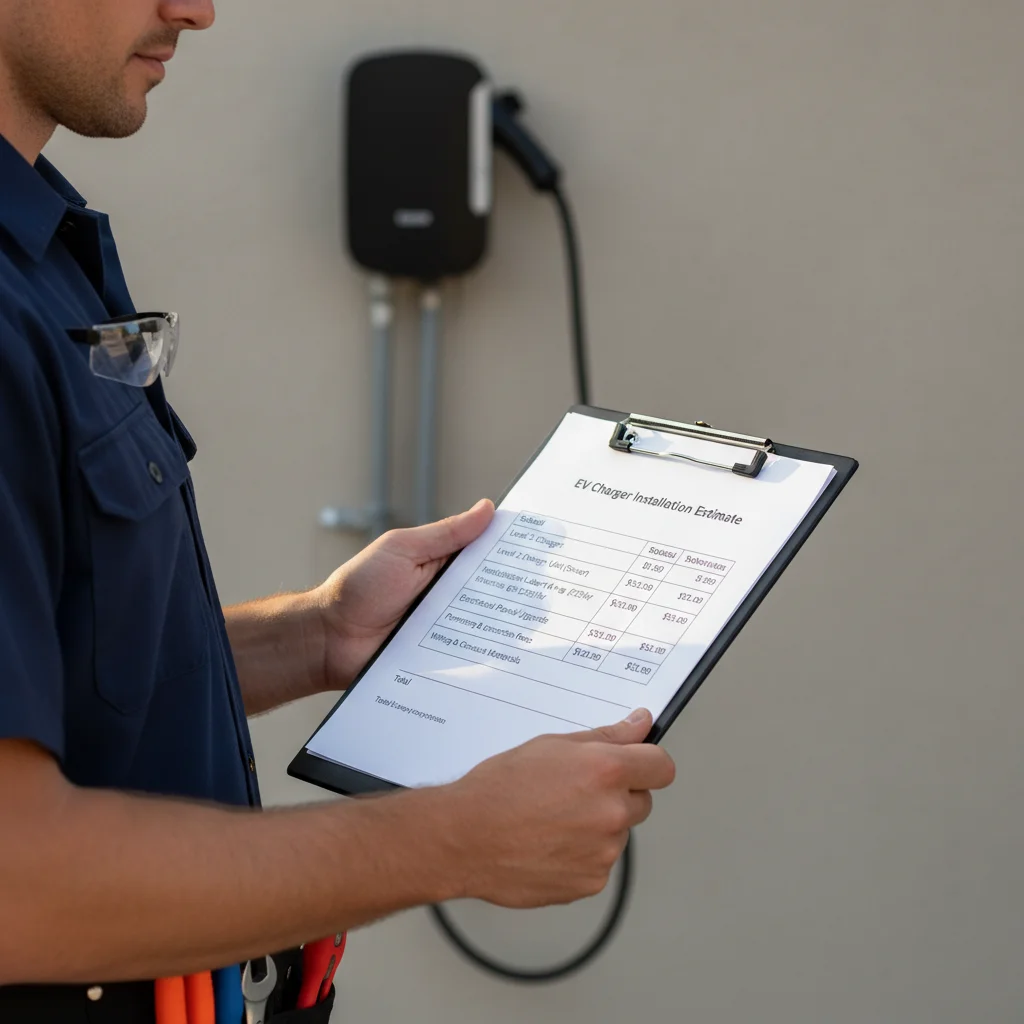
A legitimate quote is more than just a single number scribbled on the back of a business card. It should be a detailed, itemized document that shows you exactly what you’re paying for. If a contractor is hesitant to break down the costs, it’s a major red flag.
Look for these specific line items on your quote:
- EV Charger (EVSE): The cost of the unit itself, if you’re buying it through the contractor.
- Circuit Breaker: The specific brand, amperage, and type (e.g., “50-Amp 2-Pole GFCI Breaker”).
- Wire/Conduit: The length, gauge, and type of wire (e.g., “75 ft. of 6/3 NM-B wire” or “6 AWG THHN in EMT conduit”).
- Labor: A clear description of the work to be performed and the associated labor cost.
- Permit Fees: The exact cost of the permit from your local jurisdiction (e.g., City of San Diego, Chula Vista, Carlsbad). This should be a pass-through cost, not a padded number.
- Miscellaneous Materials: Small items like straps, connectors, and junction boxes.
- Panel Modifications (if needed): If your panel is full, the quote should specify the cost of adding a subpanel or upgrading the main panel.
Transparency is key. A detailed quote empowers you to compare apples to apples and shows that the contractor has thoroughly planned your project. For a deeper dive into pricing specifics, see our guide on EV charger installation costs in San Diego.
How to verify SDG&E permit and inspection track record
In San Diego County, a permit is not optional for installing an EV charger circuit. It’s a legal requirement that exists to protect you, the homeowner. The permit process ensures that the work is reviewed by a city or county inspector to verify it meets all safety codes.
A contractor who tries to downplay the need for a permit is putting you at risk. Ask any potential electrician directly: “Do you pull a permit for every EV charger installation?” The only acceptable answer is “yes.”
Here’s how to verify their track record:
- Ask for examples: Request addresses or permit numbers of recent EV charger jobs they’ve completed in your area. They should be proud to share their work.
- Check with your city: You can often look up contractor permits online through your city’s building department portal.
- Understand SDG&E’s role: While SDG&E doesn’t issue the electrical permit, a properly permitted and inspected installation is necessary to comply with their service requirements and to be eligible for any of their EV-specific rates or programs. An unpermitted installation could jeopardize your standing with the utility.
A contractor with a long history of pulling permits and passing inspections is one who knows the local codes and doesn’t cut corners. For the full picture on what San Diego’s permit process involves, see our guide on EV charger permits in San Diego.
Questions to ask before they pull conduit
Once you’ve vetted a few licensed electricians and have quotes in hand, it’s time for some final qualifying questions before you sign a contract. These questions will reveal their technical expertise and professionalism.
- “Have you performed a load calculation on my main panel?” This is the most important question. The electrician must calculate your home’s existing electrical load to ensure the panel has enough capacity for the new charger. If they just glance at the panel and say “it looks fine,” they are skipping a critical safety step. This is a common cause of the EV and panel upgrade bottleneck.
- “What size wire and breaker are you planning to use?” For a typical 40-amp charger (like a Tesla Wall Connector), they should be installing it on a 50-amp circuit using 6-gauge copper wire. If they suggest smaller wire to save money, they don’t understand the code for continuous loads.
- “Can you walk me through the planned route for the conduit?” Where will the electrical run go? Will it be on the exterior of your stucco? Through the attic? A good electrician will discuss the options with you to find a solution that is both safe and aesthetically pleasing.
- “Who on your team will be doing the installation?” Will it be the licensed electrician you’re speaking with or a less-experienced apprentice? You have the right to know who will be working in your home.
- “Are you fully insured with both general liability and worker’s compensation?” Ask to see a copy of their certificate of insurance. It should be current and show adequate coverage.
The answers to these questions will tell you everything you need to know about their competence and commitment to a safe installation. Our comprehensive San Diego EV charger installation guide covers more of these technical details.
Why the cheapest bid usually fails inspection
It’s tempting to go with the lowest price, but in electrical work, the cheapest bid is often the most expensive in the long run. Contractors offering a price that seems too good to be true are almost always cutting corners.
How do they get the price so low?
- By not pulling a permit. This is the easiest way to slash a few hundred dollars from a bid. It also means no independent inspector will ever check the work, leaving you with all the risk.
- By using cheaper, undersized materials. They might use 8-gauge wire instead of 6-gauge, or an indoor-rated receptacle for an outdoor installation. These materials won’t pass inspection and can be dangerous.
- By skipping the load calculation. Performing a proper load calculation takes time. Skipping it is faster but risks overloading your entire electrical system.
- By using unskilled labor. A low bid might mean they’re sending an unlicensed apprentice to do the job without proper supervision.
When that work fails inspection, the cheap contractor is often gone. You then hire a licensed electrician to open the work and correct it. Bright Pro does not tear out or reinstall the charger. The cheap first pass can cost more than a permitted job.
Related guides
Once you’ve picked your installer, our complete EV charger installation guide for San Diego walks through the full install process: hardwired vs. plug-in, panel capacity checks, charger brands, and rebates.
Frequently asked questions
How do I check if an EV charger installer in San Diego is licensed?
Go to cslb.ca.gov and use the “Check a License” tool. Enter the contractor’s name or license number. You’ll see whether the license is active, whether workers’ compensation insurance is current, and whether any disciplinary actions are on record. This takes about 30 seconds and is worth doing before you hand over a deposit.
What should be on an itemized EV charger quote?
A complete quote should list: the circuit breaker (brand, amperage, type), wire gauge and length, conduit type, labor, permit fees, and whether the charger hardware is included or owner-supplied. If a contractor gives you a single-line total without these details, ask for the breakdown. If they won’t provide it, that’s your answer about how they work.
Is a Qmerit installer better than an independent electrician in San Diego?
Not necessarily. Qmerit pre-vets installers, which reduces your vetting burden, but you’re assigned a contractor rather than choosing one. Pricing can be higher to cover the referral fee, and you may not get a truly local company familiar with your neighborhood’s permit office or HOA requirements. An independent C-10 electrician with good local reviews and a verifiable license is often the better value.
Why do some EV charger installs fail the city inspection in San Diego?
The most common reasons are undersized wire gauge (8 AWG instead of the required 6 AWG for a 40-amp load), missing GFCI protection on the circuit breaker, an installation that wasn’t permitted, or work performed by an unlicensed contractor. All of these create the same outcome: you pay to have it torn out and redone by a licensed electrician. Doing it right the first time costs less.
When to call us
Installing a home EV charger is a significant electrical project that requires a licensed, insured, and experienced C-10 electrician. For a safe installation that protects your home and your vehicle, you need a professional who understands San Diego’s codes and the specific demands of modern electric vehicles.
Use contact.