A Coronado panel project often starts with a new electrical load. An EV charger, electric appliance, cooling system, or remodel can change what the home needs. The right proposal should follow a load review, not a quick assumption about panel size.
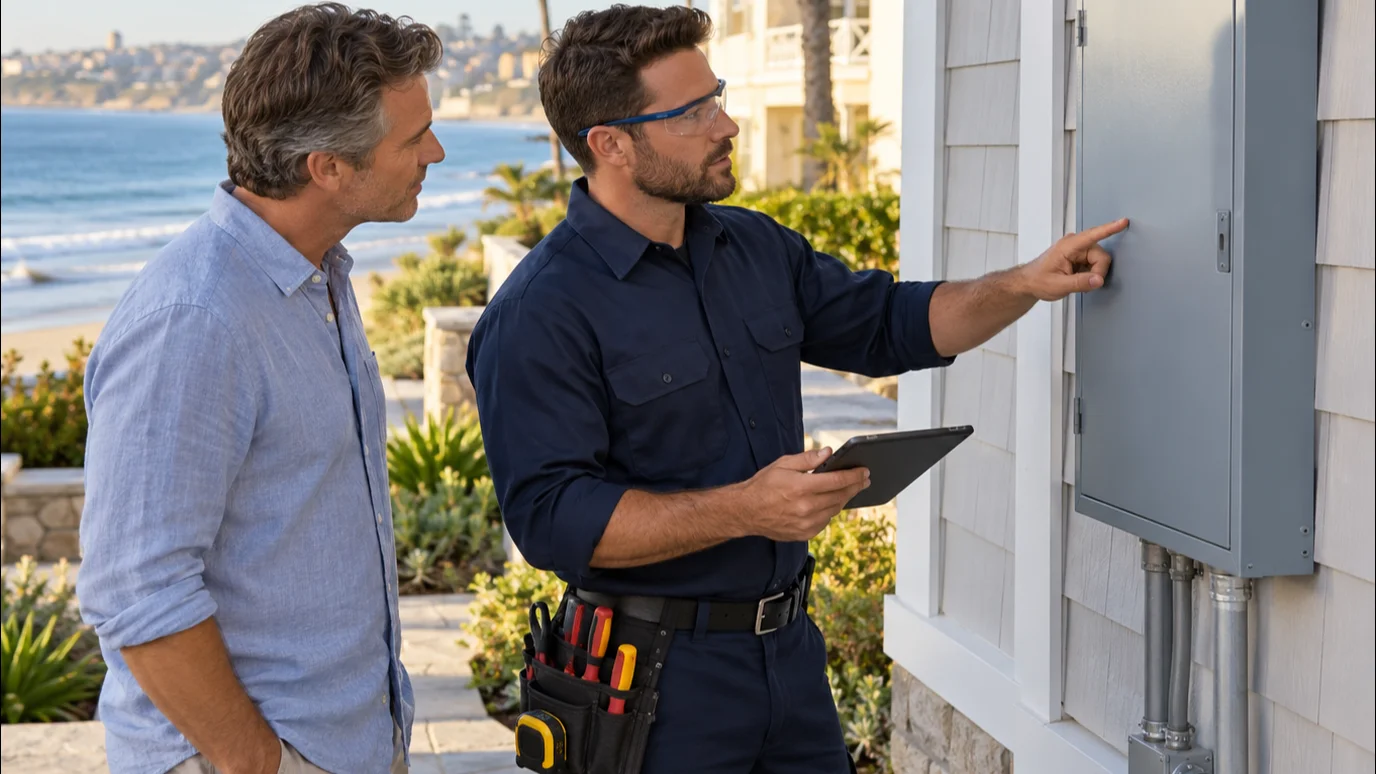
Start with the new loads the Coronado home must support
Begin with what you plan to add during the next several years. List the EV charger, cooking equipment, water heating, cooling, laundry equipment, battery system, or remodeled rooms under consideration. Include equipment already ordered and projects still being discussed.
An electrician can compare those plans with the home’s existing service and circuits. Our guide to an electrical load calculation in San Diego explains why this review comes before choosing a larger panel. A calculation tied to actual equipment is more useful than selecting an amperage from a sales page.
Ask the electrician to separate three issues:
- The home’s total electrical demand
- Space for the circuits serving planned equipment
- The condition and suitability of existing equipment
Those issues can lead to different recommendations. A crowded panel doesn’t automatically prove the service lacks capacity. Likewise, open breaker spaces don’t establish that the service can support every planned load.
A proposed 200 amp panel upgrade in Coronado should have a clear reason behind it. Ask which planned loads drive that recommendation. Our 200 amp electrical panel guide provides more questions for that discussion.
Don’t assume a panel change requires rewiring the entire house. The answer depends on the inspected wiring, the project scope, and what the electrician finds. Ask the proposal to distinguish panel work from branch-circuit repairs or broader rewiring. That separation makes competing scopes easier to compare.
How attached garages and limited equipment space affect planning
An attached garage can be important when the project includes vehicle charging. The electrician needs to review the charger location, proposed circuit path, existing panel location, and any physical obstacles. Don’t assume the nearest wall creates the simplest plan.
Limited equipment space can also shape the proposal. A contractor may need to assess the panel enclosure, meter location, surrounding wall, and access for the planned work. These details should be reviewed at the property. Photos can help with an initial conversation, but they don’t replace an onsite assessment.
Coronado’s coastal setting shouldn’t become a shortcut for diagnosing equipment. A home near the water doesn’t automatically have damaged electrical equipment. Ask the electrician to document any visible condition that changes the proposed scope. The proposal should identify observed issues instead of relying on broad claims about coastal homes.
Keep the panel closed during your own review. Homeowners don’t need to remove a screwed-on cover or touch internal equipment. Let the electrician inspect anything behind that cover.
For a garage project, share these details before comparing proposals:
- The vehicle and charging equipment being considered
- Where the vehicle normally parks
- Whether the garage is attached or detached
- Other electrical projects planned for the home
- Any remodeling that could change equipment access
A good electrical panel upgrade assessment connects these details. It shouldn’t treat the panel, garage, and future loads as unrelated projects.
When service capacity and load management lead to different proposals
A larger electrical service isn’t the only proposal an electrician may discuss. Depending on the load review, another option may involve managing when certain equipment draws power. The right comparison depends on the home’s actual loads and the owner’s priorities.
Load management can affect daily use. For example, a proposal might limit or pause one managed load when other household demand rises. Ask exactly which equipment would be managed and how that affects normal routines. Don’t accept a vague promise that a device solves every capacity issue.
A service upgrade takes a different path. SDG&E says its planners evaluate load requirements, meter location, and available system capacity. Applications are submitted through its project systems. Its Express Program may apply to panel upgrades with no added load, but eligibility depends on the project.
No verified SDG&E timeline is available in the approved claims record. Don’t accept an unsupported promise about review or completion dates. Ask who will submit utility information, what still needs confirmation, and which scheduling assumptions appear in the proposal. The SDG&E website is the authority for current utility procedures.
Use the same questions for each option:
- What load calculation supports this recommendation?
- Does the proposal change service capacity?
- Is any equipment subject to load management?
- Which assumptions still require utility confirmation?
- What happens if the planned household loads change?
A proposal should also state whether it covers panel replacement, service changes, or both. Those terms aren’t interchangeable in every project. Clear scope matters more than a familiar product label.
Confirm the permitting authority for the exact address
Coronado is an incorporated city with its own building authority. A Coronado project shouldn’t be routed through the City of San Diego or San Diego County Planning & Development Services merely because the address is within San Diego County.
Confirm the jurisdiction using the exact project address. Then ask the City of Coronado which permit path, documents, inspections, and current fees apply. The approved claims record doesn’t confirm a Coronado panel-upgrade fee or a universal permit procedure. The city sets those details, so verify them before paying or scheduling work.
The California Electrical Code currently in effect is the 2025 edition, based on the 2023 National Electrical Code with California amendments. Local jurisdictions may also have additional requirements. That makes address-specific confirmation more useful than a generic San Diego checklist.
Ask each panel upgrade electrician in Coronado to identify:
- The permitting authority used for the address
- Who will prepare and submit permit documents
- Who will coordinate required inspections
- Whether utility review is part of the proposed scope
- Which fees are included or excluded
- How changes to the approved scope will be handled
Don’t confuse a utility application with a city permit. They involve different authorities and different project questions. A contractor should explain both when both apply.
You can also verify the contracting business through the CSLB license lookup. Check the business identity, current status, and classifications. A lookup result doesn’t guarantee workmanship, insurance coverage, or permit approval. Ask for insurance evidence and written warranty terms separately.
What to compare in panel-upgrade proposals
Compare written scopes, not just the final totals. Panel upgrade pricing varies by the work found at the property. The approved claims record contains no verified Coronado market range, so a typical local price couldn’t be confirmed.
For a useful price comparison, give each electrician the same project brief. Include the same planned appliances, vehicle-charging needs, remodeling scope, and future projects. Then ask for an itemized proposal after the onsite assessment. Our panel upgrade cost guide explains the scope questions that matter without inventing a Coronado price.
A complete comparison should identify:
- Existing service and panel information observed onsite
- Proposed service and panel configuration
- The load calculation behind the recommendation
- Included circuit, meter, or service-related work
- Permit and inspection responsibilities
- Utility coordination responsibilities
- Wall, finish, or access work included in the scope
- Equipment brands and model information
- Written warranty terms from the contractor
- Exclusions and conditions that could change the price
Ask whether the proposal assumes existing branch wiring will remain. If repairs or rewiring may be needed, request a clear method for approving additional work. Don’t let a possible whole-home issue hide inside a one-line allowance.
A low total can reflect a narrower scope. A higher total can include work another proposal excludes. Neither conclusion is automatic. Compare matching tasks, equipment, permit responsibilities, and assumptions.
Bright Pro Electric is a referral service. We connect Coronado homeowners with independent, licensed, vetted electricians. The matched contractor performs the assessment, provides the price, handles the agreed work, and supplies any warranty.
When to call us
Call when planned EV charging, electric appliances, cooling equipment, or remodeling raises questions about your panel and service capacity. A licensed electrician can inspect the property, calculate the planned load, and explain the available proposals.
Call us at (858) 988-5580 and we’ll connect you with a licensed local electrician.