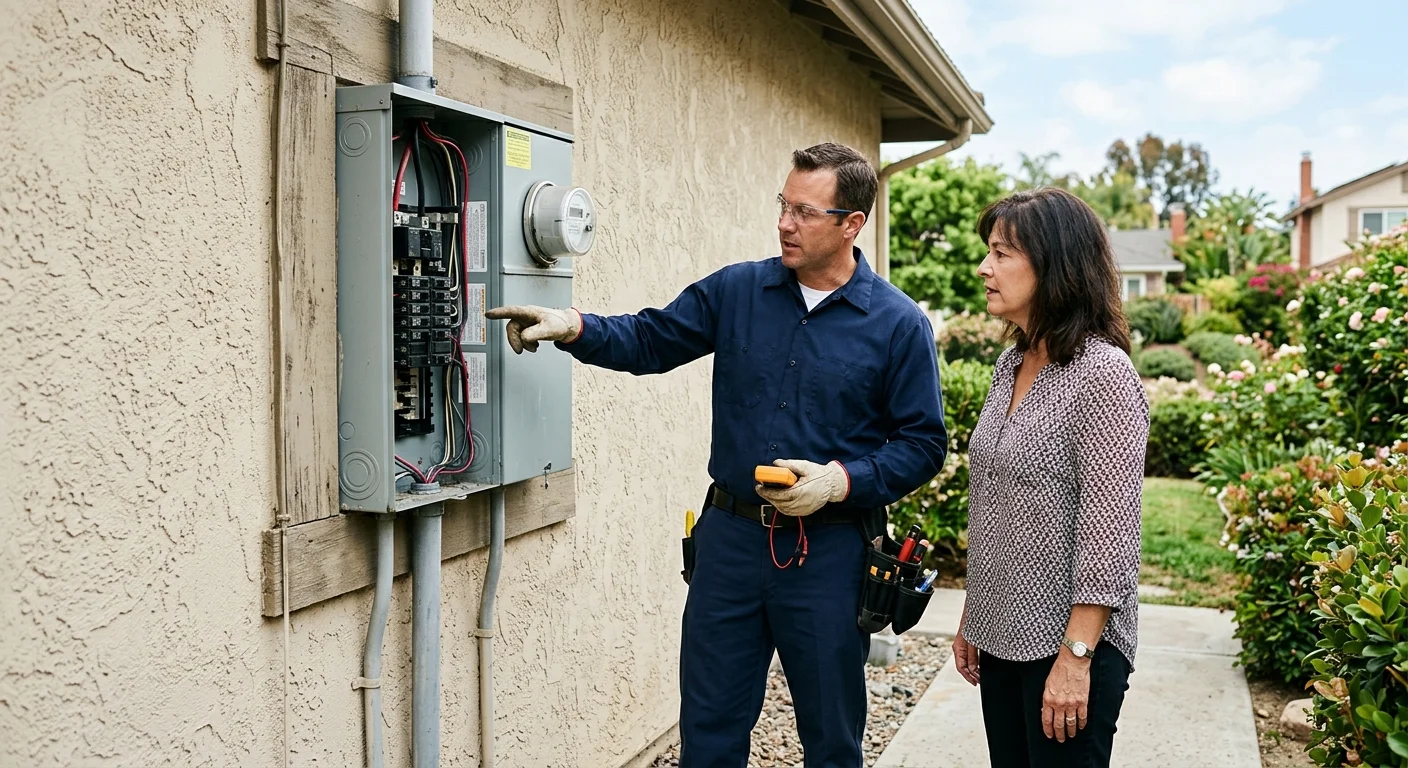
A 200 amp panel upgrade in Scripps Ranch starts with a capacity decision. A licensed electrician should determine whether the home needs more service, a panel replacement, or load management. The answer affects the permit path and any coordination with SDG&E.
Why Scripps Ranch homeowners search for 200-amp service
The search often starts when a homeowner plans another electrical project. That might include EV charging, a heat pump, battery storage, solar equipment, an addition, or a remodeled kitchen. Each project can change the home’s expected electrical demand.
A full panel can also start the conversation. Breaker spaces and service capacity aren’t the same thing, though. A panel may lack open spaces while the existing service still has usable capacity. Another panel may have open spaces but lack room for the proposed load.
That distinction matters before anyone recommends 200 amps. Replacing equipment and increasing service capacity are different projects. An electrician needs to identify the existing service, inspect the panel, and review the equipment being added.
Don’t let the neighborhood name replace an address-specific review. Whether the home is near Pomerado Road, Scripps Poway Parkway, or Miramar Reservoir, its existing installation needs individual attention. Meter placement, service routing, panel condition, and planned loads can change the scope.
The homeowner’s future plans matter too. Tell the electrician about projects that haven’t started yet. An EV charger planned next year may affect today’s capacity decision. The same applies to electrified appliances, an addition, or battery equipment.
The goal isn’t to choose the largest number automatically. It’s to select a scope that supports the documented load and planned work. That decision should appear clearly in the proposal.
How an electrician checks whether 200 amps is necessary
A useful assessment starts with the existing electrical service. The electrician identifies its rating, examines the main equipment, and checks how power reaches the home. A panel label or main breaker is useful evidence, but it shouldn’t be the entire analysis.
Next comes the load calculation. The electrician reviews existing circuits, fixed appliances, heating and cooling equipment, and other connected loads. Planned additions belong in that calculation. For an EV charger added to an existing panel, NEC 220.87 is one standard practice reference for evaluating load.
Ask the electrician to explain the inputs, not just the answer. The proposal should identify which new equipment was included. It should also separate confirmed plans from possible future projects. That makes competing recommendations easier to compare.
Some service changes also need utility review. SDG&E says its planners evaluate load requirements, meter location, and current system capacity. Those utility-side conditions can’t be settled from panel photos alone.
SDG&E’s Express Program may apply to a service upgrade with no added load. That doesn’t mean every panel project qualifies. The electrician should confirm the correct utility process for the actual scope.
A sound evaluation can lead to several outcomes. The home may need 200 amp service. It may need replacement equipment without added capacity. It may support the proposed load as installed. Load management may also deserve consideration. The calculation and site conditions should drive that choice.
Panel replacement, service upgrades, and load management aren’t the same
These terms often get grouped together, but they describe different scopes.
A panel replacement changes the panel equipment. The project may keep the same service capacity. This can address equipment condition, configuration, or available breaker space without automatically increasing the electrical service.
A service upgrade changes the available service capacity. That scope may involve the panel, meter equipment, service conductors, or the utility connection. The exact work depends on the existing installation and SDG&E’s review.
Load management takes another approach. It controls or coordinates selected loads so they don’t all draw power in the same way. Whether that works depends on the equipment, household needs, and electrician’s calculation. It shouldn’t be treated as a universal substitute for a service upgrade.
Our electrical panel upgrade service connects Scripps Ranch homeowners with licensed independent electricians who can evaluate these options. Bright Pro Electric doesn’t perform the installation or make the capacity decision.
For a broader explanation of ratings and project scope, read the San Diego 200 amp electrical panel guide. If you’re preparing to compare bids, the 2026 electrical panel upgrade cost guide explains the categories that can shape a proposal.
Keep the terms straight when requesting estimates. “Replace my panel” doesn’t necessarily request more capacity. “Upgrade my service” can involve more than the panel itself. A clear request helps each electrician price the same intended outcome.
Which permitting authority applies to the property
Scripps Ranch is a City of San Diego community. City Development Services is therefore the normal starting point for permit research. Still, use the legal property address when confirming jurisdiction. A neighborhood label isn’t a substitute for an address check.
The City of San Diego electrical permit page lists a 200 amp panel upgrade as work requiring an electrical permit. Depending on the project, the city identifies a Simple or Plan permit path.
The city’s published 2026 fee schedule lists $176.57 for this panel-upgrade permit. A $12.16 mapping fee also applies when plans or drawings are used for project review. These are city permit figures, not the total project price. Confirm the current amount with Development Services before paying.
A licensed C-10 contractor or the property owner or lessee can pull the permit. That permission shouldn’t be read as a recommendation to perform panel work without a qualified contractor. Most electrical installation, alteration, or extension work requires a licensed contractor regardless of price.
Utility coordination is separate from the city permit. SDG&E accepts service-upgrade applications through My Project Center or the Builder Services Portal. Its planners then evaluate the property’s load, meter location, and available system capacity.
No verified completion timeline appears on the cited SDG&E service-planning materials. The proposal should explain who submits utility documents and how utility review affects scheduling, without promising an unsupported turnaround.
Ask the electrician to name both paths plainly: city permitting and utility coordination. If only one appears in a proposal, ask whether the other is unnecessary or simply excluded.
What to compare in a panel-upgrade proposal
Start with the recommended capacity and the reason behind it. The proposal should identify the existing service and summarize the load calculation. It should also list every planned addition used in that calculation.
Next, check whether the bid covers a panel replacement or a full service upgrade. Look for clear treatment of the meter equipment, service conductors, grounding work, circuits, and utility-side coordination. An item should be marked included, excluded, or dependent on inspection.
Compare these details across proposals:
- The existing service rating and proposed final rating
- Loads included in the electrician’s calculation
- Panel-only work versus service-capacity changes
- Permit preparation, permit fees, and inspection responsibility
- SDG&E application and coordination responsibility
- Equipment included in the quoted scope
- Work needed after the panel installation
- Contractor warranty terms and equipment warranty documents
- Conditions that could trigger a written change order
A lower total can reflect a narrower scope. One electrician may include permitting and utility coordination while another excludes them. Ask for revisions when proposals aren’t describing the same work.
Check the contractor before signing. California’s CSLB license lookup lets homeowners verify license status. C-10 contractors install, erect, or connect electrical wires, fixtures, appliances, apparatus, raceways, conduits, solar photovoltaic cells, or any part thereof which generate, transmit, transform or use electrical energy.
Bright Pro Electric is a referral service, not the contractor. The independent electrician provides the proposal, performs the work, and states any warranty terms. Homeowners should keep the signed scope, permit records, utility documents, and final inspection information together.
The strongest proposal won’t simply say “200 amp upgrade.” It will explain why 200 amps was selected, what physical work is included, and which outside approvals affect the project.
When to call us
A panel replacement, service-capacity change, or electrical-system extension needs review by a licensed electrical contractor. Call us at (858) 988-5580 and we’ll connect you with a licensed local electrician.